The International Campaign to Abolish Nuclear Weapons (ICAN) today released a report showing that nine nuclear-armed nations – the US, Russia, China, the UK, France, India, Israel, North Korea, and Pakistan – spent nearly 119 billion USD on their atomic arsenals in 2025.
This figure marks a historic high, representing a 19% increase from the previous year. "A new nuclear arms race is underway", the document states.
ICAN, an organization founded in 2007 and headquartered in Australia, aims to promote compliance with and enforcement of the Treaty on the Non-Proliferation of Nuclear Weapons globally. It received the Nobel Peace Prize in 2017.
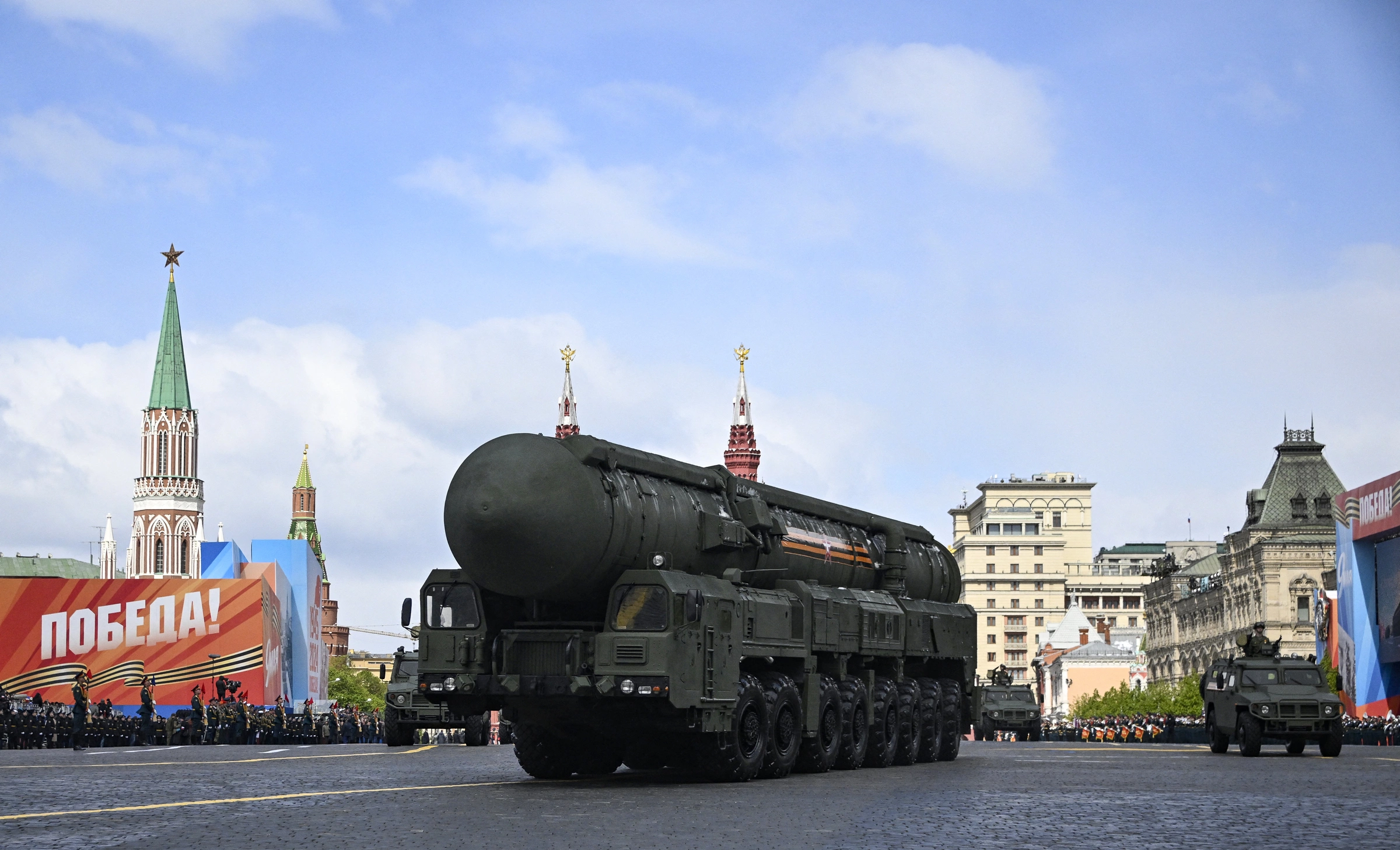 |
A Russian Yars intercontinental ballistic missile during a parade in Moscow in 5/2024. Photo: AFP
The Stockholm International Peace Research Institute (SIPRI), based in Sweden, also released a report on global nuclear arsenals on 8/6. It expressed concern about an escalating arms race amid rising geopolitical tensions worldwide.
Both studies indicate a sharp increase in spending as nations modernize their nuclear arsenals and move more warheads from storage to combat-ready status.
Susi Snyder, co-author of the ICAN report, stated that the trend of expanding nuclear capabilities, combined with concerns that artificial intelligence (AI) could heighten the risk of atomic weapons use, is particularly alarming. "Honestly, I feel very concerned", she said.
According to the SIPRI report, the total number of nuclear warheads globally continued to decrease, reaching approximately 12.187 at the start of this year. However, the number of warheads on high operational alert increased to 9.745. "The number of nuclear weapons has decreased, but the level of danger and nuclear risk is rising", warned Karim Haggag, SIPRI director.
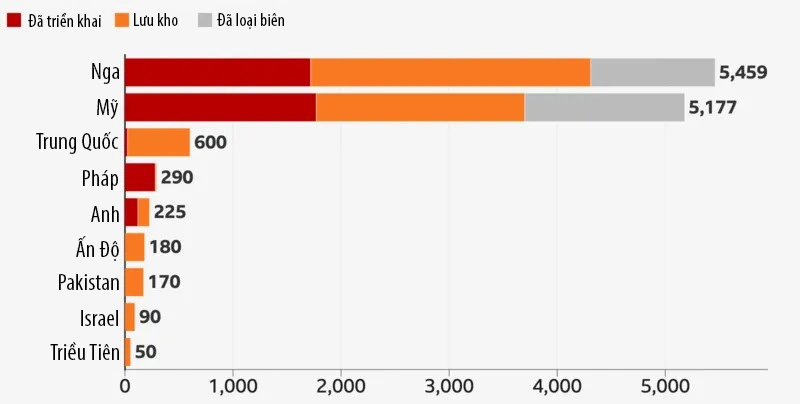 |
Number of nuclear warheads by country worldwide. Graphic: BBC
Haggag highlighted several worrying signs, such as the weakening of strategic arms control mechanisms and intensifying competition among nuclear powers. SIPRI forecasts that the overall size of global nuclear arsenals will increase again in the coming years, as the pace of dismantling old warheads slows, while the deployment of new nuclear weapons accelerates.
The US and Russia currently hold about 83% of the total global nuclear arsenal, with each possessing more than 5.000 warheads. SIPRI reported that China is expanding its nuclear arsenal at a faster rate than any other nation, with approximately 620 warheads.
The US was the largest spender, allocating 69,2 billion USD to nuclear weapons in 2025, an increase of 12,4 billion USD from the previous year. This figure is even larger than the combined spending of all other nuclear nations. Following the US were China with approximately 13,5 billion USD, the UK with 12,6 billion USD, and Russia with 9,5 billion USD.
According to ICAN, nuclear powers have spent over 470 billion USD on their atomic arsenals over the past five years, and this investment is projected to continue rising.
The US, the UK, and France are preparing to spend hundreds of billions of USD to develop and maintain nuclear weapon systems into the next century. Other nations are also deploying assets with very long operational lifespans.
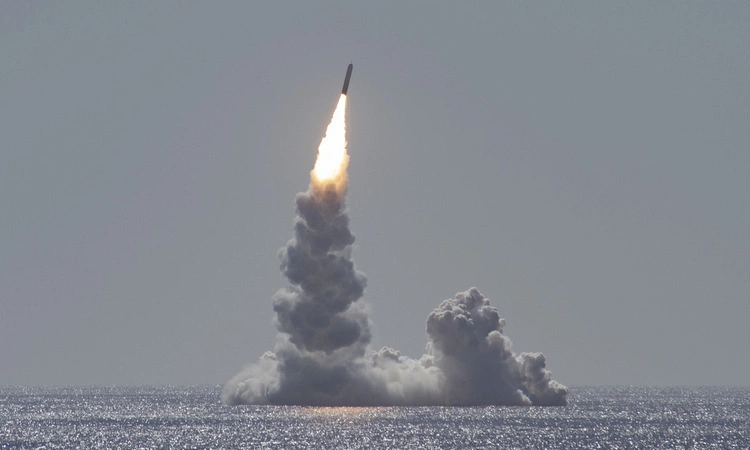 |
A Trident II D5LE missile launched from the US Navy submarine USS Maine in 2/2020. Photo: US Navy
The US Sentinel intercontinental ballistic missile project is designed to remain operational beyond 2100. Meanwhile, expanded plutonium core production indicates that US nuclear warheads could continue to be maintained until 2120.
Specifically for the 2025-2034 period, the US expects to spend nearly 1.000 billion USD on nuclear weapons projects.
Researchers argue that these enormous expenditures are particularly controversial, especially as the global humanitarian system struggles due to severe funding cuts. The amount spent on nuclear weapons in just one day last year would be sufficient to ensure food security for more than two million people.
By Huyen Le (AFP)