|
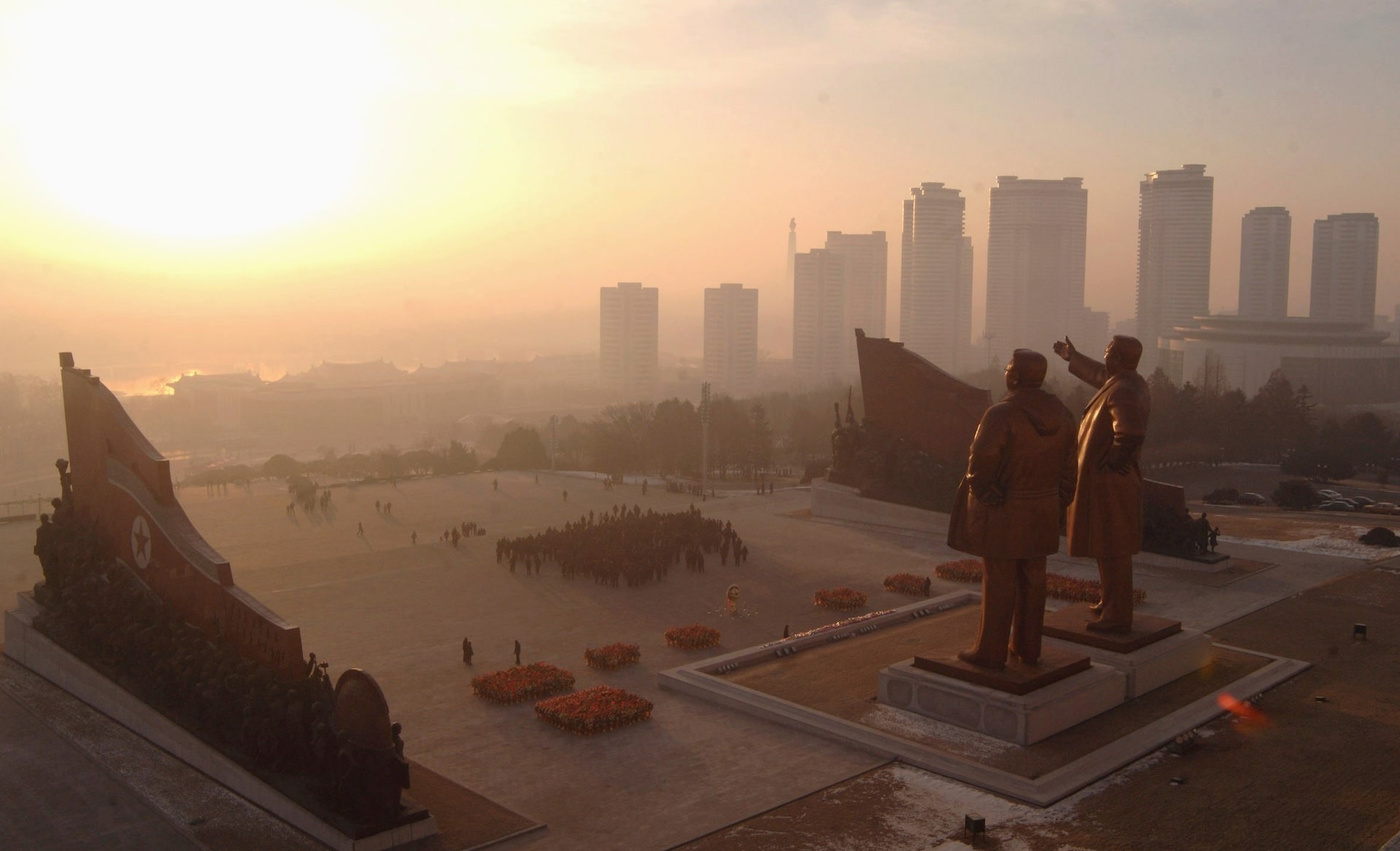
Bronze statues of former North Korean leaders Kim Nhat Thanh and Kim Jong-il, 22 meters tall, at the Mansu Hill Grand Monument. The monument includes two statue clusters with 229 figures, depicting themes of the North Korean people's revolutionary history. Behind the two statues is the Korean Revolution Museum, which houses 90 exhibition rooms displaying artifacts. |
North Korean leader Kim Jong-un presided over the inauguration ceremony for 10,000 new apartments in Pyongyang on 16/2. This event marked the completion of the goal to build 50,000 apartments in the North Korean capital, a target set at the 8th Workers' Party Congress in 2021.
As part of this major project, 40,000 units were constructed in Songsin, Songhwa, and Hwasong districts between 2022 and 2025. The final 10,000 units were built in Hwasong district.
The newest development includes numerous high-rise apartment buildings, along with educational, commercial, and service facilities lining the boulevard in Hwasong district. Two of the apartment buildings are connected by a skybridge.
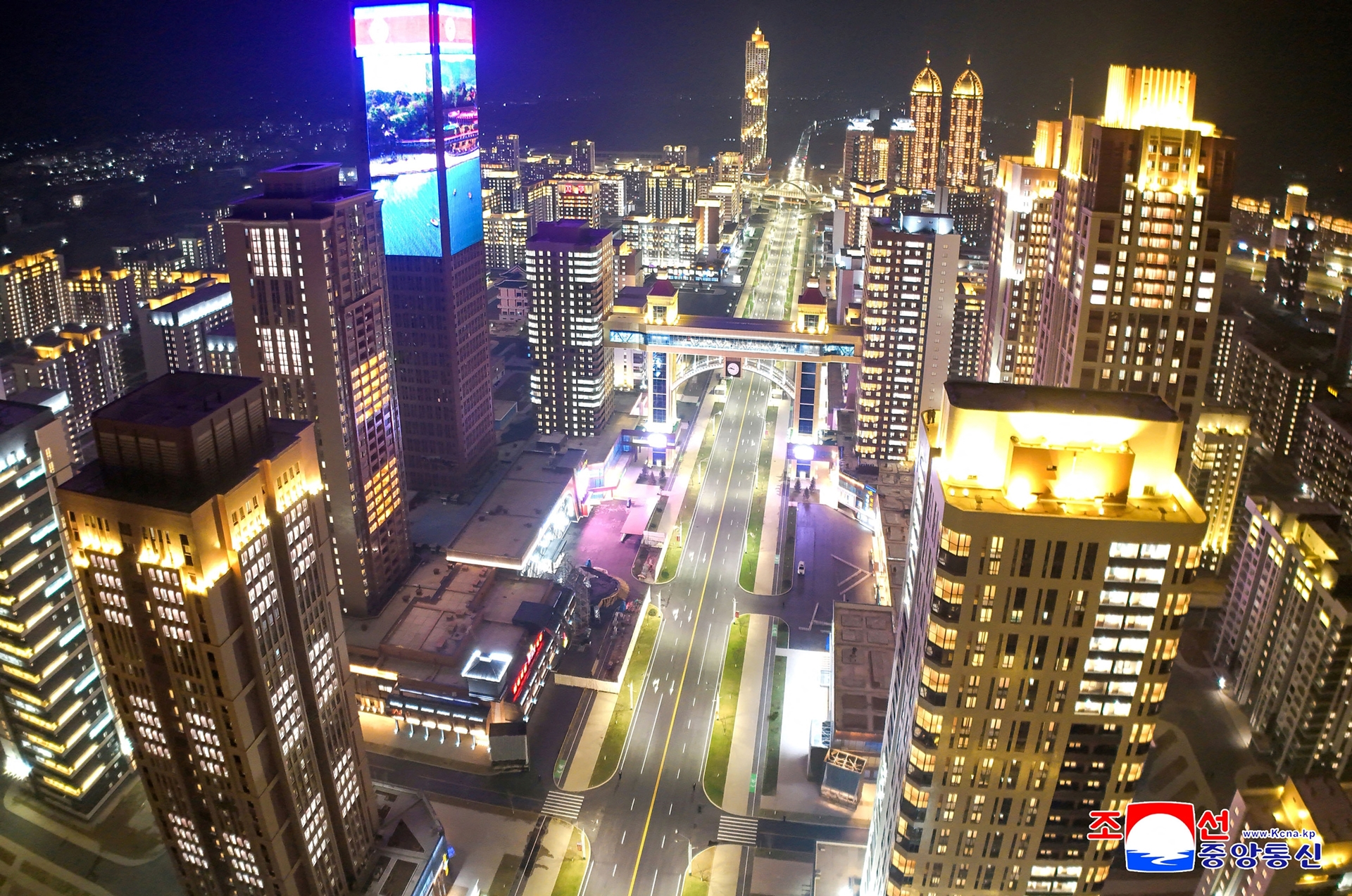 |
Apartment buildings in Hwasong district.
Pyongyang, North Korea's capital and largest city, lies on both banks of the Dai Dong River. The city spans over 3,000 square kilometers and has a population of over 3.1 million people, according to 2024 statistics from World Population Review.
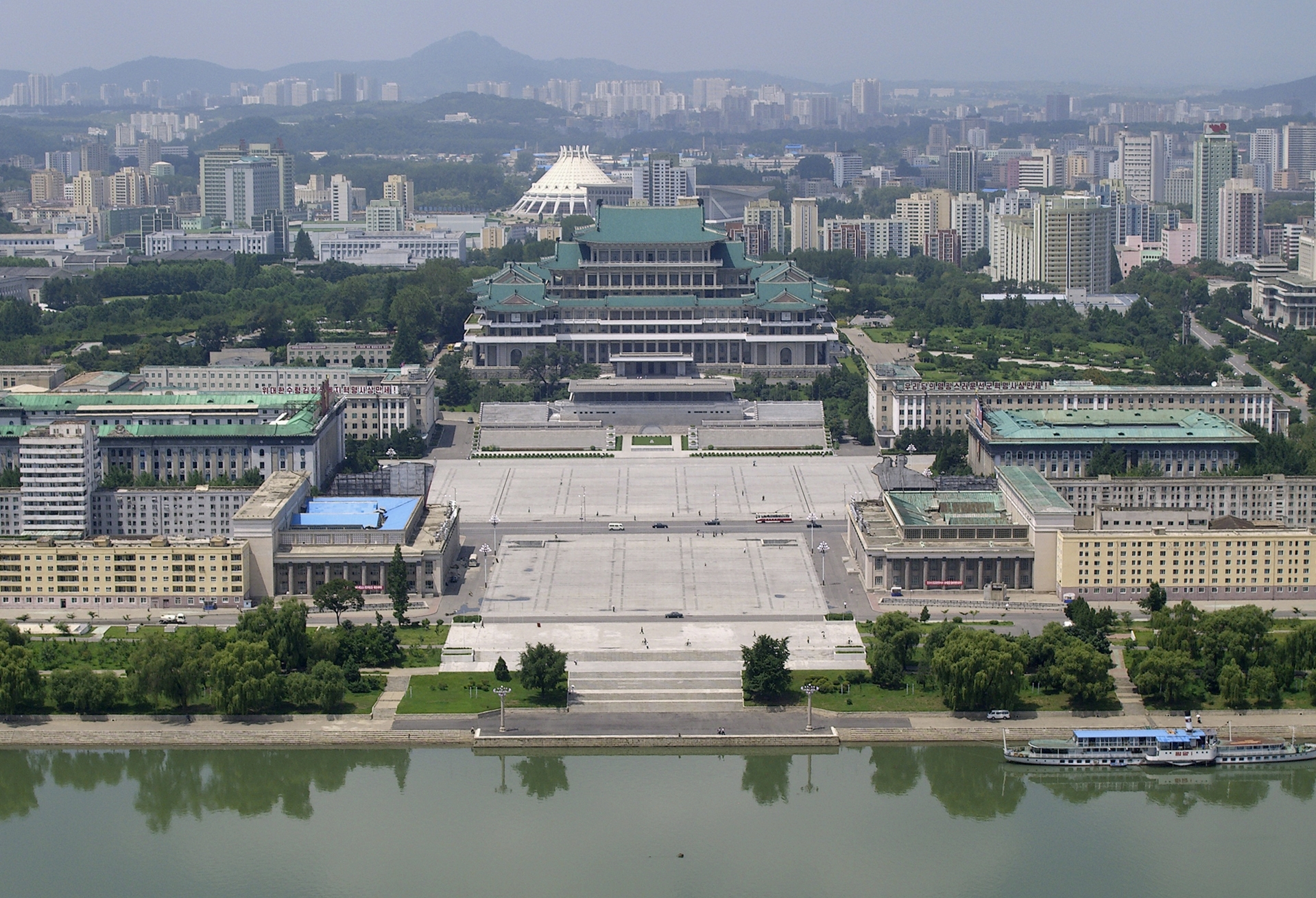 |
Pyongyang features many iconic architectural works. Among them is the Grand People's Study House, a green-roofed library designed in the shape of a traditional hanok house, situated behind Kim Nhat Thanh Square, along the Dai Dong River.
The library is a massive structure with 600 rooms, a capacity for 30 million books, and welcomes up to 12,000 visitors daily. Construction began in 1982 to commemorate leader Kim Nhat Thanh's 70th birthday, taking 21 months to complete. It stands 10 stories tall with a total floor area of 100,000 square meters.
 |
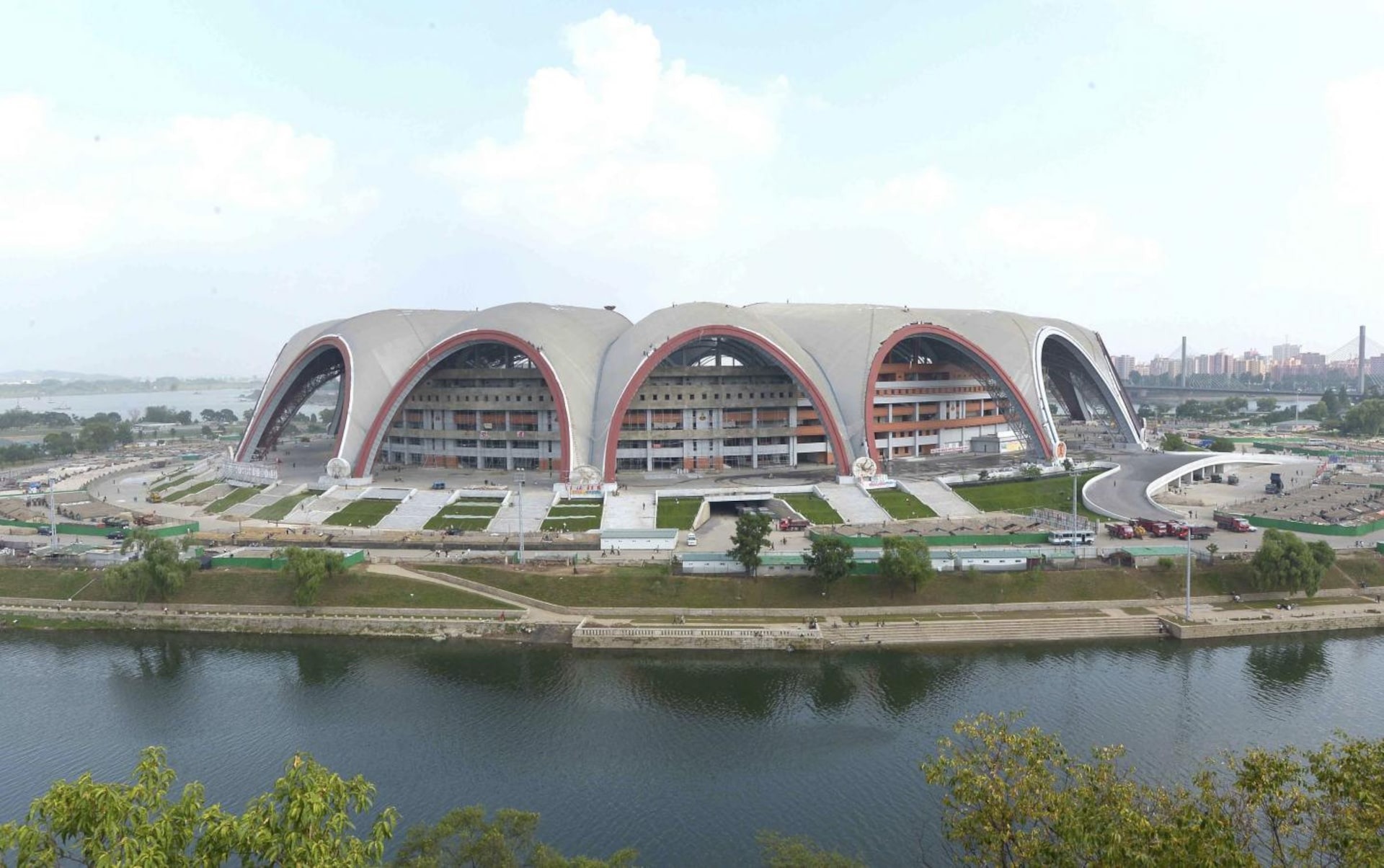 |
The Rungrado 1st of May Stadium in Pyongyang was once the world's largest stadium, with an initial design capacity of up to 150,000 spectators. However, international experts estimate that after renovations to install seating, the stadium's capacity is 114,000 seats, ranking second globally after the Narendra Modi Stadium in India, which has 132,000 seats.
This structure opened in 1989 to commemorate the 13th World Festival of Youth and Students and showcase the nation's scale to the world following the 1988 Seoul Olympics. The stadium features a circular dome roof, composed of 16 petal-shaped sections, resembling a blooming magnolia flower when viewed from above—North Korea's national flower.
The building has a total floor area of over 207,000 square meters, stands 8 stories tall, and its dome peaks over 60 meters above ground. It serves as a venue for major sporting events and large-scale mass artistic performances.
 |
The Ryugyong Hotel, 105 stories tall, is North Korea's tallest building, prominently featured in the Pyongyang skyline.
Ryugyong is named after a historical nickname for Pyongyang, meaning "capital of willows." The pyramid-shaped skyscraper was designed to feature at least 3,000 rooms and 5 restaurants with panoramic views.
The hotel is divided into three wings, each sloped at 75 degrees, converging into a conical shape. The top 15 floors were intended for restaurants and observation decks.
Construction of the Ryugyong Hotel began in Pyongyang in 1987, with an anticipated opening two years later. However, nearly 40 years have passed, and the structure remains unfinished and unused.
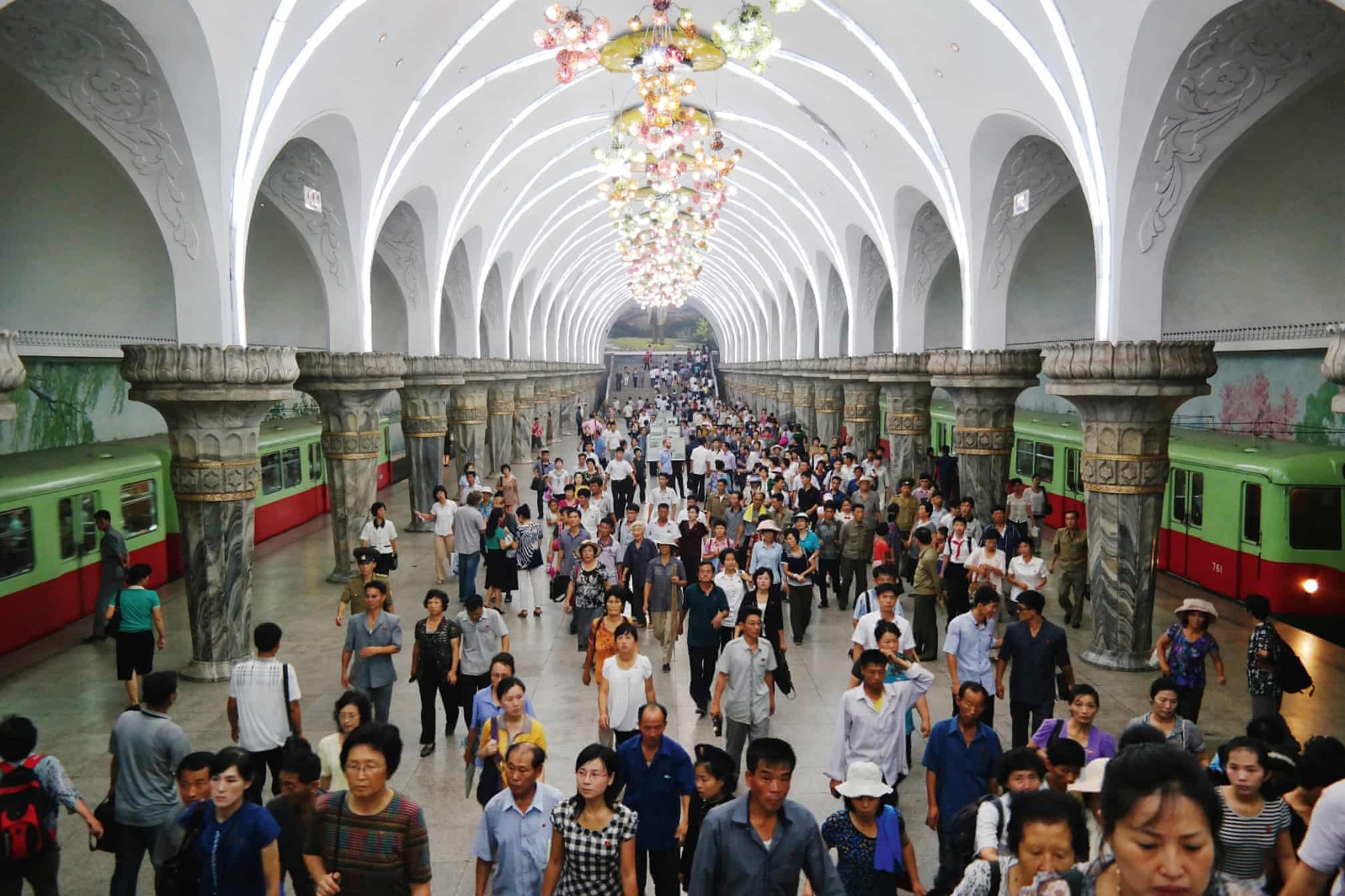 |
Pyongyang's subway system began construction in 1966 under leader Kim Nhat Thanh. It is the world's deepest subway system, with a maximum depth of 200 meters underground and an average depth of 100 meters, reaching 150 meters in some mountainous sections.
At such depths, beyond its transportation function, the subway system can also serve as a bunker, designed to prepare for potential wartime scenarios.
The first subway line, Cheollima, opened in 1973. The second line, Hyeoksin, began operations in 1975.
Pictured is Yonggwang Station on the Cheollima line, one of the system's most grand stations. Its chandeliers resemble fireworks, marble columns are carved in the shape of torches, and two 80-meter-long murals adorn the station walls.
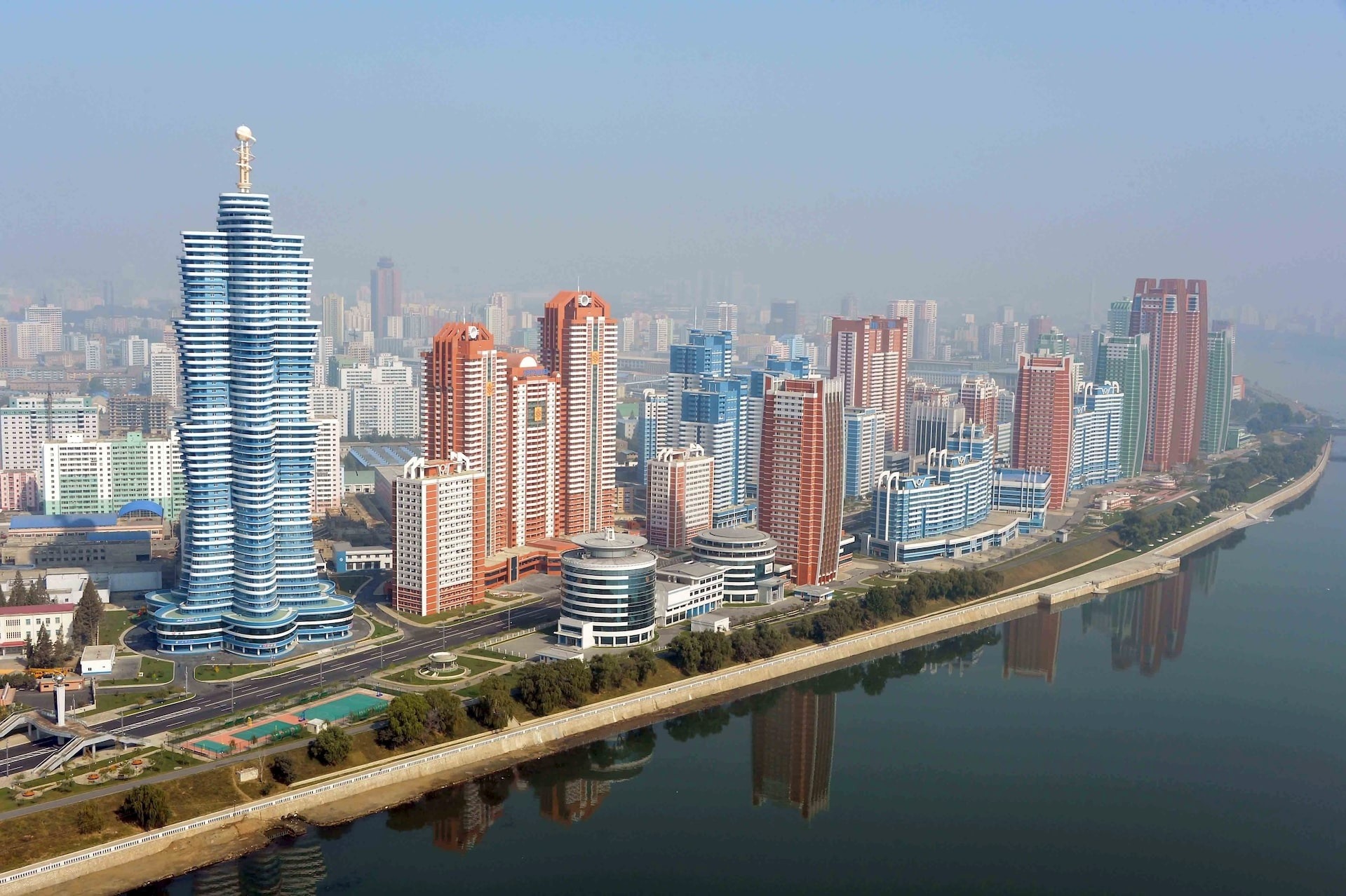 |
Future Scientists Street houses the headquarters of scientific institutes affiliated with Kim Chaek University of Technology, and serves as a residential area for North Korean scientists. The first building on the left is the 53-story Unha Tower, the tallest structure within the complex.
A six-lane road runs through this high-rise apartment district, connecting Pyongyang Station and the Dai Dong River. This area opened in 2015.
 |
North Koreans dance in the Arch of Triumph Square, a structure located at the foot of Mau Don Hill. Mau Don Hill is a scenic spot and a political symbol of North Korea.
The Pyongyang Arch of Triumph, modeled after the Arc de Triomphe in Paris, is larger in scale, standing 60 meters high and 50 meters wide. It is the second-tallest triumphal arch in the world, surpassed only by the Monument to the Revolution in Mexico. The structure opened in 4/1982, coinciding with leader Kim Nhat Thanh's 70th birthday.
 |
The North Korean Science and Technology Complex is a center located in an atom-shaped building on Ssuk Island in Pyongyang, connected to the city center by the Chungsong Bridge. The facility was completed in 2015, with a floor area of over 100,000 square meters.
Inside the center is an electronic library, equipped with approximately 3,000 computers connected to the national intranet, Kwangmyong.
Hong Hanh (Photos: Reuters/AFP)