At an ancient-themed restaurant that opened in central Beijing in early November, customers select outfits in a room full of Hanfu attire, wigs, hair ornaments, and accessories. They apply detailed makeup before dining. They walk through cobblestone courtyards, pausing to take photos under pavilions, amidst the melodious sounds of the guzheng.
These customers are willing to pay to "time-travel" back to ancient China for a few hours, enjoying the ambiance and an eight-course imperial meal from bygone eras.
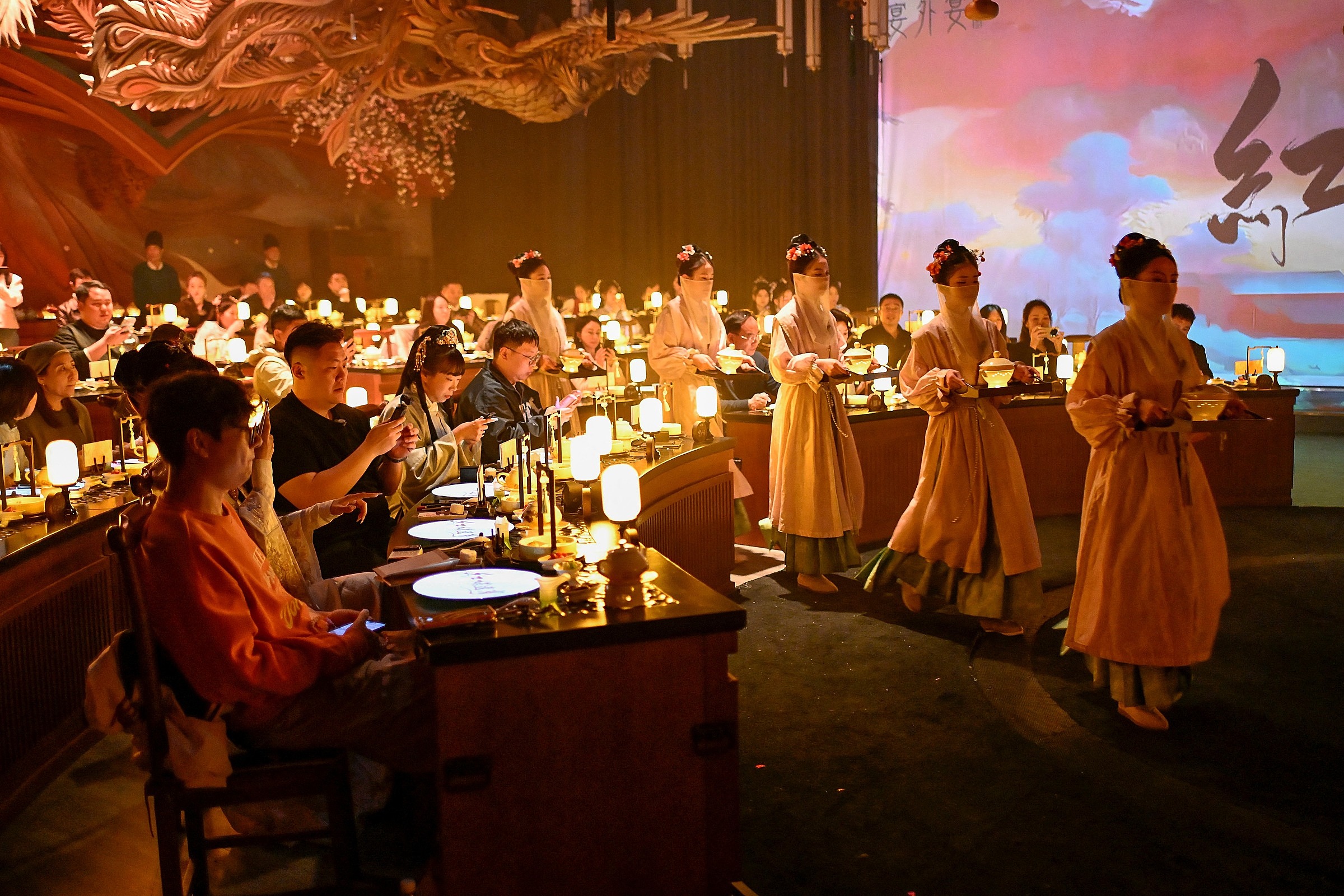 |
Staff, dressed and made up in ancient themes, serve food to diners at a Beijing restaurant on 2/11. Photo: AFP
Amid declining domestic spending in the world's second-largest economy, many people still spend on experiential services and goods that provide a sense of satisfaction. This trend is known as "emotional consumption."
According to China Daily, consumers born after the 1990s often shop to "please themselves," becoming a driving force behind emotionally-driven purchases.
Chinese Minister of Commerce Wang Wentao stated in July that "new forms of consumption and new trends," such as Labubu dolls, are boosting China's economy.
Carey Zhuang, a 27-year-old entrepreneur, paid 1.000 Chinese yuan (140 USD) to transform into a character from the classic novel Dream of the Red Chamber, a theme featured at the restaurant. Dressed in a red silk robe embroidered with dragons, he was happy to pay for the new experience.
"I'm not blindly tightening my belt; I spend to fully enjoy the present moment," Zhuang said.
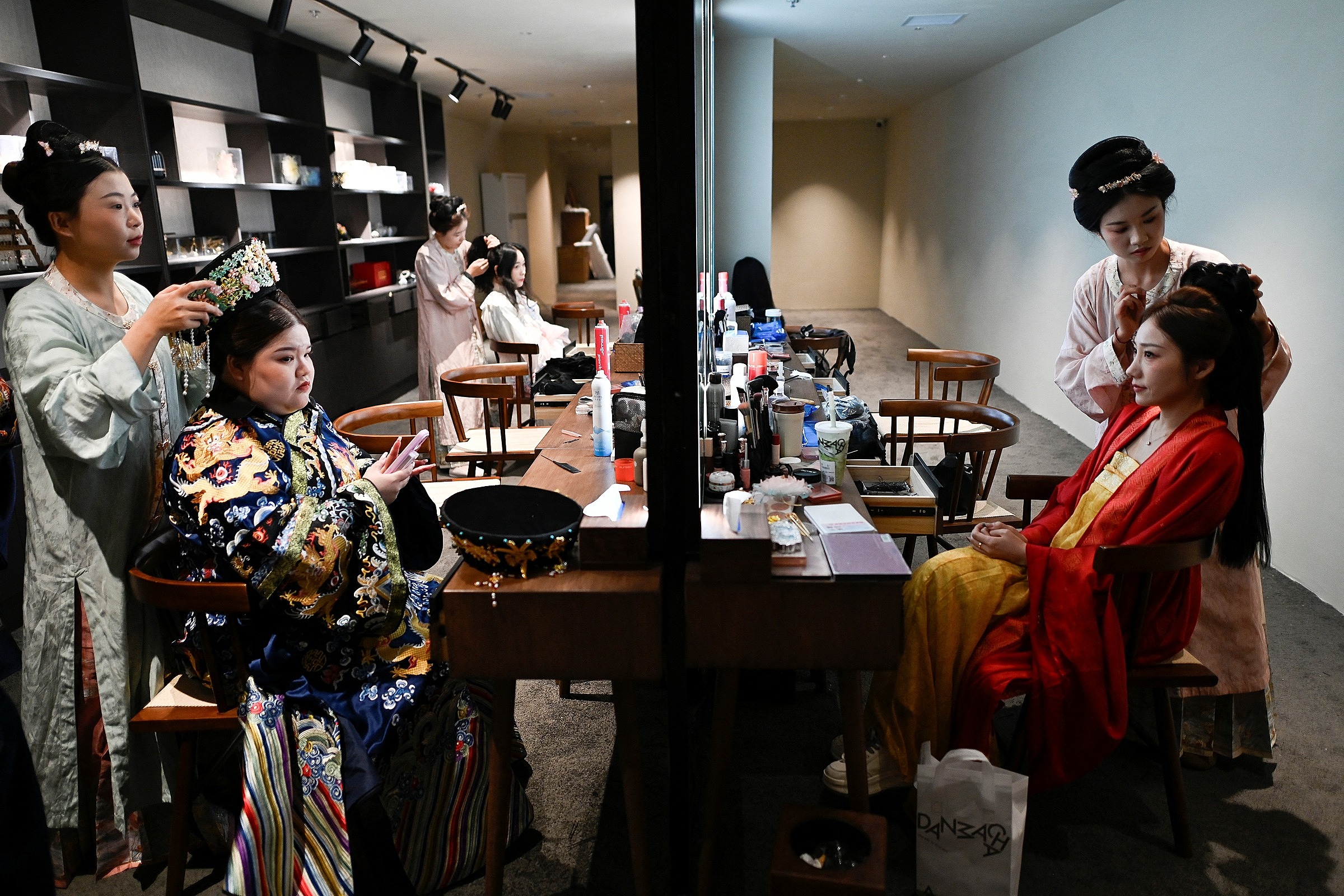 |
Staff help customers with hair and makeup before a meal at an ancient-themed restaurant in Beijing on 5/11. Photo: AFP
On the second floor, young female customers sit at dressing tables, waiting for experts to apply powder and blush. Wu Ke, 22, wearing a lilac Hanfu with a matching cloak, said she was drawn to the restaurant due to her interest in ancient Chinese culture and Song and Qing dynasty attire.
The announcer explained that while Chinese people are tightening their belts, they are still willing to spend on certain items and experiences.
"If we normally eat frugally and choose public transportation, then the money we save will definitely be spent somewhere worthwhile," she said.
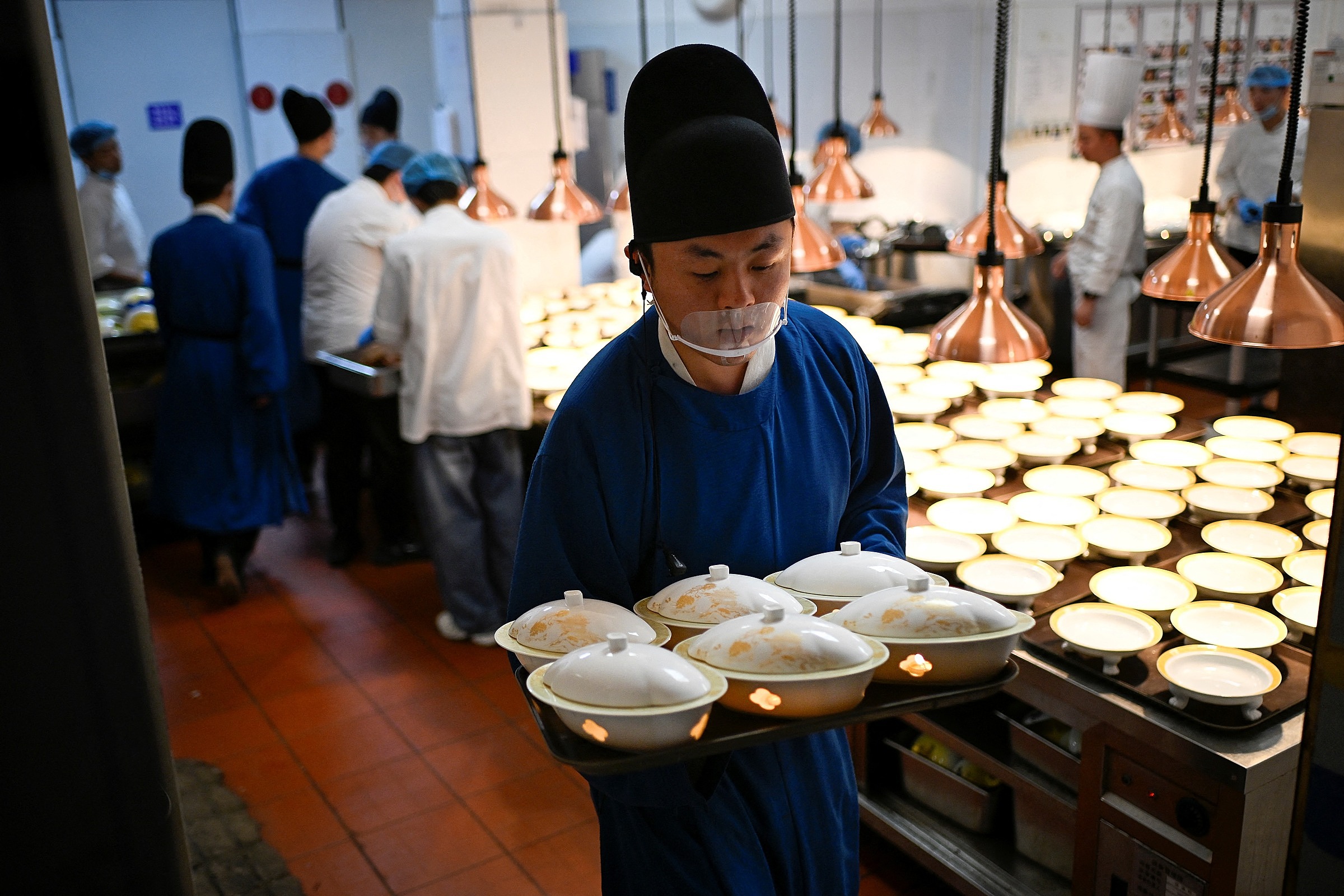 |
A staff member dressed as a eunuch carries food in the kitchen of an ancient-themed restaurant in Beijing on 5/11. Photo: AFP
In the main hall, Huang Jing, a teacher, smiled as she watched her 9-year-old daughter pose with an umbrella on a small wooden bridge in the hazy garden. Huang paid 900 Chinese yuan (126 USD) for her daughter to wear traditional attire, enjoy dinner, and have photos taken. Huang said this restaurant offers "role-playing" and cultural experiences, unlike typical restaurants.
In recent years, Chinese people, primarily women, have shown increasing interest in wearing Hanfu, especially when visiting famous tourist attractions.
The hashtag "hanfu" has appeared over 11 billion times on Xiaohongshu, an Instagram-like application, alongside countless posts of women in ancient attire with elaborate hairstyles.
Huang believes that young people are increasingly embracing traditional Chinese culture. She hopes future generations, like her daughter, will continue to inherit, promote, and spread awareness of Chinese culture.
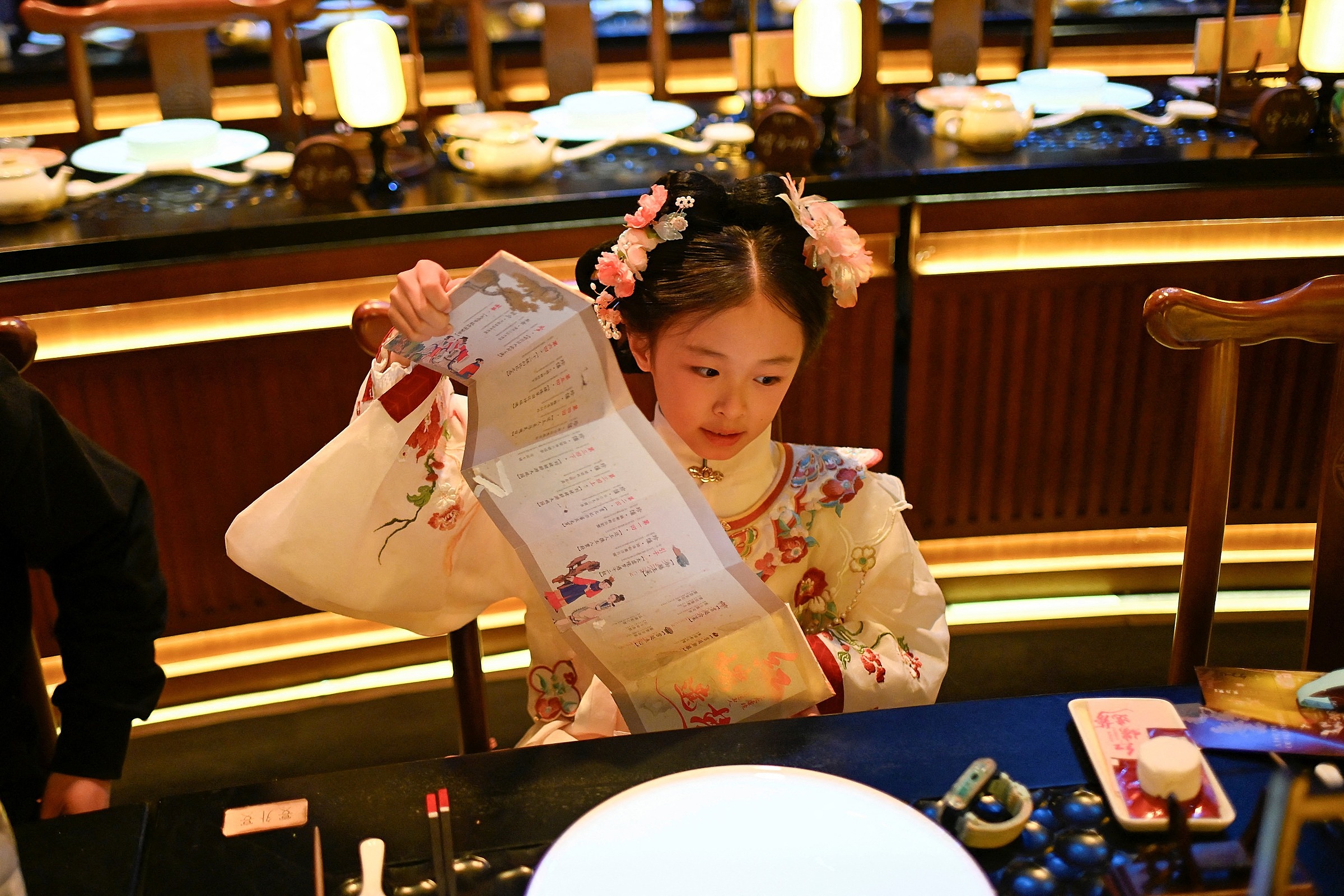 |
A young girl dressed and made up in ancient style at an ancient-themed restaurant in Beijing on 5/11. Photo: AFP
Yang Jianfei, a lecturer at Communication University of China, suggests that the revival of Hanfu indicates consumers are spending based on emotional motivations. Through dressing up as people from ancient times, they explore personal identity and connect with their national cultural roots.
After their makeovers, diners are led to a large circular room where staff, also in Hanfu, serve meals. Guests enjoy their food while watching artists perform dances and songs.
Wu stated that as long as she feels she receives worthy spiritual value, she will not save money but is willing to spend to "make herself happy."
Hong Hanh (According to AFP)