On 19/5, the US Justice Department announced a settlement agreement in the lawsuit between former President Donald Trump and his two sons against the Internal Revenue Service (IRS), which was filed in late January. In their lawsuit, the Trump family sought 10 billion USD in damages, alleging that the IRS failed to prevent a former contractor from leaking their tax records to the media.
Under the agreement, the plaintiffs withdrew their lawsuit, and the US Justice Department agreed to establish a "weaponization of government" fund totaling nearly 1,8 billion USD. This fund is intended to compensate individuals who claim they were unfairly prosecuted. The agreement also includes an addendum stating that the IRS is "permanently prohibited" from auditing or investigating tax records submitted by Trump, his family, and his businesses prior to 19/5.
The US Justice Department maintained that this was merely a procedural clause to ensure no further disputes arose after the settlement. However, this explanation has left tax experts skeptical.
"This is an unprecedented measure. Every citizen expects the tax law system and its enforcement mechanisms to be applied fairly to all", Daniel Werfel, a former IRS commissioner, told AP.
 |
The US Internal Revenue Service building in Washington in 4/2025. Photo: AFP |
The US Internal Revenue Service building in Washington in 4/2025. Photo: AFP
Tax experts suggest the agreement contains several points that "deviate from US practice and law". The IRS typically resolves matters through direct agreements with taxpayers or by referring cases to the US Justice Department. There is currently no indication that the IRS took either of these steps in Trump’s case.
The exemption clause, moreover, was included in a civil lawsuit, not a tax case. This exemption mechanism is broad and was not initiated by the IRS.
"This addendum appears to place the President, his businesses, and his family above tax law", said Brandon DeBot, policy director at the New York University Tax Law Center. According to DeBot, the US Justice Department lacks the authority to grant such "special protections" and is setting a dangerous precedent.
Senator Ron Wyden, a leading Democrat on the Senate Finance Committee, stated the settlement "clearly violates federal law".
"Democrats will fight every aspect of this self-serving agreement. Regardless of the outcome, future administrations and IRS leadership should consider this illegal directive entirely void", Wyden said.
Following the Watergate scandal in the 1970s, the US enacted regulations to protect the IRS's independence from political pressure. Executive officials are thus prohibited from interfering with the tax agency's audits, with some exceptions for the Attorney General.
This agreement's addendum was signed by acting Attorney General Todd Blanche, a former personal lawyer for Trump. Therefore, the Trump administration could argue it complied with legal regulations.
However, the incident still creates an unprecedented image in US politics, BBC commented. Trump became the first president to sue the government he led, then reached an agreement to end tax scrutiny against himself.
US media reported in 2024 that the IRS audit of President Trump revolved around suspicions he had double-deducted losses from a Chicago real estate project. If found in violation, Trump could face over 100 million USD in back taxes and penalties.
DeBot believes the US Justice Department is attempting to "wipe the slate clean" for Trump.
"This way, the President and related entities may not have to pay the taxes they owe", DeBot said. "That is creating an entirely different set of rules for the President compared to regular taxpayers".
Trump's tax records have long been a controversial topic. For decades, US presidential candidates and presidents typically voluntarily disclosed their tax records to demonstrate financial transparency. Trump was the first modern president to refuse this practice.
President Trump repeatedly explained that he could not release his records because he was under IRS audit, even though US law does not prohibit him from doing so.
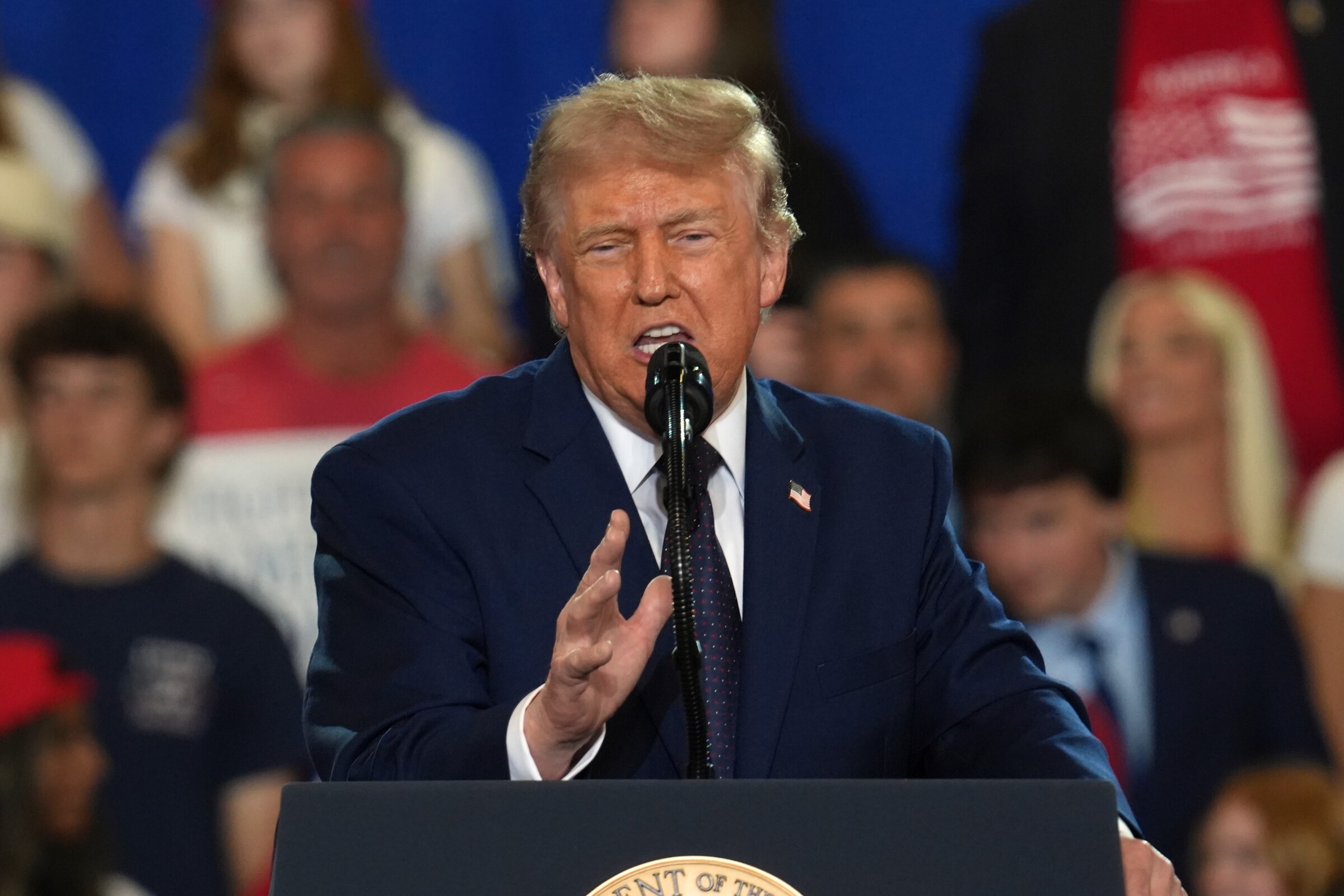 |
President Donald Trump speaks in Suffern, New York on 22/5. Photo: AP |
President Donald Trump speaks in Suffern, New York on 22/5. Photo: AP
The "weaponization of government" fund, valued at 1,776 billion USD, is also sparking debate over the use of US taxpayer money. This amount is drawn from a federal fund Congress allocated to address legal claims against the US government. The figure of 1,776 billion USD is said to be a reminder of 1776, the year the US declared independence.
However, instead of direct oversight by courts or Congress, the fund will be managed by a five-member committee, with Blanche authorized to appoint four members. This committee will determine who is eligible for compensation if they can prove they were "politically, personally, or ideologically targeted" by the government.
Democrats view this as a "slush fund", raising concerns it could be used to support Trump's allies or those involved in the 2021 Capitol riot. Some Republican lawmakers have also expressed skepticism about the fund's size and operational mechanism.
"Granting the executive branch the power to distribute such a large amount of taxpayer money with few constraints is highly susceptible to abuse and corruption", Rupa Bhattacharyya, a former Justice Department official who oversaw the 9/11 victims' compensation fund, told Reuters.
The first legal hurdles have emerged. Federal courts in Washington, D.C. and Virginia have begun receiving lawsuits alleging the compensation fund is unconstitutional and violates the Freedom of Information Act. Some legal experts believe the tax exemption mechanism for Trump will also be challenged in court.
"Granting broad immunity powers, as in this agreement, exceeds the actual authority of the US Justice Department", DeBot said.
Nhu Tam (According to AP, BBC, Reuters)