Republican Senator Bernie Moreno introduced the "Single Citizenship Act of 2025" draft bill on 2/12, proposing an end to dual citizenship for Americans. The bill aims to eliminate potential conflicts of interest by requiring US citizens to hold allegiance solely to the United States.
Under Moreno's proposal, no US citizen would be permitted to simultaneously hold citizenship of another country. Americans with two or more nationalities would need to choose which citizenship to retain within one year. Failure to comply would result in voluntary renunciation of US citizenship. Additionally, anyone acquiring foreign citizenship after the law takes effect would be deemed to have renounced their US citizenship. Moreno argues that an individual "cannot simultaneously hold US citizenship if they possess any foreign nationality".
Moreno, whose family immigrated from Colombia to the US when he was a child, states that becoming a US citizen at 18 was the "greatest honor of his life". He emphasizes swearing allegiance "solely to the United States". His spokesperson confirmed that he voluntarily renounced his Colombian citizenship upon naturalization.
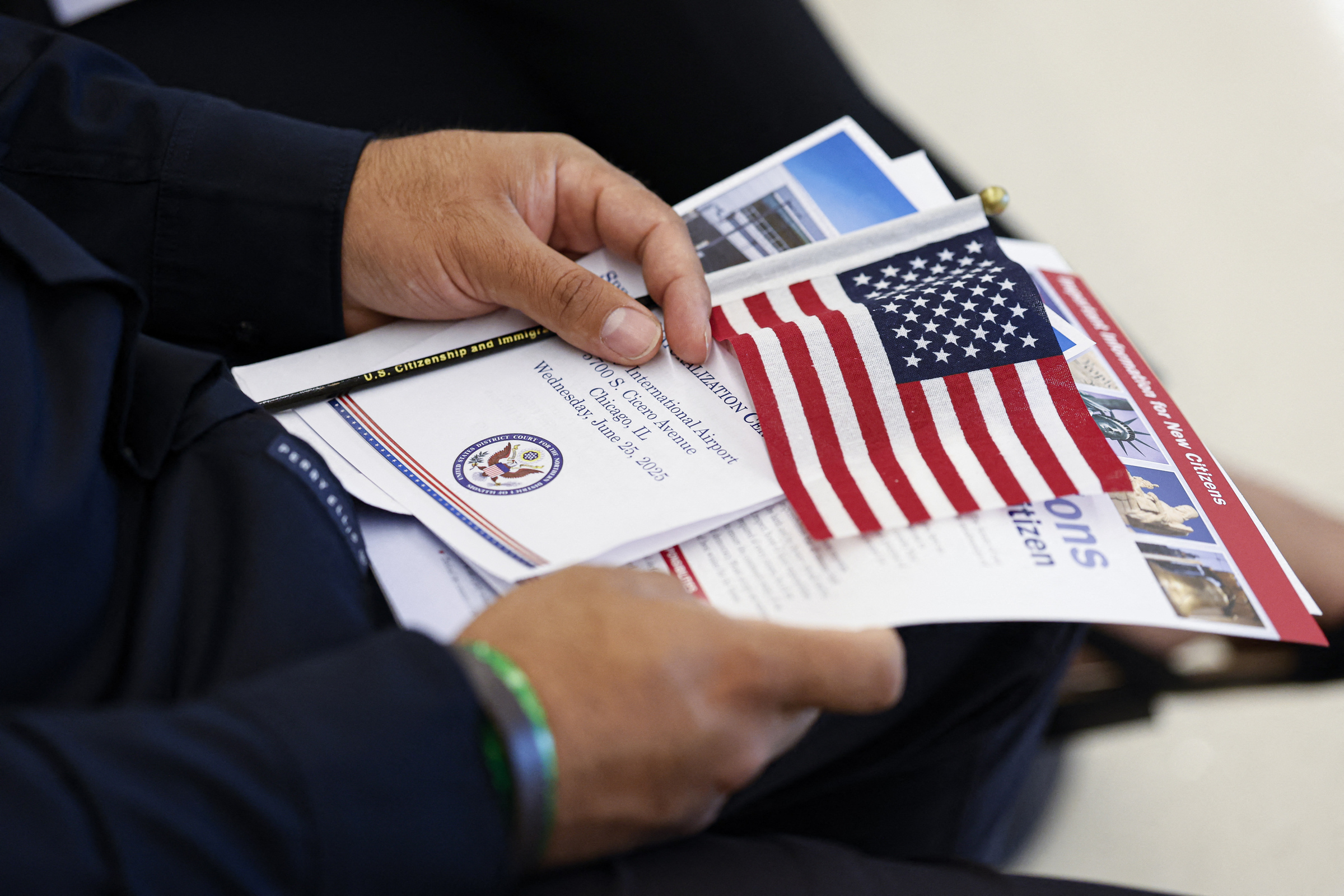 |
Documents at a naturalization ceremony for immigrants granted US citizenship in Chicago, Illinois, on 25/6. Photo: AP |
Documents at a naturalization ceremony for immigrants granted US citizenship in Chicago, Illinois, on 25/6. Photo: AP
This proposed legislation contradicts long-standing US policy. Current law does not require citizens to renounce US citizenship when naturalizing elsewhere, nor does foreign naturalization automatically risk loss of US citizenship. The US Supreme Court affirmed in a 1952 ruling that a person can "simultaneously possess and exercise the rights of citizenship in two countries". Despite the prevalence of dual citizenship, comprehensive data on US citizens holding multiple nationalities is unavailable, as most countries, including the US, do not fully track this information, according to a 2000 report by the Center for Immigration Studies.
Dual citizenship is common in the US; First Lady Melania Trump holds Slovenian citizenship alongside US citizenship, and Barron Trump, the youngest son of the US President, also holds dual citizenship. However, critics argue that dual citizenship can lead to conflicts of interest. For example, Elena Branson, a US-Russian dual citizen, was accused of operating as an "unregistered foreign agent", engaging in political lobbying and organizing events to serve Moscow's interests before fleeing to Russia in 2020.
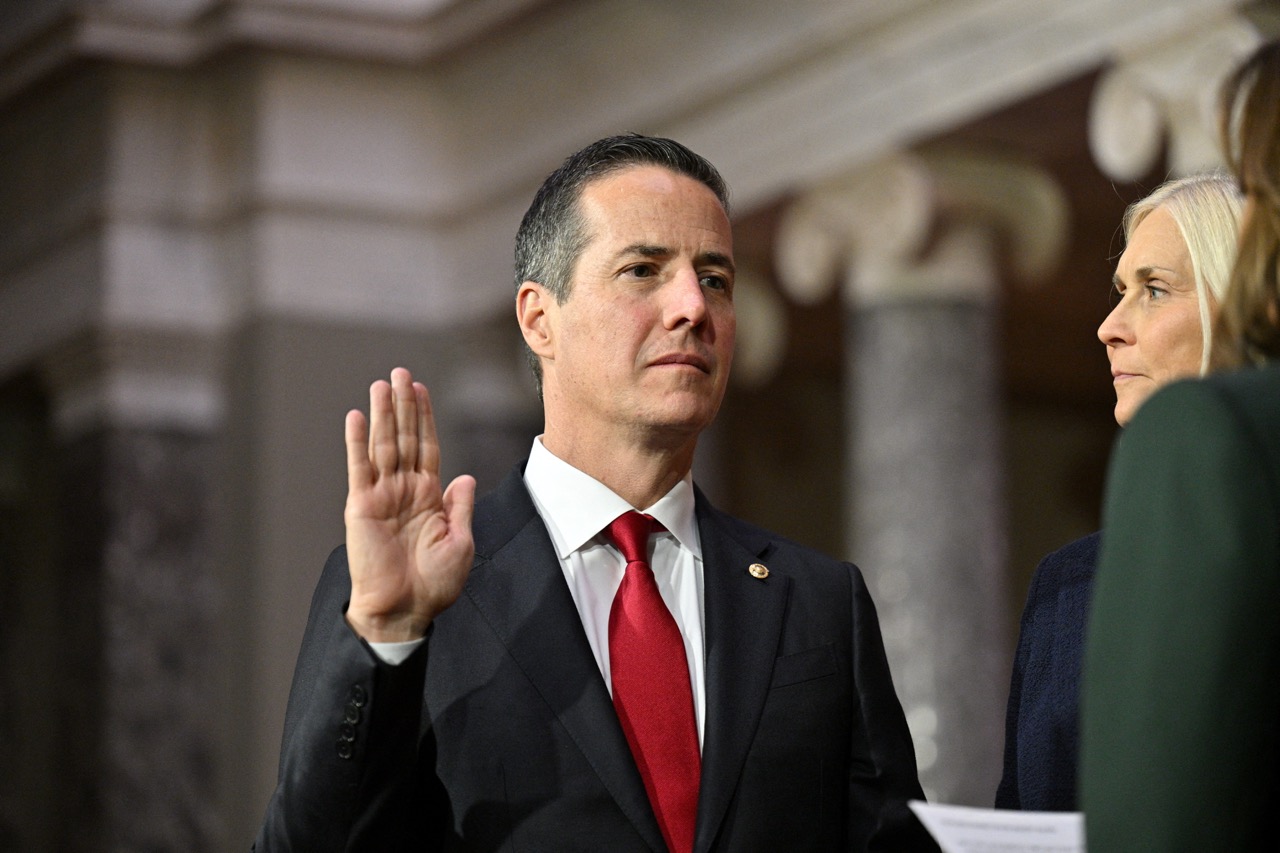 |
Republican Senator Bernie Moreno takes the oath of office on 3/1 in Washington. Photo: Reuters |
Republican Senator Bernie Moreno takes the oath of office on 3/1 in Washington. Photo: Reuters
Security experts highlight that dual citizenship can hinder obtaining security clearances for those working in federal or defense agencies, due to potential foreign government influence. Dual citizens may also face tax liabilities in both countries or be subject to military service abroad, creating risks of conflict with US interests.
If passed, Moreno's bill could impact millions of Americans with complex family situations, such as children born abroad to US citizen parents or Americans married and residing in other countries. Forcing them to renounce one citizenship could affect their right to live with family, inherit property, or maintain business operations. The bill also risks contradicting the US Constitution. In a 1967 ruling, the Supreme Court affirmed that Congress cannot revoke a citizen's nationality unless they voluntarily renounce it, and citizenship is protected under the 14th Amendment.
Even if enacted, the law's implementation is expected to face significant challenges. Washington currently lacks a comprehensive system for managing citizens' foreign passport data, which would be crucial for enforcing such a mandate.
By Thanh Danh (Cleveland.com, Hill, Fox)