President Lee Jae-myung today revealed he considered apologizing to North Korea but hesitated, fearing it would spark political and ideological conflict and lead to accusations of pro-North Korean sentiment. His remarks came during a press conference marking one year since his predecessor, Yoon Suk-yeol, declared martial law, which plunged the nation into chaos.
This statement comes as a special prosecutor investigates allegations that former President Yoon and several close military aides deployed drones carrying leaflets over Pyongyang last October. The alleged purpose was to provoke a North Korean military response, which would provide the Yoon administration a pretext to declare martial law.
Last month, South Korean prosecutors indicted Yoon, accusing him of aiding the enemy. They allege Yoon and others "conspired to create conditions for declaring an emergency martial law, thereby increasing the risk of inter-Korean armed conflict and harming national military interests." Last year, North Korea claimed it had evidence that South Korea used drones to drop leaflets over Pyongyang, a claim the South Korean military did not acknowledge at the time.
President Lee characterized current inter-Korean relations as "completely blocked," emphasizing that unilateral trust-building measures from Seoul might be necessary to reopen communication channels.
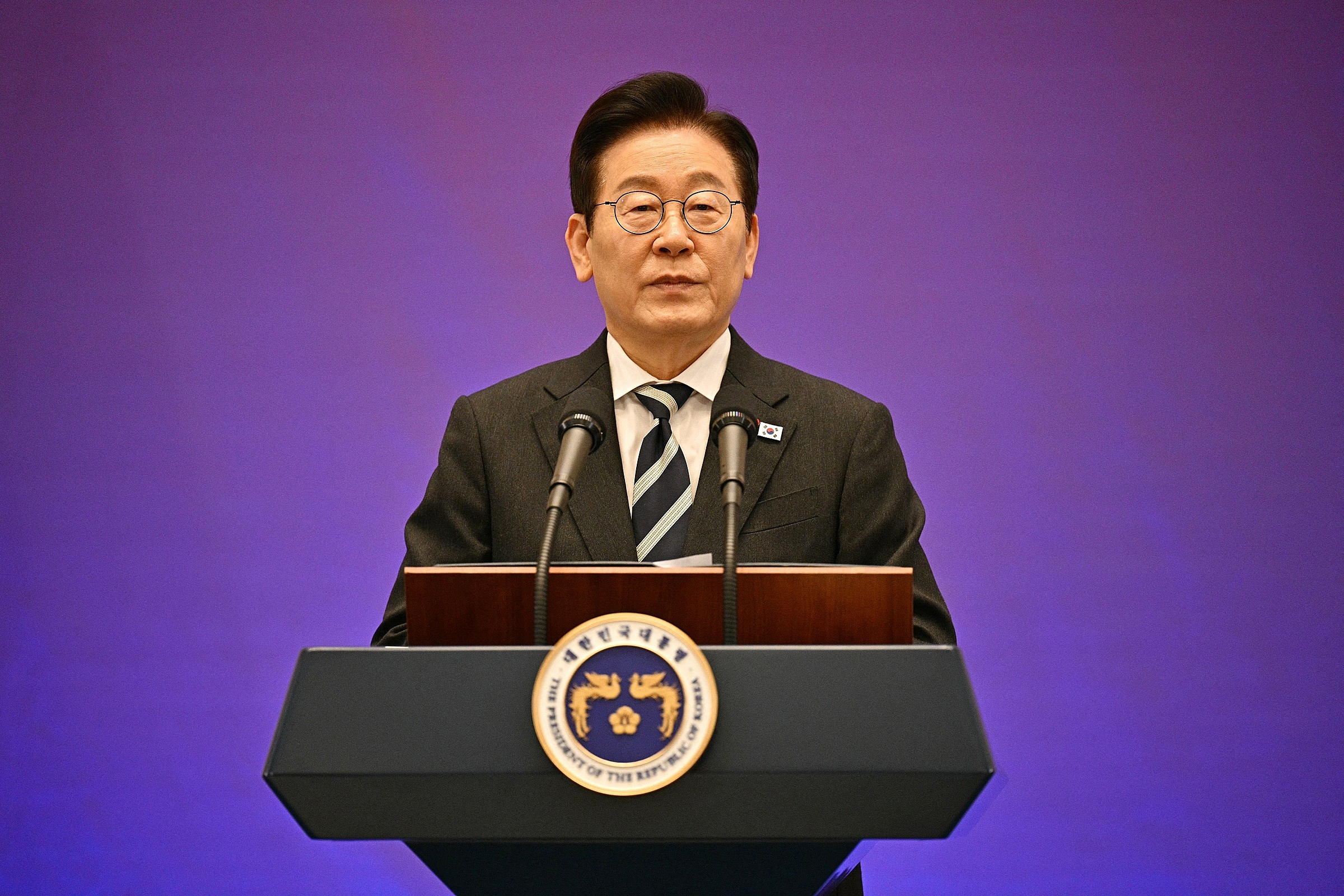 |
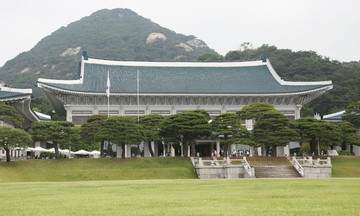
South Korean President Lee Jae-myung at a press conference at the Blue House on 3/12. *Photo: AFP*
Lee also indicated a willingness to compromise on the long-standing issue of joint South Korea-US military drills. He suggested Seoul could discuss scaling down these exercises if needed to facilitate new talks between Washington and Pyongyang.
He stressed Washington's greater influence on Pyongyang's decision-making, noting that North Korean leadership views the US, not South Korea, as the sole entity capable of providing reliable security guarantees. Addressing deterrence and nuclear policy, Lee reaffirmed his commitment to nuclear non-proliferation. He stated that issues such as uranium enrichment, spent fuel recycling, and the potential acquisition of nuclear-powered submarines "do not violate non-proliferation standards" as they do not involve the development of nuclear weapons.
Lee asserted that South Korea's conventional military capability is sufficient to deter North Korea, noting that its defense spending surpasses Pyongyang's annual GDP. Even without US troops stationed, President Lee believes South Korea's military strength ranks among the top 5 globally. He emphasized the need for persistent efforts to de-escalate tensions and rebuild dialogue channels to prevent the current deadlock from prolonging.
North Korea has not yet commented on President Lee's statements.
By Huyen Le (Based on AFP, Korea Times)