Door studs symbolized hierarchy, adhering to strict regulations regarding quantity and color during the Ming (1368–1644) and Qing (1644–1912) dynasties. Firstly, the number of door studs had to be odd because, in traditional Chinese culture, odd numbers represent yang or light, while even numbers represent yin or darkness.
The number 9, being the largest odd number less than 10, became exclusive to the emperor, symbolizing supreme power and divine kingship.
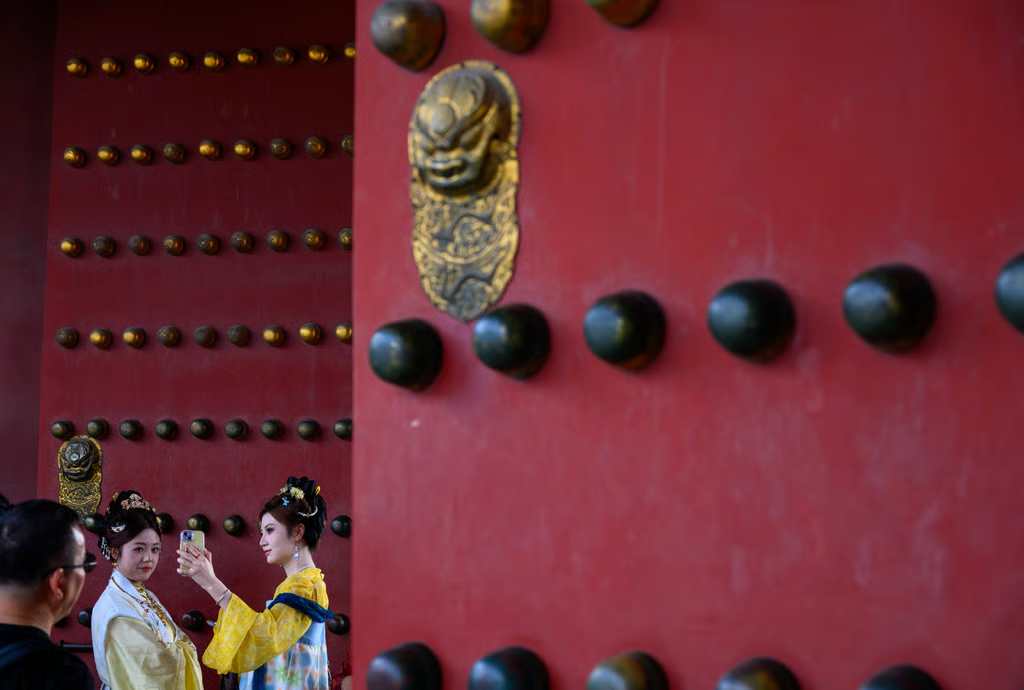 |
Tourists take photos next to a gate of the Forbidden City, now the Palace Museum, on 2/10/2025. *Xinhua* |
Within Beijing's Forbidden City, the gates are painted red, a color representing dignity and prosperity. The main gates are adorned with 81 gilded door studs, arranged in a strict 9x9 grid pattern.
However, the number of door studs on Donghua Gate, the eastern gate of the Forbidden City, is an even 72. According to researchers, several theories explain this exception. One theory suggests it was once a "ghost gate", where the coffins of emperors, such as Shunzhi, Jiaqing, and Daoguang of the Qing dynasty, departed the Forbidden City. The use of an even number of studs aimed to distinguish death from life.
Another explanation posits that the last Ming dynasty emperor, Chongzhen, fled through Donghua Gate before hanging himself from a tree as the dynasty collapsed. After the Ming dynasty, when the Qing dynasty took power, they rebuilt the gate, omitting one row of door studs to signify the gate's failure in protecting the regime.
A third interpretation suggests that the east is the direction of wood, and according to the five elements, wood overcomes earth. Therefore, an even number of door studs was used to neutralize the power of wood.
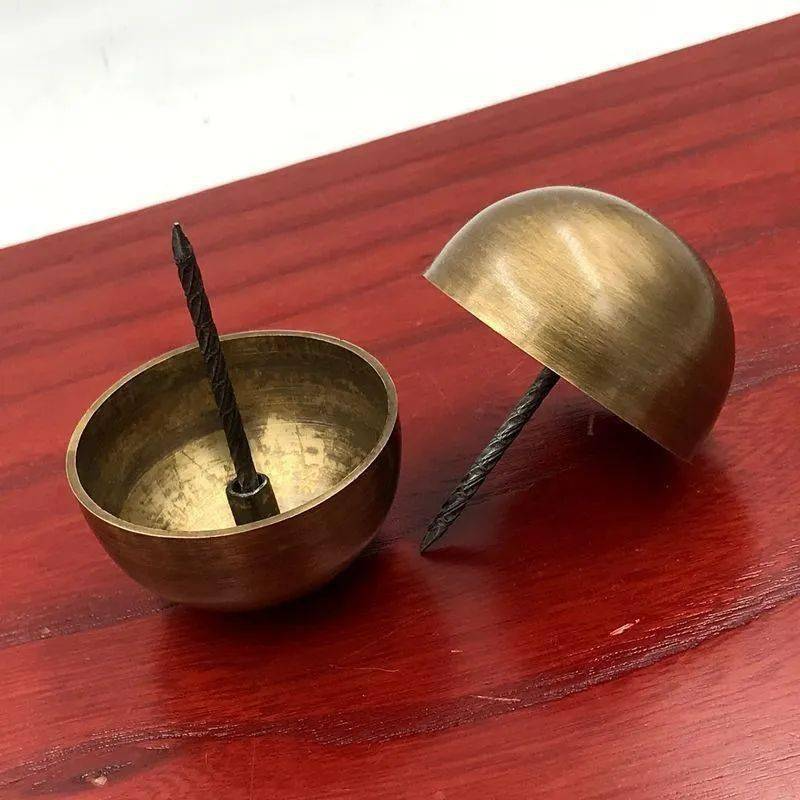 |
Structure of traditional Chinese door studs. *Sohu* |
Only the emperor was permitted to use 81 door studs. During the Qing dynasty, princely residences used 63 studs, and their sons' residences used 45. Dukes and marquises were also allowed to install door studs, using 49 and 25 respectively. They were only permitted to use iron studs. Commoners were not allowed to use door studs.
The color of the gates was also strictly regulated. During the Qing dynasty, red gates were reserved for the imperial family and officials. Wealthy individuals could paint their gates black, but commoners were not allowed to paint their gates at all.
The earliest documentation of door studs dates back to the Northern Wei dynasty (386-535). In fact, door studs served more than just decorative purposes. As many gates were large and incorporated multiple wooden panels, the studs also functioned as reinforcing components.
They were designed in a round shape for aesthetic reasons. Because the studs were hollow, during the Song dynasty (960-1279), they were referred to as "floating bubbles".
 |
Security forces patrol the Palace Museum on 4/6/2012. *Reuters* |
The custom of touching door studs today also has historical roots. During the Ming dynasty, women would often close their eyes and touch the door studs when going out on the evening of January 16. This was one of the few days ancient women were allowed to go out in the evening. This walk was named "walking to dispel illness", with the belief that touching the door studs would bring them good fortune.
Some also believed that touching the door studs would help them give birth to sons, as the Chinese word for door stud, "men ding", is a homophone for "nan ding" (a male member of the family). They also believed that the higher they touched the door studs, the more luck they would have.
Hong Hanh (According to SCMP)