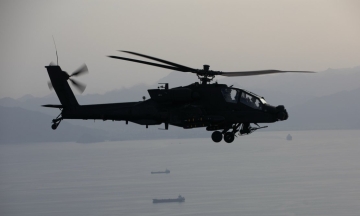
President Donald Trump announced on Truth Social on 9/6 that Iran had shot down one of America's advanced Apache helicopters on patrol over the Strait of Hormuz "last night". The US leader confirmed the two pilots were safe and unharmed. However, he stressed, "the US is compelled to respond to this attack."
Two US officials told CNN the army helicopter crashed off Oman due to an Iranian unmanned aerial vehicle (UAV). Another source identified the weapon as a Shahed suicide UAV.
 |
President Donald Trump boards an executive jet in Palm Beach, Florida on 1/3. *AFP* |
The US Central Command (CENTCOM) reported the two crew members were rescued within about two hours. Naval Forces Central Command and the 82nd Airborne Division conducted the rescue, supported by US Navy and Air Force units.
A US official revealed that the two pilots were rescued by a navy unmanned surface vessel. This vehicle, similar in design to a speedboat, may belong to Task Force 59 of the 5th Fleet.
This marks the first time Washington has officially blamed Tehran for the Apache helicopter crash near the Omani coast on 9/6. It also signifies the first US loss of an Apache helicopter in conflict with Iran.
Trump's statement intensified doubts about the fragile ceasefire announced on 8/4. The day before, Israel and Iran had paused mutual attacks at the US President's request. However, Tehran warned it would resume military action if Israel continued targeting Hezbollah forces in Lebanon.
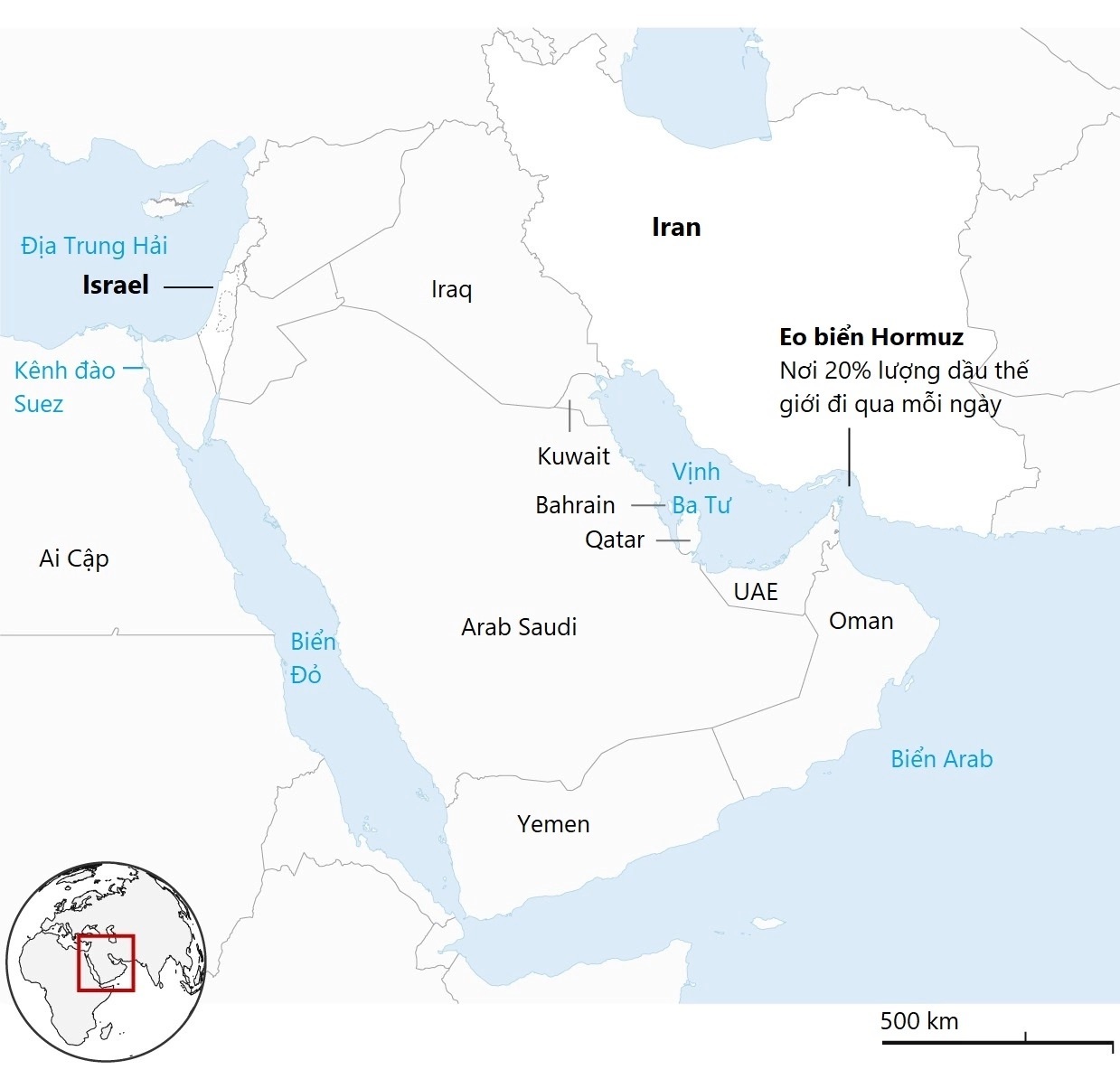 |
Location of Iran, Oman, and the Strait of Hormuz. *Guardian* |
The Islamic Revolutionary Guard Corps (IRGC), a key force controlling operations in the Strait of Hormuz, has not commented on the US helicopter crash. Minutes before Trump's post, Iranian Parliament Speaker Mohammad Bagher Ghalibaf issued a stern warning to Washington.
"We prioritize the language of diplomacy, but we are even better at other languages. If the enemy breaks its commitments, we will turn to what we do best," Ghalibaf wrote on social media platform X, implying a readiness to use force.
Apache squadrons have recently operated closer to Iranian territory, including Tehran-controlled islands in the Strait of Hormuz and the Persian Gulf. The United Arab Emirates (UAE) has also used this helicopter model to intercept Iranian unmanned aerial vehicles.
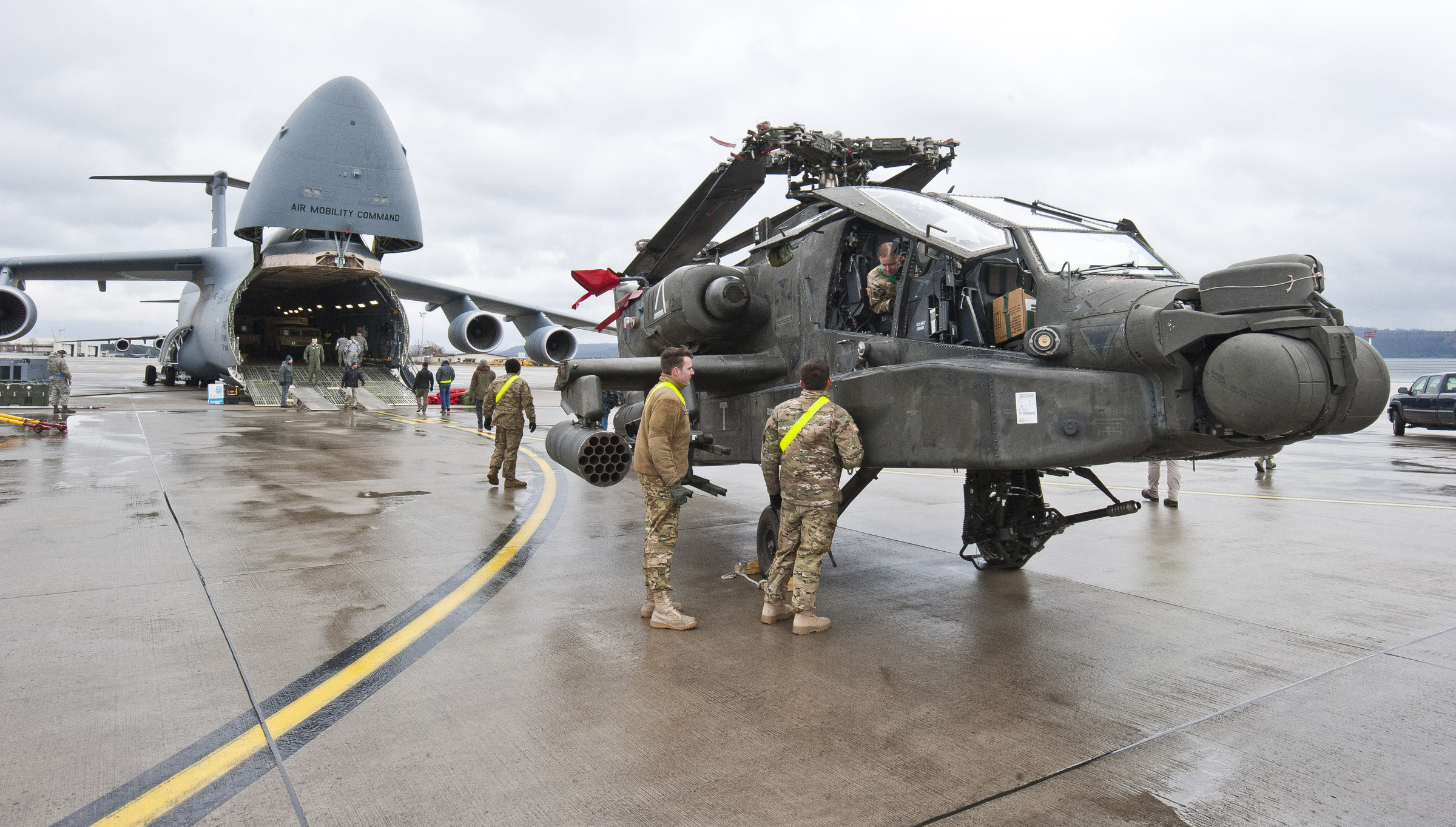 |
An AH-64 Apache attack helicopter at Ramstein, a US air base in Germany, in 2/2017. *AFP* |
The US military has lost at least 40 aircraft in six weeks of conflict with Iran, including key planes like the "eyes in the sky" E-3G Sentry and a series of F-15E multirole fighter jets.
As of early 2025, the US Army will possess a total of 750 Apache helicopters: 160 AH-64D units and 590 advanced AH-64E aircraft.
Each AH-64D helicopter costs 31-35 million USD, while the AH-64E typically has an ex-factory cost of 35 million USD. Including components, technical support, weapons, and operational training, each AH-64D/E helicopter can cost up to 50-65 million USD.
Thanh Danh (According to CNN, Reuters)