Brent crude oil prices surged over 2% to 107.5 USD per barrel by 7 a.m. on 27/4, following the collapse of peace talks between the United States and Iran. US West Texas Intermediate (WTI) crude also climbed nearly 2%, reaching 96.2 USD.
Weekly figures showed Brent and WTI crude prices increased by nearly 17% and 13% respectively, marking the largest weekly gains since the war began. Brent crude, in particular, reached its highest point in three weeks.
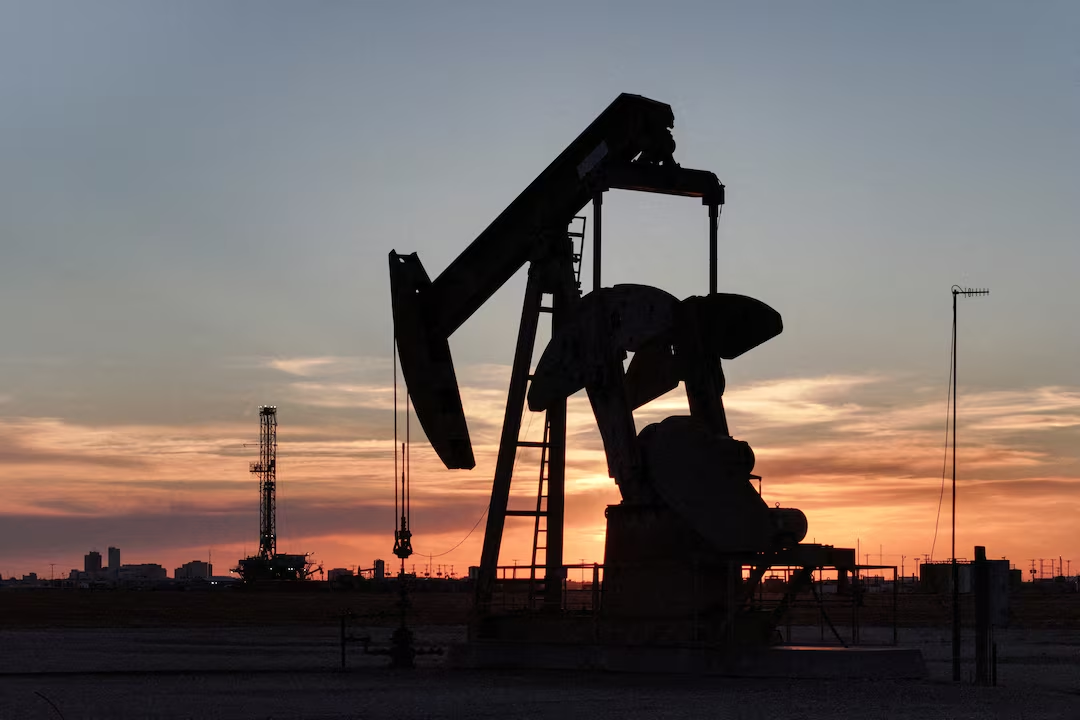 |
Oil pumps and drilling rigs south of Midland, Texas, US, 11/6/2025. Photo: Reuters |
Last weekend, US President Donald Trump canceled plans to send an envoy to Islamabad, Pakistan, for negotiations with Iran. He explained on Truth Social that the effort was "a waste of too much travel time and effort," citing "terrible power struggles and chaos among their leadership."
"Furthermore, we hold all the cards, and they have none," Trump stated. The US leader added that if Iran wished to speak, all they needed to do was call.
"You know, we have telephones – good, secure telephone lines. The deal is very simple: They can't have nuclear weapons, otherwise there's no reason to meet," Trump said on Fox News' "The Sunday Briefing" program.
Iran's Foreign Minister Abbas Araghchi arrived in Islamabad over the weekend but only met with Pakistani officials before departing. "No meeting was planned between Iran and the US," Iran's Foreign Ministry spokesperson Esmaeil Baqaei wrote on social media on the evening of 24/4.
Tony Sycamore, an analyst at financial services firm IG, suggested that the US move was "kicking the ball" of negotiations to Iran, a nation that may have to halt production once its oil storage capacity is exhausted.
Tehran has largely closed the trading strait, while Washington imposed a blockade on its adversary's ports. Traffic through the Strait of Hormuz remains restricted. According to shipping data from Kpler, only one oil tanker entered the Gulf on 26/4.
Given the new situation, Goldman Sachs raised its Quarter IV Brent crude price forecast to 90 USD per barrel, and WTI to 83 USD, in a report released yesterday. This adjustment cited reduced output from the Middle East. The report stated, "Economic risks are far greater than the baseline scenario based on crude oil prices we have presented."
Analysts from Goldman Sachs highlighted that the reasons include unusually high refined product prices, the risk of product shortages, and an unprecedented energy shock.
Although a ceasefire has temporarily halted full-scale hostilities, the two countries have not yet reached an agreement on the terms for reopening the Strait of Hormuz, causing energy prices to surge.
Bao Bao (via CNBC, Reuters)