A new children's book, "Finneas in the Big World," penned by three high school students—Mai Watanabe, Chloe Kong, and Giang Tran—takes readers on an expansive journey with a young elephant named Finneas. The book, which recently launched in Hanoi on 4/7, aims to instill values of environmental conservation, wildlife protection, and the importance of friendship in young readers.
The story follows Finneas as he searches for a new home after his savanna is devastated by human activity. His quest leads him across continents, where he encounters diverse animals and explores various natural landscapes and indigenous cultures. The authors, who began conceptualizing the book in their 9th grade and took almost three years to complete it due to their studies, were inspired by the principles of sustainable development. They sought to deliver environmental knowledge to children in an engaging and accessible manner.
According to Mai Watanabe, the elephant character symbolizes ongoing environmental issues, including the threats to wild African elephants. Giang Tran added that the greatest motivation for Finneas to continue his journey, despite the challenges, is the unwavering support of his friends, thus celebrating the value of friendship.
On his journey, Finneas befriends Abina and Arno, and together they traverse diverse regions such as the Atlantic, the Amazon rainforest, Ireland, and the Arctic. In each location, Finneas discovers more about local wildlife, unique ecosystems, and cultural practices. Through conversations with characters like a polar bear, a toucan, and a whale shark, the authors subtly weave in messages about wildlife and nature conservation. The book introduces common animals specific to each habitat; for instance, Finneas meets a toucan in the Amazon and converses with a polar bear in the Arctic, learning about its thick fur and small ears that help it survive in freezing temperatures. The trio also witnesses remarkable natural phenomena, such as the vibrant Northern Lights illuminating the sky as they fly over the Arctic in a hot air balloon.
One memorable stop for Finneas is the Buon Don festival in Vietnam's Central Highlands, where the characters encounter an elephant wearing a conical hat and selling traditional fried spring rolls. After his extensive travels, Finneas realizes that many places are either too cold or lack sufficient grass, making them unsuitable for him. He confides in Abina and Arno, stating, "I can't live anywhere but my home in South Africa." Determined to rebuild, he invites all the friends he made along the way to return to South Africa with him to plant seeds and trees, restoring a lush, green habitat.
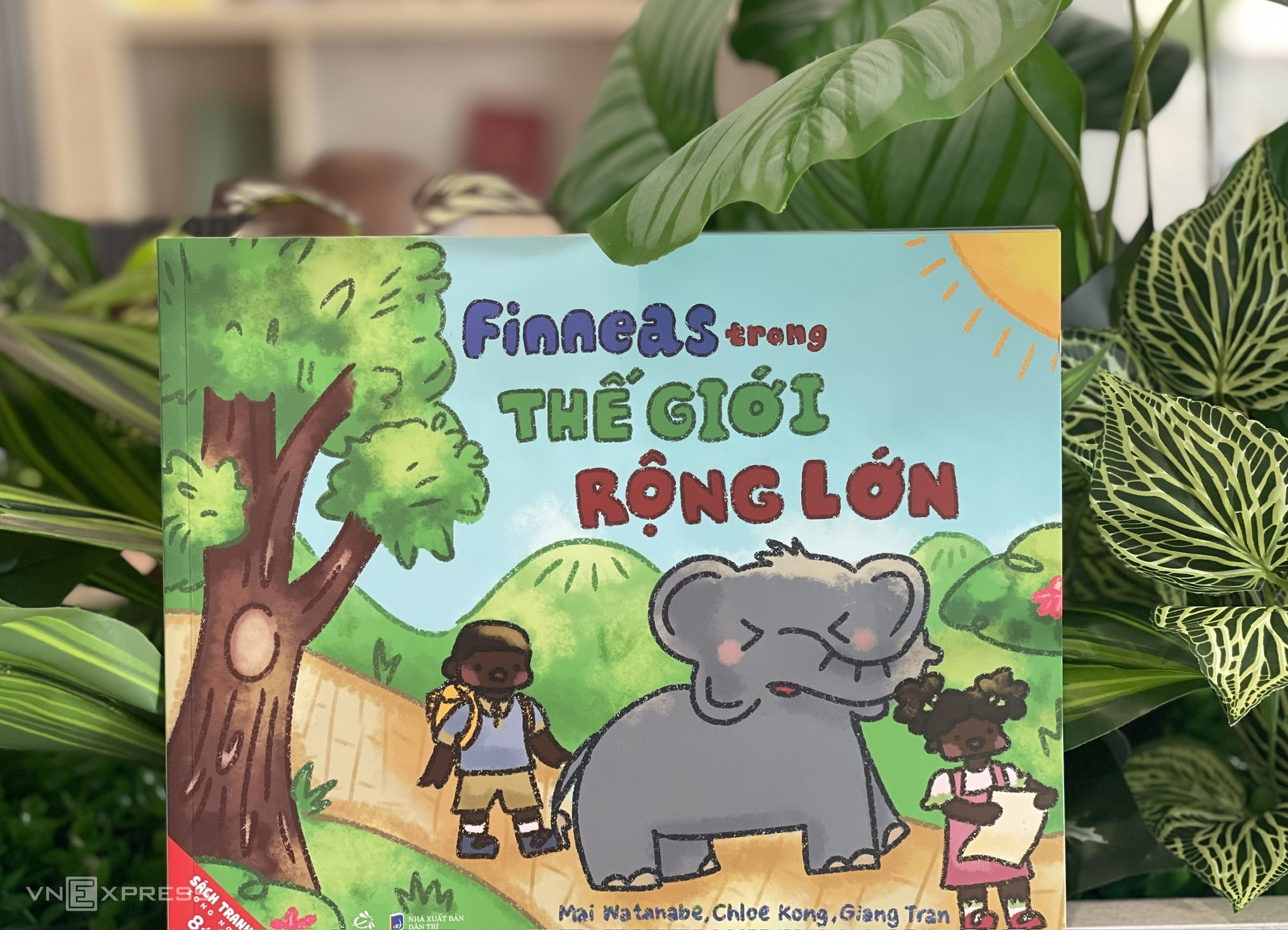 |
The bilingual Vietnamese-English book, illustrated with charcoal sketches, is published by Dan Tri Publishing House in collaboration with Quang Van Publishing and Education Joint Stock Company. Photo: Phuong Linh
Beyond the adventure, the authors convey a crucial message: everyone, especially children, must cultivate a greater awareness of nature and the animals around them. This includes reducing waste, conserving water, and making conscious daily choices to minimize environmental impact. The book also encourages young readers to explore the world freely, forge meaningful connections as they grow, and understand that overcoming failures can reveal what truly matters.
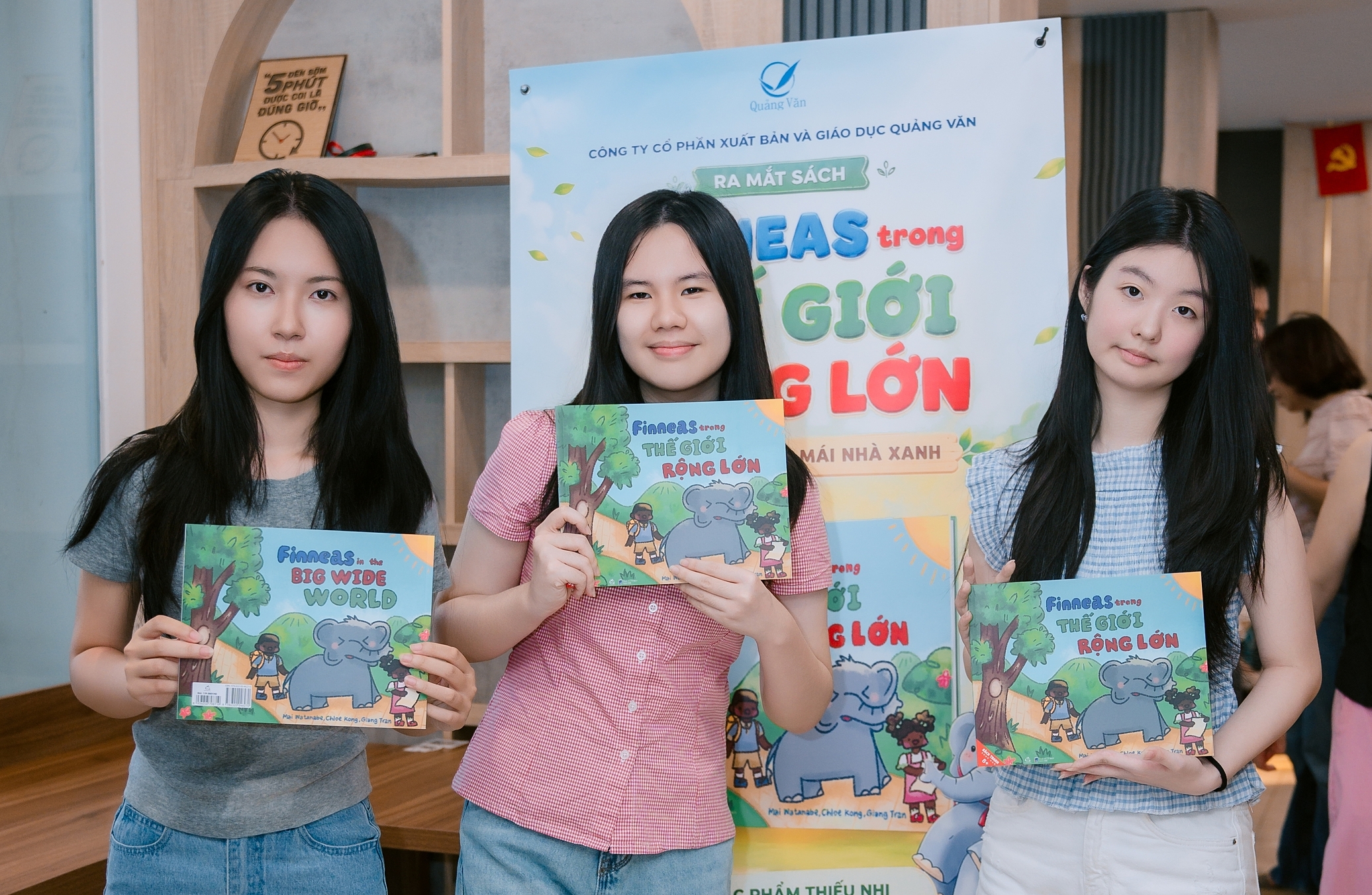 |
From left: Giang Tran, Mai Watanabe, Chloe Kong at the picture book launch event. Chloe Kong is Korean-American, while Mai Watanabe is of Japanese-Vietnamese heritage. All three authors currently live in Hanoi. Photo: Quang Van
At the book's launch event in Hanoi on 4/7, writer Thanh Cam praised the three young authors for delivering a timely message without being overly didactic, thereby making environmental protection more accessible to young readers. She particularly noted the authors' skillful integration of Vietnamese culture, exemplified by the conical hat and familiar fried spring rolls. The collaborative effort of Finneas and his friends in planting trees underscores the idea that protecting our "common home" is a shared responsibility, not a solitary endeavor.
Phuong Linh