Ms. Dinh, 47, sought care at Tam Anh General Hospital TP HCM after experiencing severe abdominal pain, fatigue, and loss of appetite. Six months prior, she had discovered a small liver hemangioma but did not pursue follow-up examinations. A recent CT scan revealed the tumor had grown to a diameter of 16 cm, occupying most of her liver parenchyma. This rapid growth and its associated symptoms prompted immediate medical intervention.
Dr. Thi Van Gung, Head of the Endovascular Intervention Unit at the Imaging Diagnosis and Interventional Radiology Center, highlighted the high complication risk associated with such large liver hemangiomas. While most are benign, rapid proliferation and increasing volume can compress the liver and surrounding organs, leading to atrophy of adjacent liver tissue and persistent pain. There is also a risk of tumor rupture and dangerous internal bleeding.
Considering the tumor's size, Dr. Gung explained that open surgery would pose risks of significant blood loss, require a large incision, and lead to extended recovery. Consequently, doctors opted for endovascular intervention. This procedure, supported by digital subtraction angiography (DSA) and ai software guidance, aims to block the blood supply to the tumor. This minimally invasive technique reduces pain, shortens recovery time, and can be repeated to enhance treatment efficacy.
 |
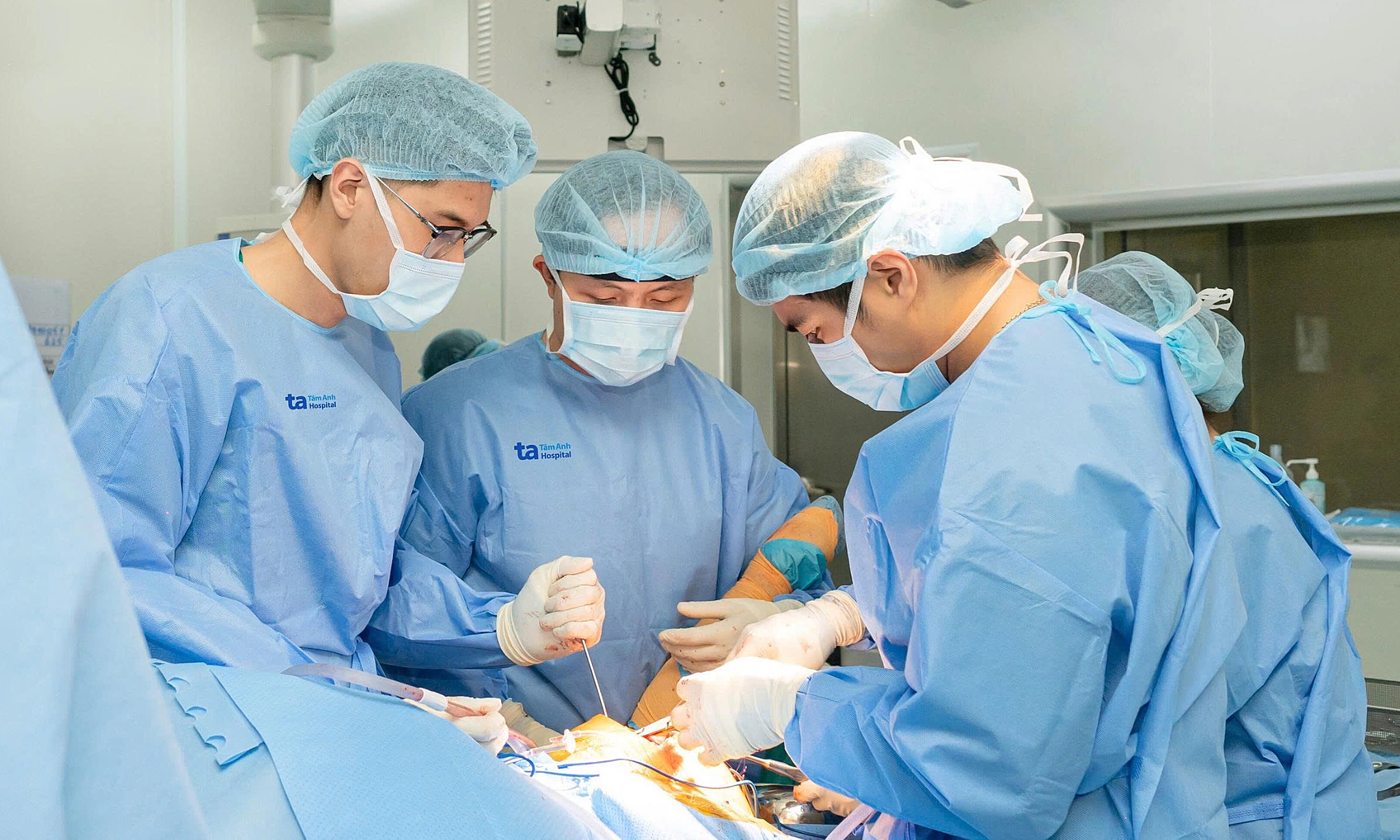
Doctor Gung (right) and Doctor Duc perform an intervention to block the tumor's blood supply. *Photo: Tam Anh General Hospital.* |
The medical team performed the procedure under anesthesia. They accessed the femoral artery and guided a catheter through the vascular system to the hepatic artery, utilizing the DSA system and ai software for navigation. Doctors selectively identified the arterial branches supplying the tumor and then injected embolic material to cut off its blood source.
The first intervention successfully reduced the tumor's size from 16 cm to approximately 10 cm. Three months later, Ms. Dinh underwent a second intervention, which further shrank the tumor to 6 cm, a substantial reduction in its volume. Following a third intervention, Ms. Dinh's abdominal pain completely resolved, and she has returned to nearly normal daily activities.
 |
The liver hemangioma before (right) and after (left) intervention showed significant size reduction. *Photo: Tam Anh General Hospital.* |
Doctors emphasize that individuals with liver hemangiomas should not be complacent, even if the tumor is benign. Regular check-ups are crucial to monitor the tumor's growth rate, particularly if symptoms such as abdominal pain, rapid abdominal enlargement, or prolonged fatigue emerge. Tumors that increase rapidly in size require early assessment and intervention to mitigate the risk of dangerous complications.
Nhu Ngoc
*The patient's name has been changed.