


According to Gavi, the Vaccine Alliance, 2026 marks a major transformative phase for vaccine development, driven by scientific breakthroughs and global collaboration. mRNA technology continues to expand its applications, moving towards therapeutic treatments. Concurrently, recombinant protein and viral vector technologies maintain their pivotal role due to their capacity for large-scale, cost-effective production.
Innovations in adjuvants and vaccine delivery methods, such as targeting nasal, oral, or pulmonary mucosa, or using needle-free patches, promise to enhance immune efficacy and increase accessibility in resource-limited countries. Artificial intelligence is also revolutionizing vaccine development, aiding in the identification of potential targets and the design of more precise and rapid clinical trials.
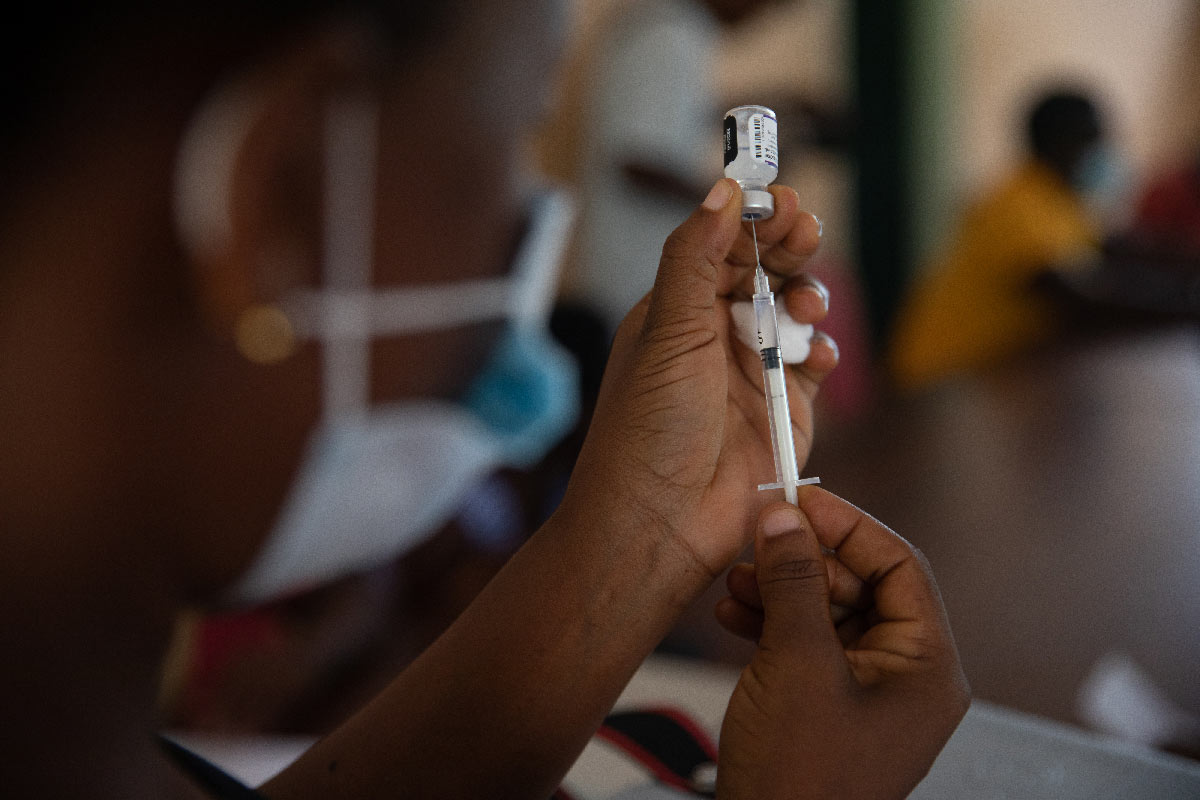 |
Healthcare workers prepare to administer a Covid-19 vaccine. Photo: Gavi |
A notable priority is the pre-F fusion respiratory syncytial virus (RSV) vaccine designed for pregnant women. This vaccine targets the RSV F protein in its prefusion state, a specific structure of the F protein before the virus fuses with human cells. By maintaining this form, the vaccine can stimulate the body to produce significantly stronger neutralizing antibodies compared to the post-fusion state.
This vaccine helps transmit protective antibodies to newborns before birth, reducing the risk of severe illness in the first months of life. Trials have demonstrated over 80% protective efficacy, while also decreasing the burden of hospitalization.
In the field of enteric vaccines, 2026 will see significant progress with an oral cholera vaccine developed by a South African company, which will implement a closed-loop production program in Africa for the first time. Additionally, new data from rotavirus vaccines produced in India continue to affirm their substantial impact on reducing child mortality and morbidity.
For HIV, the mRNA platform is undergoing trials to generate a more robust and precise immune response. Research focuses on gradually training the immune system to produce broadly neutralizing antibodies, a key factor in preventing HIV. 2026 will also feature additional phase one clinical trials for HIV vaccines. These aim to test the immune response from the injection. Furthermore, regional vaccine ecosystems are being built, increasing production capacity and shifting from an aid-dependent model to self-sufficiency.
Van Ha


