


Response:
In in vitro fertilization (IVF) treatment, cases of low ovarian reserve may require multiple cycles of ovarian stimulation (egg collection) to accumulate a sufficient number of oocytes for embryo creation. With 7 oocytes, it is common to create approximately 3-4 day-3 embryos. Your result of 5 day-3 embryos is relatively positive, higher than the average.
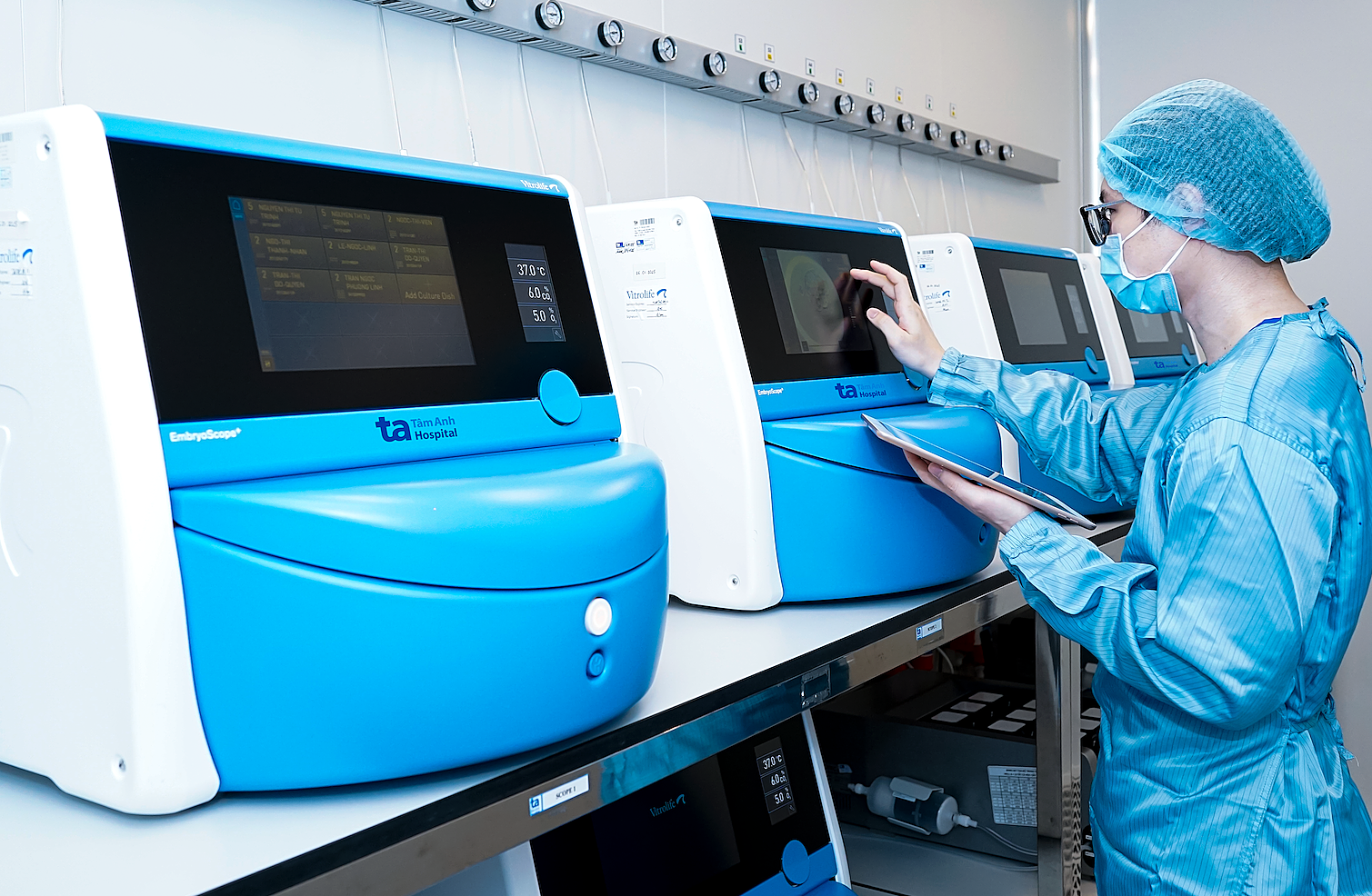 |
The Time-lapse embryo culture system integrated with artificial intelligence (AI) in an ISO 5 lab. Photo: IVF Tam Anh |
During development up to day 3, embryos rely entirely on the egg's energy supply. A crucial event called "gene activation" occurs at the end of day three, when the embryo begins to synthesize its own proteins based on its genetic material.
Culturing embryos to day 5 does not improve them, but rather acts as a natural selection process to identify embryos with the highest potential. At this stage, the embryos are also closer to the time of implantation in the uterus. Therefore, embryos that continue to develop from day 3 to day 5 generally have a higher chance of successful implantation.
However, embryo quality is not the only factor determining the chance of pregnancy. Uterine receptivity and the endocrine environment also play significant roles. Therefore, doctors consider factors such as the current number of embryos, day-3 embryo quality, maternal age, obstetric history, and any accompanying medical conditions to advise on the feasibility of culturing embryos to day 5. This also includes preparing the uterine lining to optimize the chances of pregnancy.
At the Center for Reproductive Assistance, Tam Anh General Hospital TP HCM (IVF Tam Anh TP HCM), the Time-lapse embryo culture system, combined with artificial intelligence (AI), continuously monitors embryo development in a stable environment. This eliminates the need to remove embryos, reducing environmental impact and increasing the chance of obtaining optimal day-5 embryos. For older patients (over 35 years old), preimplantation genetic testing for aneuploidies (PGT-A) is often considered to screen for chromosomal abnormalities, thereby selecting embryos with the best developmental potential.
In cases of recurrent implantation failure, hysteroscopy is often indicated to detect abnormalities such as chronic endometritis, polyps, uterine adhesions, or hydrosalpinx. These factors can hinder implantation but are difficult to detect through ultrasound alone.
The final step involves preparing the uterine lining. Doctors monitor and adjust hormones to achieve optimal endometrial thickness before embryo transfer, which increases the embryo's chance of implantation. This comprehensive approach optimizes the entire process, thereby enhancing the likelihood of pregnancy and a healthy live birth.
Master of Science, Doctor Nguyen Thi Thuy
Center for Reproductive Assistance
Tam Anh General Hospital TP HCM


