


Repeated embryo transfer failure often stems from a lack of synchronicity among the embryo, uterus, and endocrine environment, rather than a single cause. A comprehensive re-evaluation is essential before considering another embryo transfer.
Embryo quality is a primary concern. An embryo that appears morphologically "beautiful" may not be genetically normal. Chromosomal abnormalities are a leading cause of implantation failure or early biochemical pregnancies.
Couples should consult a genetic specialist for chromosomal testing. For recurrent failures, doctors may recommend preimplantation genetic testing for aneuploidy (PGT-A). This screens out aneuploid embryos, which have low implantation potential or a higher risk of miscarriage, allowing for the selection of embryos with better developmental prospects.
Embryo culture to day five, combined with a continuous Time-lapse monitoring system integrating artificial intelligence (AI), also offers a more accurate assessment of embryo quality and development, moving beyond reliance on morphology at a single observation point.
Secondly, a thorough examination of the fallopian tubes and uterine cavity is crucial. Hysteroscopy is an important diagnostic step, as conditions like chronic endometritis, polyps, or intrauterine adhesions are often difficult to detect via ultrasound alone.
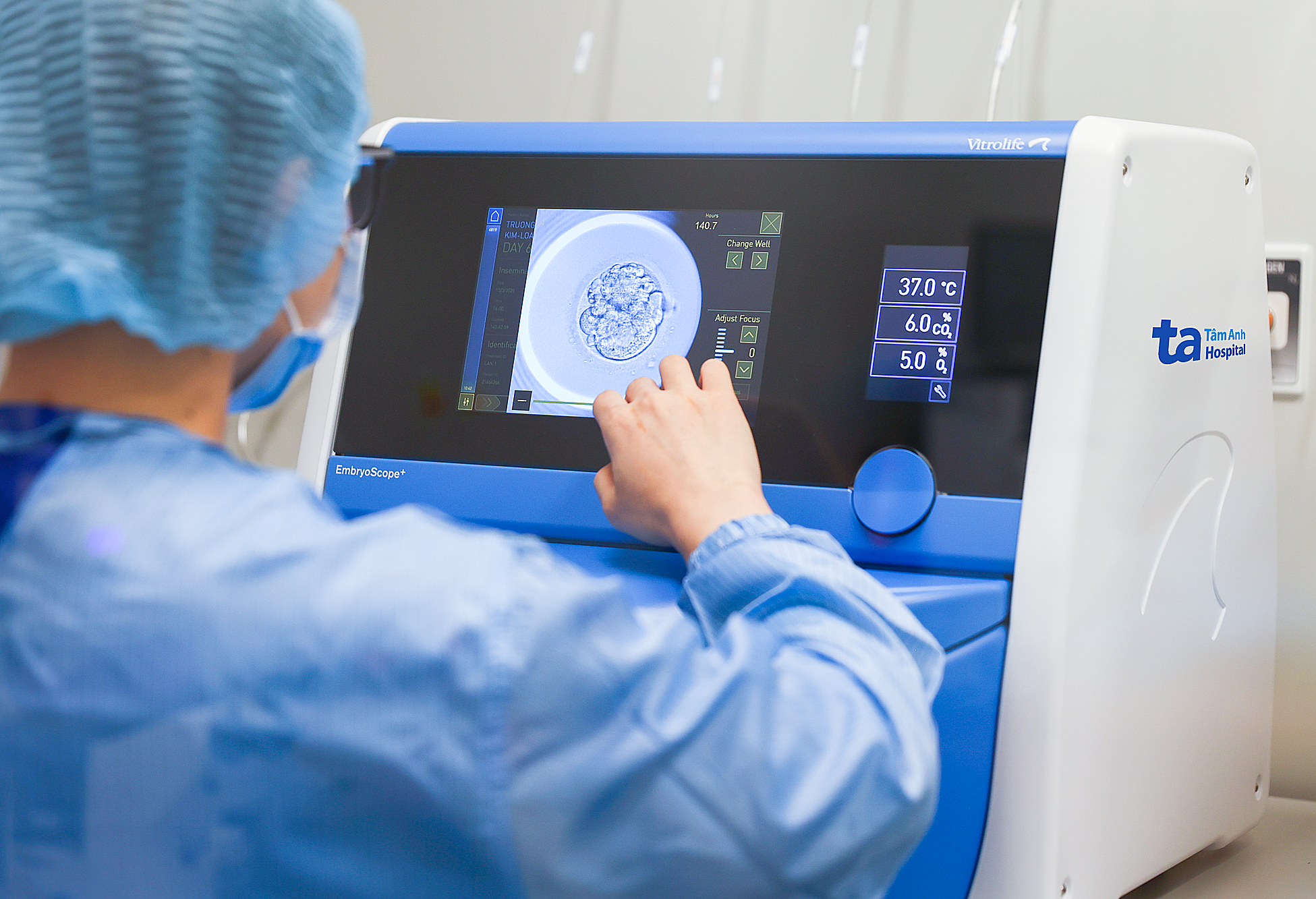 |
Embryo culture system with integrated Time-lapse and artificial intelligence (AI). *Photo: IVF Tam Anh* |
Finally, endocrine factors and endometrial preparation play a vital role. The endometrium must reach optimal thickness and quality, synchronized with the embryo transfer timing to maximize implantation success. Both an overly thin (
At IVF Tam Anh TP HCM, a "lab in lab" system optimizes embryo and gamete development, enhancing the cultivation of high-quality embryos. Patients receive individualized endometrial preparation protocols for each cycle. These protocols are tailored based on ultrasound monitoring and endocrine tests, allowing for medication adjustments to suit the body's response. For thin or poorly responsive endometrium, doctors may recommend platelet-rich plasma (PRP) infusion to improve endometrial quality, ensuring high-quality embryos are transferred at the optimal time.
Couples should undergo a comprehensive examination to allow doctors to accurately identify the underlying cause and tailor a treatment protocol, thereby increasing the chances of a healthy pregnancy and birth.
Doctor Dinh Thi Ngoc Ngan
Center for Reproductive Assistance
Tam Anh General Hospital, TP HCM
| Readers can submit questions about infertility here for doctor consultation. |


