


On the 6th day of Tet in 2022, Hope School in Ngu Hanh Son Ward, Da Nang, welcomed its first 34 students. Located within the FPT City urban area, the school lacked the usual festive flags and laughter of a new school year. The children arrived at the gate accompanied by their neighborhood leader, youth union secretary, or a neighbor. Their parents and dearest loved ones had been lost to the pandemic.
Amidst the breezy spring courtyard, Nguyen Ngoc Lan Phuong, one of Hope School's first teachers, also felt a sense of unfamiliarity. Having left her work caring for children with disabilities at Lang Hoa Binh in Quang Nam, she entered a new environment where the children needing care were physically healthy but carried deep emotional wounds.
Distress emerged immediately from behind the door of a grade 6 girl from TP HCM. Once her mother's cherished youngest child, her world collapsed when the Covid-19 storm swept through, taking her mother. For one month, the girl turned her back to the door whenever Phuong entered. The only connection was through notes she left: "Are you tired from work, teacher?" or "Sleep early, or your eyes will get dark." Even when Phuong spoke, the girl responded only with her silent back.
Facing a child who had endured such profound pain, Lan Phuong often felt at a loss. With every word and action, she feared inadvertently hurting the child. Gradually, she understood that "just being there, not abandoning her, was already a form of medicine." Phuong recounted, "This remedy truly worked. After a while, she began sitting closer to me, started speaking, and then opened up to others around her."
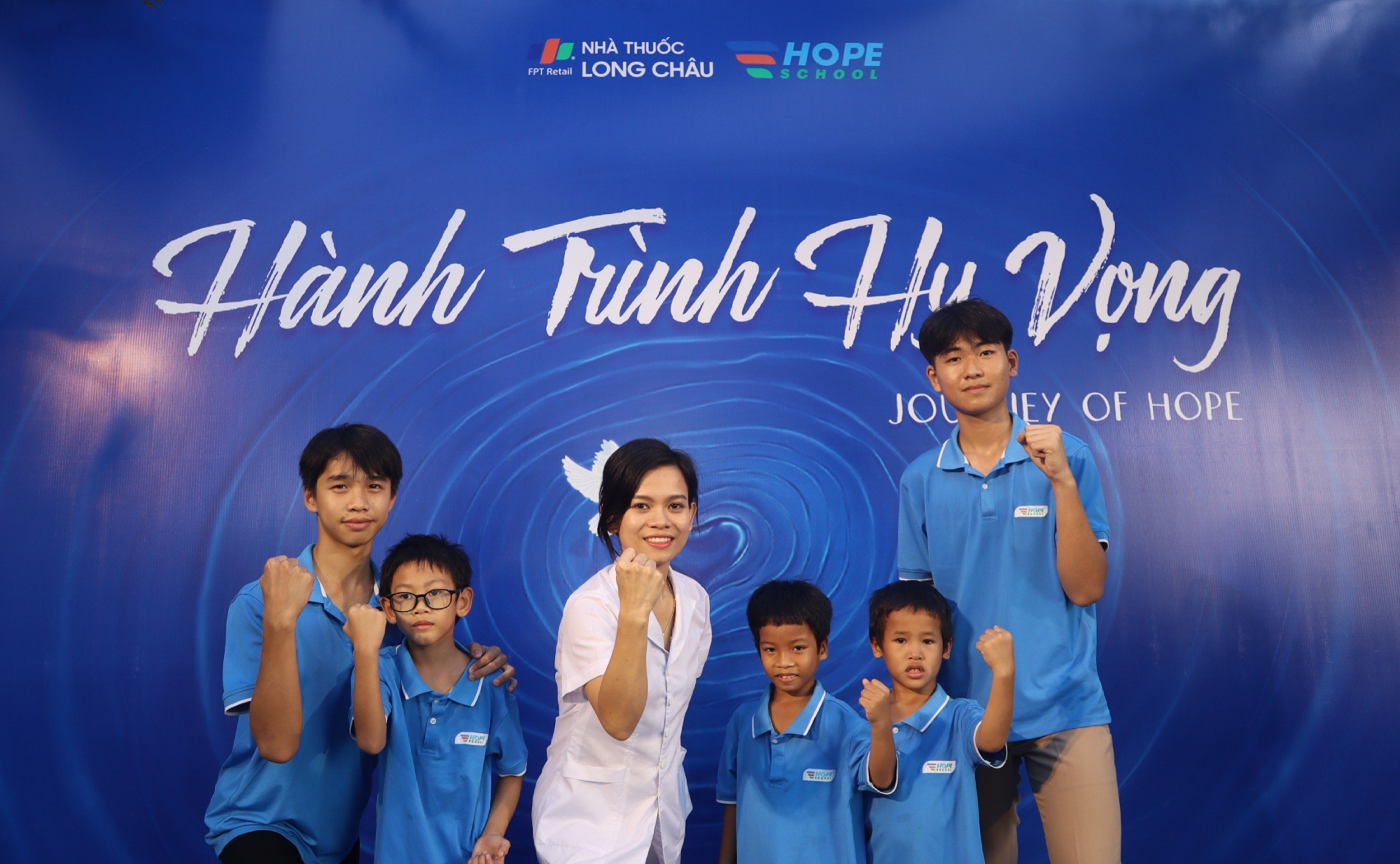 |
“Medical Phuong” with students at Hope School. Photo: Hope school |
As the initial silence faded, life at Hope School settled into a structured routine. A bell rings at 5 a.m., and students of all ages rush to the courtyard for exercise before a day packed with learning, eating, sleeping, playing, and experiential activities. On weekends, you might hear children singing, playing instruments, or drumming. In the clubs, groups engage in baking, soap making, or model building. The teachers, including Phuong, embody the roles of parents and relatives. From the initial 34 students, new children arrive each summer and spring. To date, 363 children, all sharing the loss due to Covid-19, call this place home.
Here, Phuong is more than just a healthcare worker. She is often the first to know when a child has a loose baby tooth or to address the unspoken confusion of adolescence. Daily joys intertwine with silent battles, from minor fevers to outbreaks of flu and chickenpox that sweep through the school.
The most severe challenge came in 2024 when a grade 10 female student was diagnosed with a pancreatic tumor during a routine check-up. The grim news was a shock, as her health records were completely normal just six months prior. Phuong and the other teachers rushed to complete the surgery procedures. The operation was successful, but a battle with chemotherapy followed. The small body writhed against injections, causing the girl to panic and resist treatment. During one attempt to comfort her during an injection, Phuong encouraged, "Hold on, dear, the pain will be gone soon." The girl unexpectedly looked up and screamed in frustration, "You're not getting the injection, so how do you know it hurts!"
The remark stunned Phuong. She realized that any words of comfort at that moment were hollow. The medical staff left, returning the quiet room to the teacher and student. Phuong simply sat down and embraced the trembling shoulders. Warmth and breathing passed between them, conveying the message, "I'm here, I hurt with you." As the sobs subsided, the girl nodded, accepting the doctor's hand. When the girl's health improved, the rhythm of life at Hope School gradually returned to normal.
 |
The inauguration ceremony of the new Hope School in August 2025, in Ngu Hanh Son Ward, Da Nang City. Photo: Nguyen Dong |
However, at this special school, not all ailments can be cured with medicine. Some injuries are subtle and unpredictable, requiring teachers to have even more love and patience. One such challenge involved a female student suffering from severe depression and addicted to e-cigarettes. Days of determined attempts to quit intertwined with relapses. Some days she would cry, clutching Phuong's hand, promising to "start over." Yet, the next day, e-cigarettes would be found in her backpack. Phuong admitted, "That cycle made me feel betrayed. At times, feeling helpless, I even considered returning her to her family."
Consulting with experienced colleagues, the young teacher realized that emotional recovery is not a straight line. It is a sinusoidal graph with inevitable setbacks that do not equate to failure. She changed her "treatment plan." Instead of interrogating or lecturing, she accompanied the girl to wake up early, walk in the sun, and tend to vegetable beds. Now, after three years, the once rebellious girl is a student at FPT University Can Tho. In her latest photo sent to the school, she is a young woman smiling brightly on stage during a cultural performance.
After stressful work hours, Lan Phuong finds balance at the school's "Hoa Co" (Palm Flower) club. Painting taught Phuong a philosophy that medicine had never addressed. When an artist makes a mistake, they find a way to be creative, paint over it, or transform the error into another unique detail of the artwork. Phuong reflected, "Hope School is like that painting. The pain of loss is a cruel, flawed stroke of fate. We cannot erase it, but we can help the children paint new colors of joy, knowledge, and growth on that foundation." From a young woman who was once impatient and wanted immediate results, four years at Hope School have honed the healthcare worker, making her less rigid and more adaptable, learning to guide children's scribbled lines gradually.
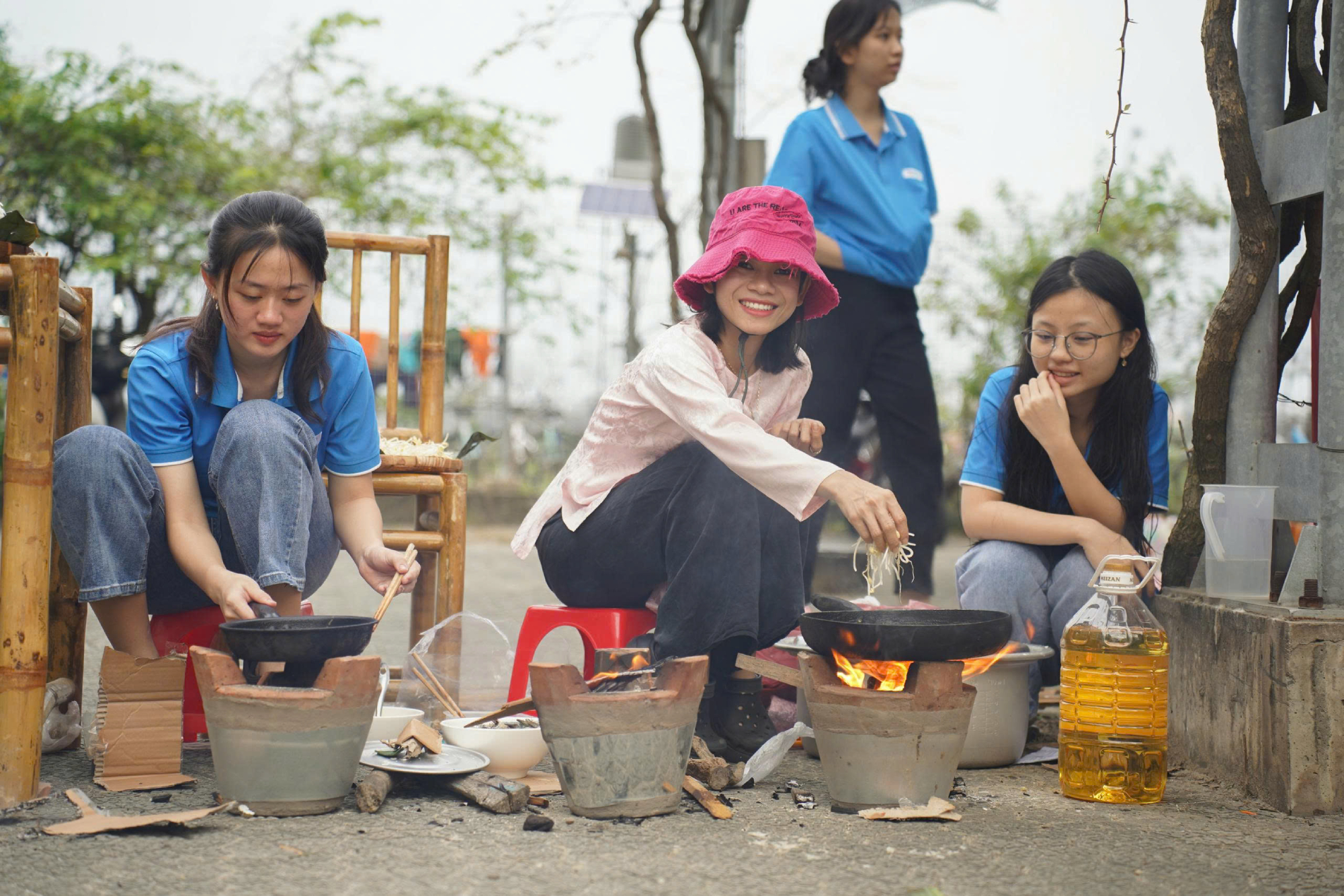 |
Phuong (wearing a hat) with students during an activity at the school in 2025. Photo: Hope School |
And the "reward" for this patience is sometimes gifts that make her laugh and cry. On her desk, the healthcare worker sometimes finds a rough bar of soap, a student's first attempt at making it, a candy saved from an event, and many handwritten letters. One note reads: "I give this to the most beautiful teacher Phuong in the world." Another promises: "When teacher Phuong gets old, I will take care of her." Just a few days ago, Bui Yen Ngan, a grade 4 student, ran to find Phuong with a mischievous look. "Open your hand for me, teacher," the child said, then tucked a small bag, wrapped through many layers of paper, into her hand. Opening it excitedly, Phuong laughed to find two newly fallen baby teeth inside. Ngan, like many other children here, trusts her to keep their first baby teeth, just as parents often do at home.
The healthcare worker said, "We came to these children thinking we were their protectors, but the further we go, the more we realize that these children are quietly nurturing us, with their strong vitality, their innocence, and their love."
Phan Duong


