 |
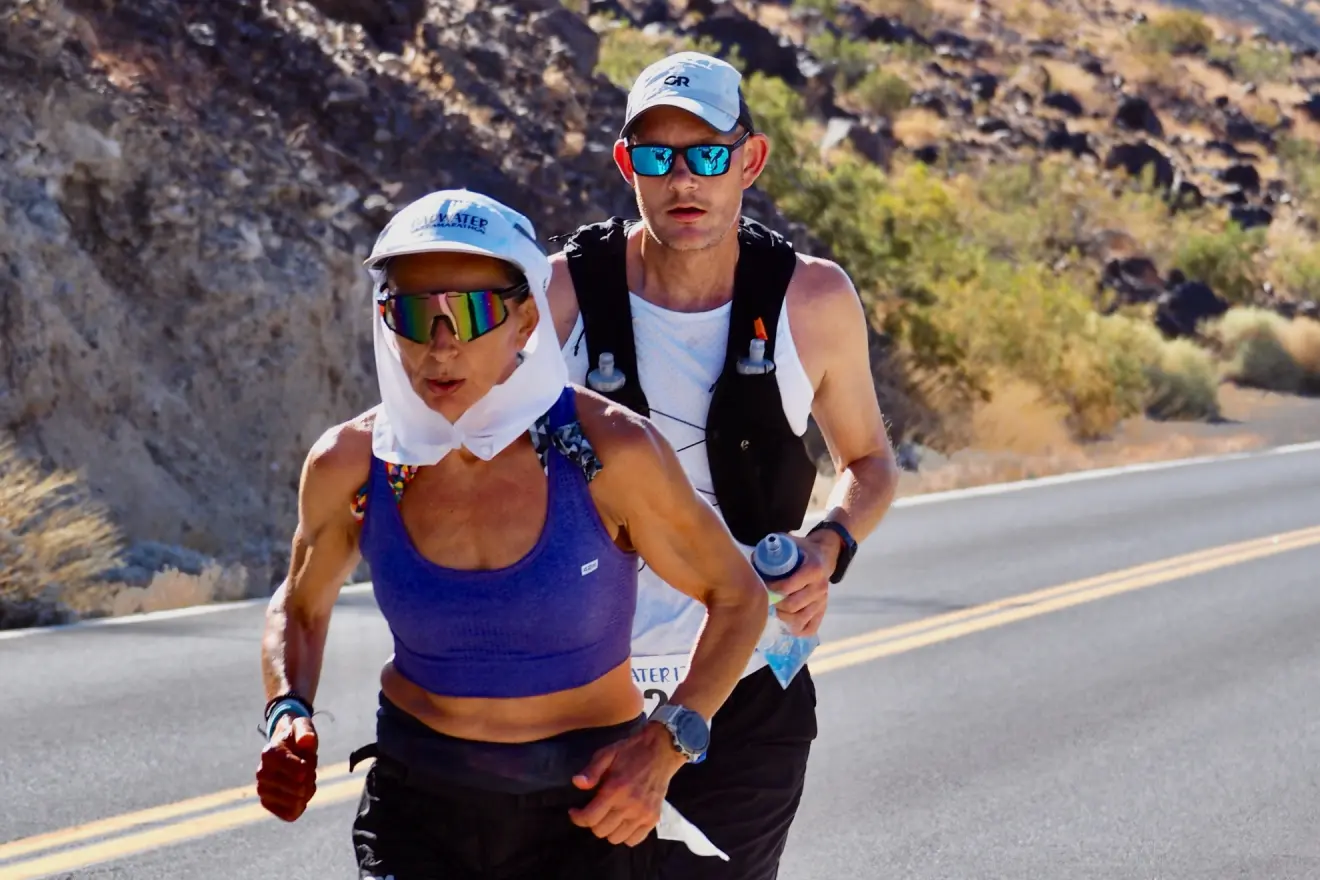
Carmen Perez competes with a cold towel on her head at Badwater 135 in 2026. Photo: Marca
Badwater 135 stands as one of the world's toughest endurance races, covering 217 km across Death Valley, California. The race begins at Badwater Basin, the lowest point in the Western Hemisphere at 86 m below sea level, and concludes on the slopes of Mount Whitney at an elevation exceeding 2,500 m.
Athletes face summer temperatures often above 50 degrees Celsius, asphalt hot enough to damage shoe soles, prolonged uphill climbs, and constant dehydration. These extreme conditions have earned Badwater the moniker "the impossible race".
The 2026 Badwater 135 took place from 27/7 to 29/7. Organizers staggered athlete starts into three waves at 20h, 21h, and 22h on 27/7 to manage congestion on the course. Competitors have a maximum of 45 hours to complete the entire 217 km journey; failure to do so results in a Did Not Finish (DNF) classification.
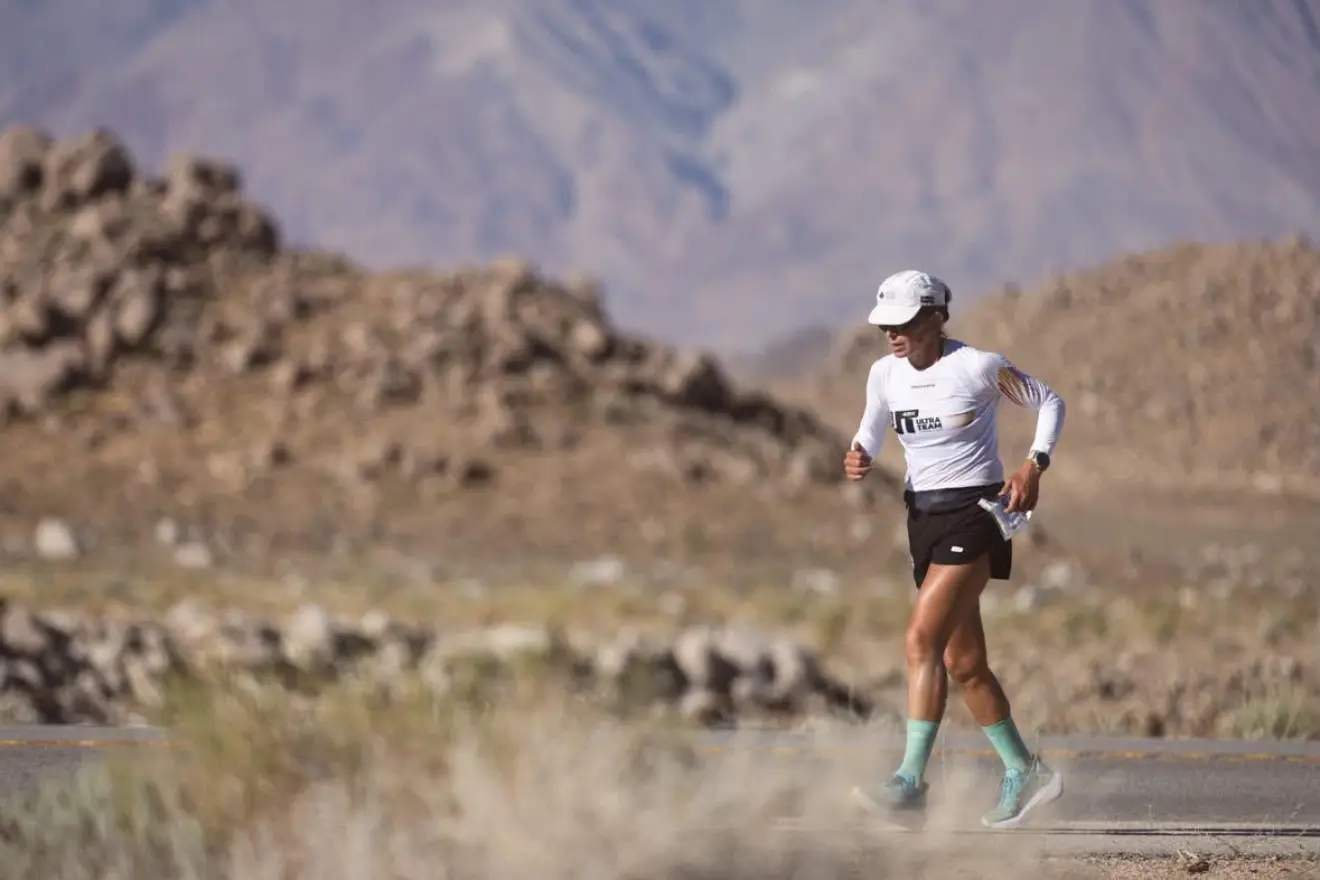 |
Carmen Perez competes at Badwater 135 in 2026. Photo: Marca
Perez set a new women's record, finishing in 21 hours 5 minutes 32 seconds, breaking the previous mark by nearly 40 minutes. On the overall leaderboard, only one male athlete finished ahead of her, by an 11-minute margin.
Perez developed an affinity for Badwater from her first encounter with the event. Her partner, Ivan Penalba, a four-time participant who finished fourth this year, served as her primary inspiration. "Initially, I thought I could never run this race," the 44-year-old athlete stated. "However, three years ago, while supporting Ivan, I became completely captivated. Everything was incredibly challenging: the brutal heat, the race's unique nature, and the limited entry of about 100 spots, mostly reserved for previous finishers."
Badwater does not offer open registration; athletes must meet stringent performance criteria. This includes completing at least four highly difficult 100-mile (160,934 km) ultra-marathons and passing a psychological assessment that evaluates their motivation and ability to confront challenges.
Perez secured direct entry after winning an ultra-marathon in Brazil, an event considered a "miniature version" of Badwater. However, she had to forgo the opportunity last year due to a scheduling conflict with the 24-hour World Championship.
To prepare for her biggest goal of the year, the runner from Valencia structured her training around Badwater's demands. Following the 210 km UltraBalaton race in Hungary in late May, she intensified her training sessions during the hottest parts of the day to acclimate to the extreme competition conditions.
Working at a gym, Perez typically ran two sessions daily, including one at midday when the sun was most intense. On weekends, she performed long-distance runs in her parents' hometown of San Juan de Requena. "I usually ran from 11h30 to 16h. That was the best possible preparation," she explained.
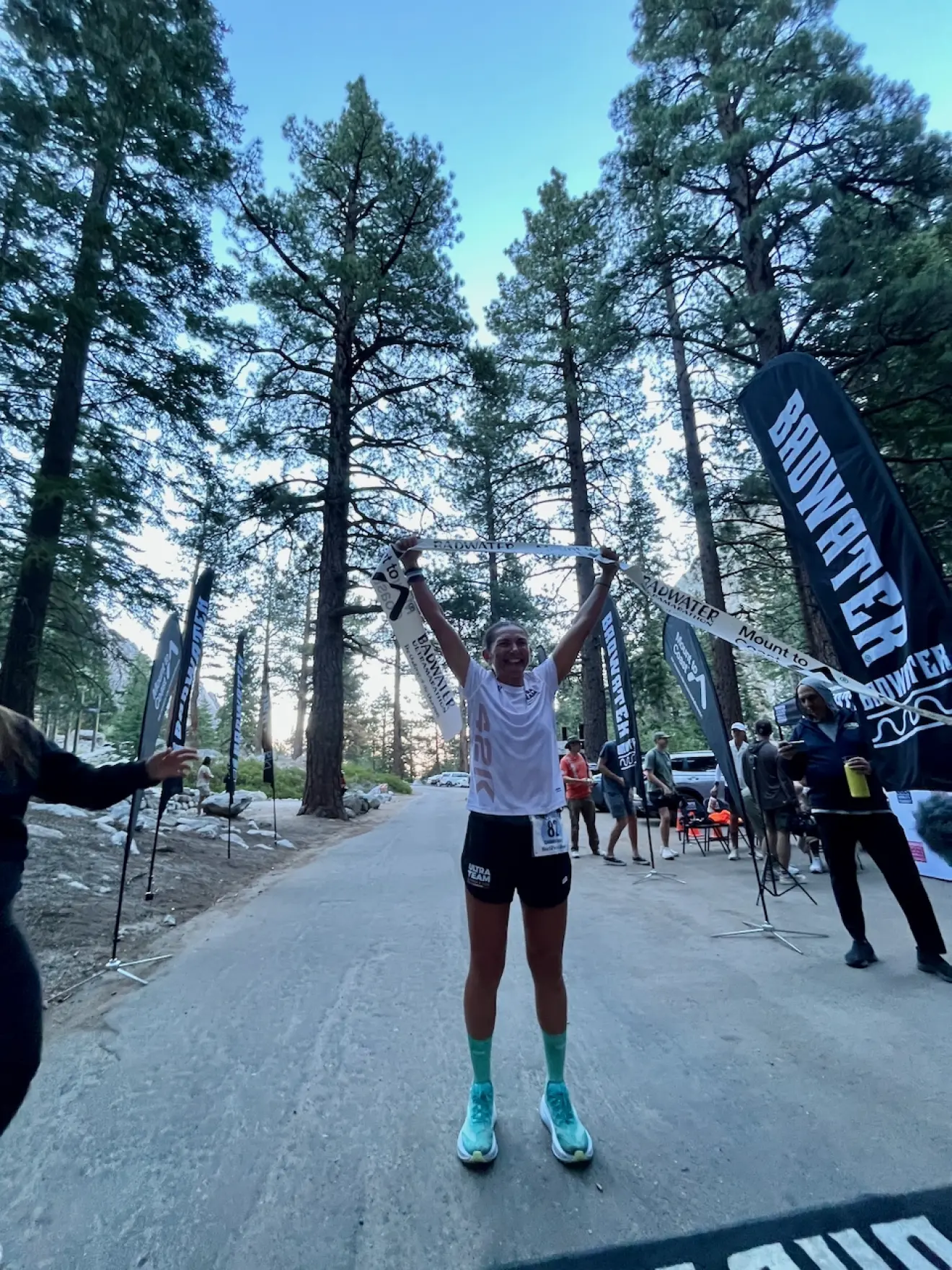 |
Perez celebrates after finishing first and setting a record on 29/7. Photo: Marca
After a week of acclimatizing to California's climate, Perez and Penalba began the race on the evening of 27/7. "The moment at the starting line was unforgettable. Competing in the world's toughest race with my partner, hearing the US national anthem, I told myself: 'The party has begun'," she recalled. The female athlete, who holds multiple Spanish national records in the 12-hour, 24-hour, and 100 km distances, initially aimed only to complete the race but found herself feeling stronger as she ran.
The most challenging moment occurred around the 160 km mark when her support team faced difficulties providing aid as planned, amidst temperatures soaring to 52 degrees Celsius. However, with water, cold towels, and ice from her crew, she quickly recovered and maintained enough energy to accelerate during the final 20 km.
Perez expressed surprise at her own performance. Before the race, organizers asked athletes to predict their finishing times, with a prize of 800 USD for charity awarded for accurate predictions. Perez had estimated 27 hours 30 minutes, acknowledging the course's difficulty.
"The reality was much tougher," Perez stated. "After 60 km, there was a 27 km uphill climb, followed by a 22 km downhill stretch that nearly exhausted my legs. The final part of the race included another 24 km climb. The scorching air made me feel like I was running in an air fryer. Despite this, I enjoyed every moment."
Carmen Perez breaks the women's Badwater 135 record. Video: Instagram / gregtaylorcamera
During more than 21 hours of competition, Perez consumed approximately 25 liters of water, continually supplementing with 50-60 grams of carbohydrates and 800-1,000 mg of sodium at each aid station to maintain electrolyte balance. The extreme conditions were such that she stopped only two times for restroom breaks.
"The 52-degree Celsius temperature genuinely frightened me," the Spanish athlete recounted. "Before the race, I called my brother and friends to express my deep concern. Not only was it hot, but the wind was so dry it felt like it was scorching my nasal passages. We had to apply a special cream inside our noses because the inhaled air was so hot. In previous years, night temperatures would drop to about 43 degrees Celsius, but this year, it never fell below 49 degrees."
Perez attributed her success to strictly adhering to a nutrition and hydration plan thoroughly tested during her acclimatization week. She and her team even monitored body salt levels by checking sweat taste to adjust electrolytes. The athlete also thanked her support crew, who provided aid and encouragement approximately every 15 minutes throughout the race, helping her maintain focus to complete the challenge.
Hong Duy (according to Marca)