In the dramatic men's football final of SEA Games 33 at Rajamangala on 18/12, Vietnam demonstrated a champion's resilience. Despite trailing host Thailand 2-0 after just 31 minutes, coach Kim Sang-sik's players mounted a comeback, equalizing early in the second half before scoring the decisive goal to win in extra time.
"The SEA Games gold medal came just months after Vietnam won the U23 Southeast Asian Championship in 2025 and the AFF Cup in 2024, further solidifying their undisputed dominance," Republika commented. "This success is not merely the result of a single tournament, but a continuation of a tightly maintained streak of achievements from regional to international levels. These accomplishments simultaneously serve as a mirror for Indonesian football."
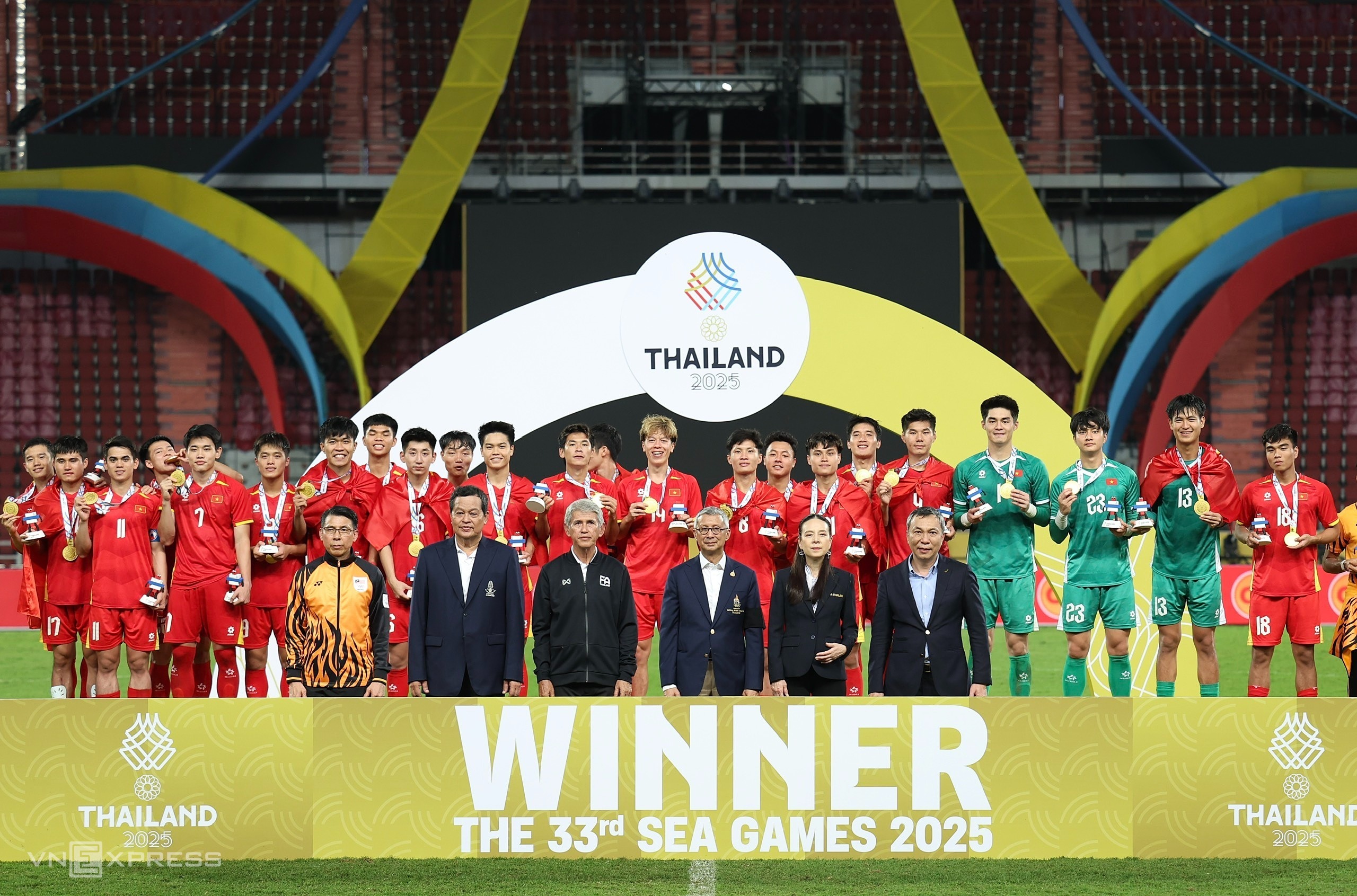 |
Vietnam U22 players during the SEA Games 33 men's football gold medal ceremony. Photo: Duc Dong
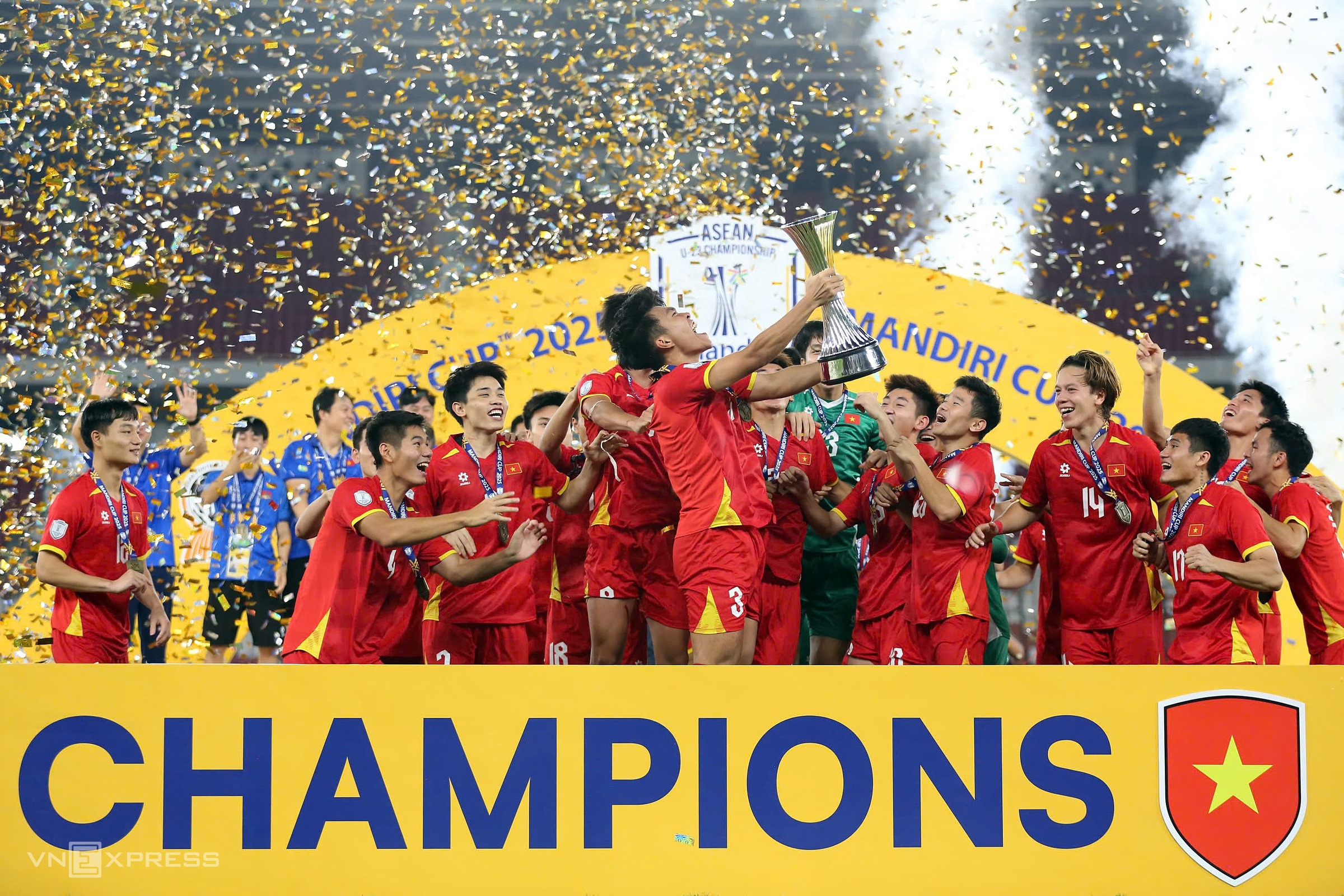 |
Vietnam U23 lifting the Southeast Asian Championship trophy in 7/2025. Photo: Hai Tu
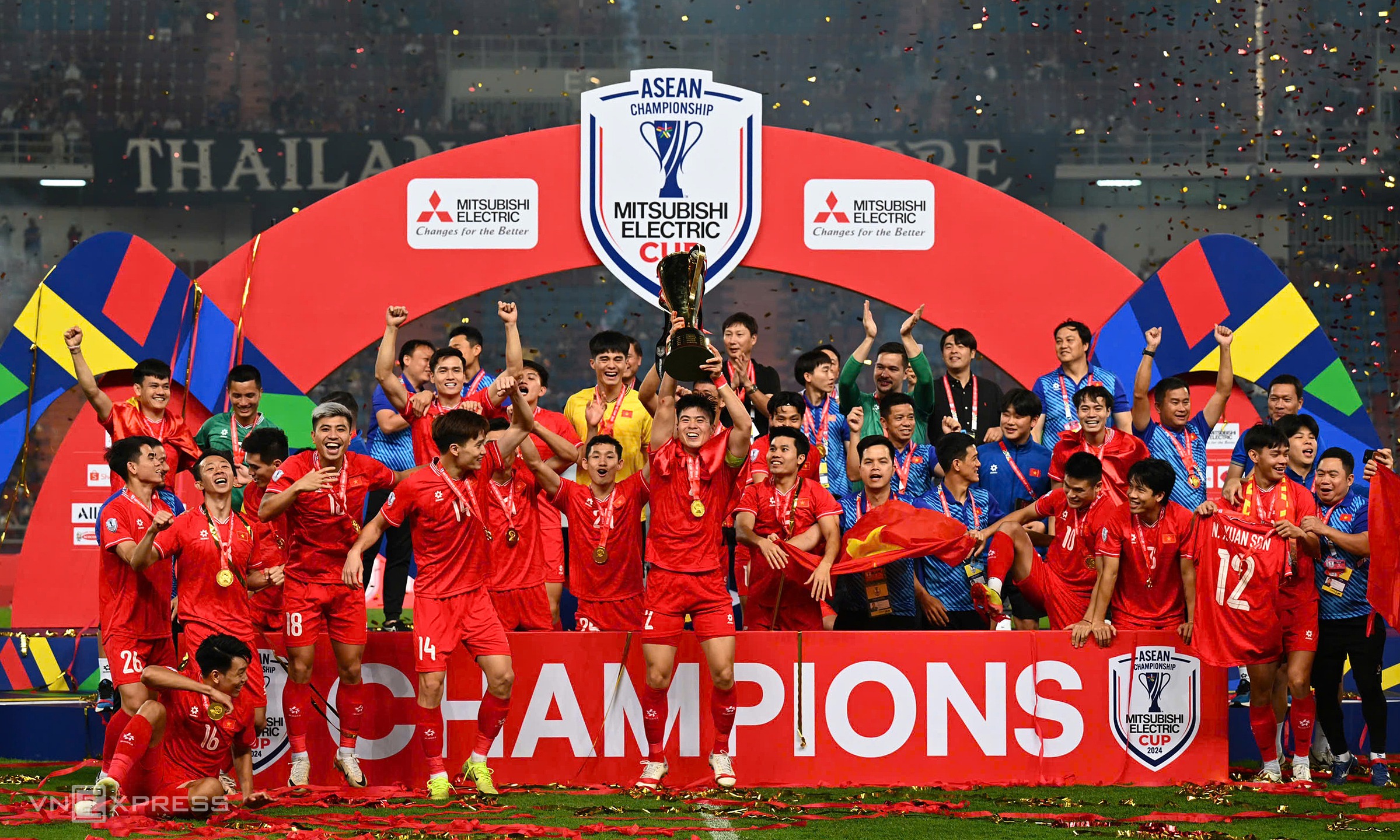 |
Vietnam national team winning the ASEAN Cup in January. Photo: Giang Huy
The Jakarta-based newspaper highlighted that in the U23 Southeast Asian Championship five months ago, Indonesia played on equal terms against Vietnam in the final. Despite a 0-1 loss with the sole goal from Nguyen Cong Phuong, data from ASEAN United recorded that the archipelago nation's team dominated with a ball possession rate of 68%, compared to 32% for coach Kim's side.
Republika further compared ball distribution, stating that Indonesia U23 also excelled with 441 accurate passes, while Vietnam only had 185. However, the newspaper commented, "this statistical superiority did not correlate with the final result."
At this SEA Games 33, Indonesia was judged to be significantly weaker than during the period when the team was led by Dutch coach Gerald Vanenburg in the U23 Southeast Asian Championship. According to Indonesian football commentator Erwin Fitriansyah, the clearest difference lies in consistency and courage in implementing a playing style.
"During Vanenburg's time, Indonesia played more convincingly at the SEA Games because the team could still control matches," Fitriansyah told Republika. He added that with a relatively similar player squad across the two periods, the decline was in creativity, fighting spirit, and the continuity of the playing model.
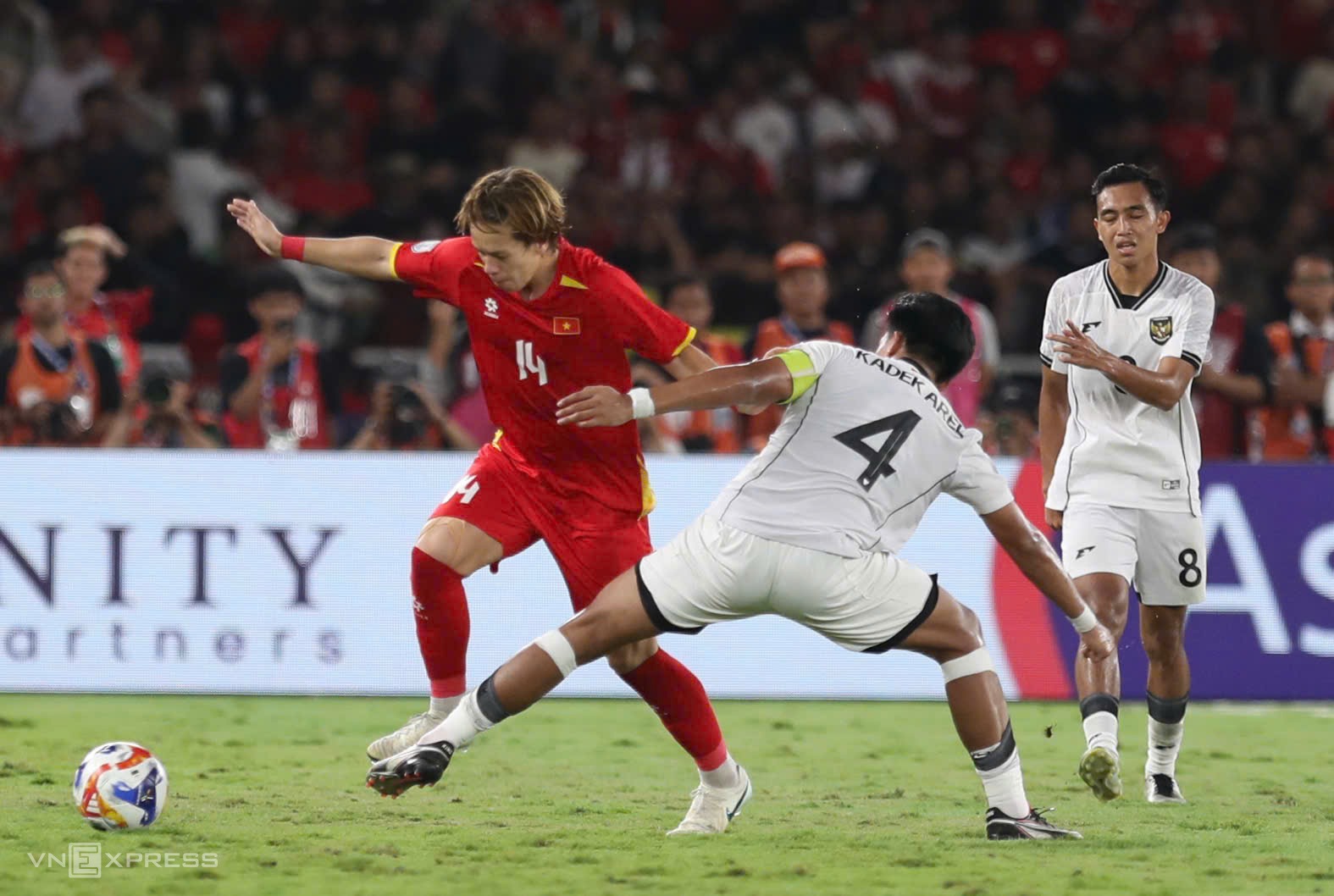 |
Midfielder Viktor Le dribbles past Indonesian captain Kadek Arel in the U23 Southeast Asian Championship final on 29/7. Photo: Hieu Luong
Expert Fitriansyah urged PSSI to seriously consider the recent state of the U22 team, especially as the federation prepares to appoint a new national team head coach. Two names, Giovanni van Bronckhorst and John Herdman, are reportedly among the candidates. "Whoever is chosen, that person needs to be given broader authority to comprehensively reform the coaching structure," he stated.
According to Fitriansyah, the primary task of Indonesia's upcoming new head coach is not only to prepare the senior national team but also to build a connected structure from the U17, U20, and U23 age groups up to the national team. "It cannot be a disjointed model, but rather a strategic approach to ensure a smooth transition of players and coaches," the expert emphasized.
Republika also underscored this view, stating that consistency in philosophy, strategy, and tactics is the key for Indonesia to not only close the gap with Vietnam in Southeast Asia but also to build a solid foundation for competing at the Asian, and even global, levels. "Without systemic reform, performance will continue to fluctuate erratically, while Vietnamese football is steadily advancing with a clear direction," the newspaper concluded.
Hoang Thong (via Republika)