South Korea defeated Japan one-zero in the final at Toyota Stadium on 3/10, securing their fourth consecutive and seventh overall men's football title at the ASIAD (1970, 1978, 1986, 2014, 2018, 2022, 2026).
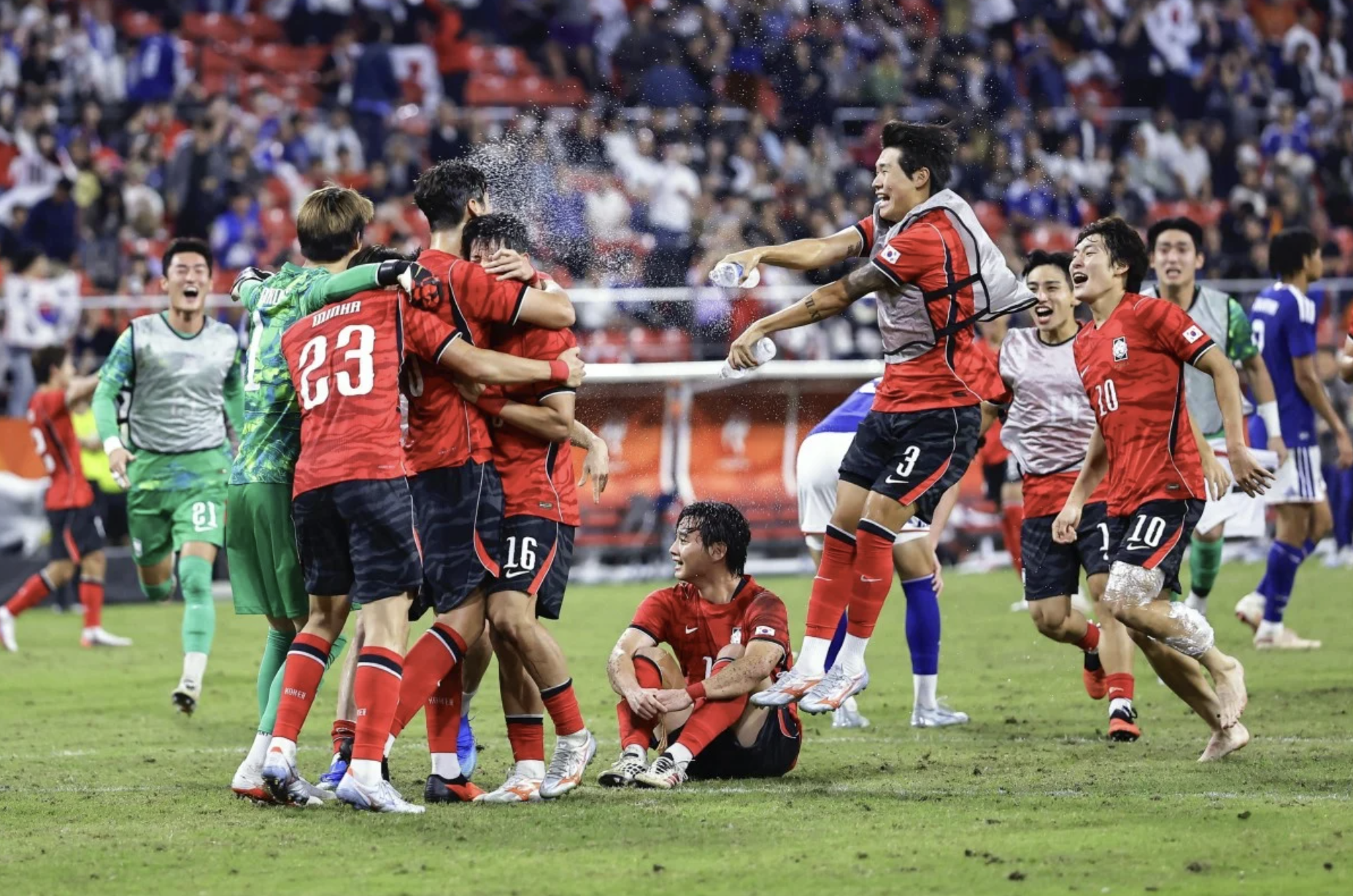 |
South Korean players celebrate after defeating Japan one-zero in the ASIAD 2026 men's football final at Toyota Stadium, Japan, on 3/10. *Reuters*
Out of the 23-member squad, most players qualified for a special military service status for high-achieving athletes due to the gold medal. However, their victory celebration was quickly overshadowed by statements regarding this benefit.
Captain Lee Gi-hyuk stated that if South Korea had not won, he would have had only nine days before his mandatory enlistment upon returning home. "This tournament was crucial for players' military service benefits, and for me, it was truly imminent", Lee said. He then raised the gold medal and smiled: "I don't have to go to the military anymore".
Midfielder Yang Minh-yeok also stated after the match that the medal or the championship cup was not his primary concern. "I believe the medal or title isn't truly important. Since the military service benefit was the reward, I seemed to play solely with that in mind", Yang said.
Defender Park Seung-soo, a Newcastle player, further fueled the controversy by posting a photo on social media wearing a hat typically associated with soldiers who have completed their service.
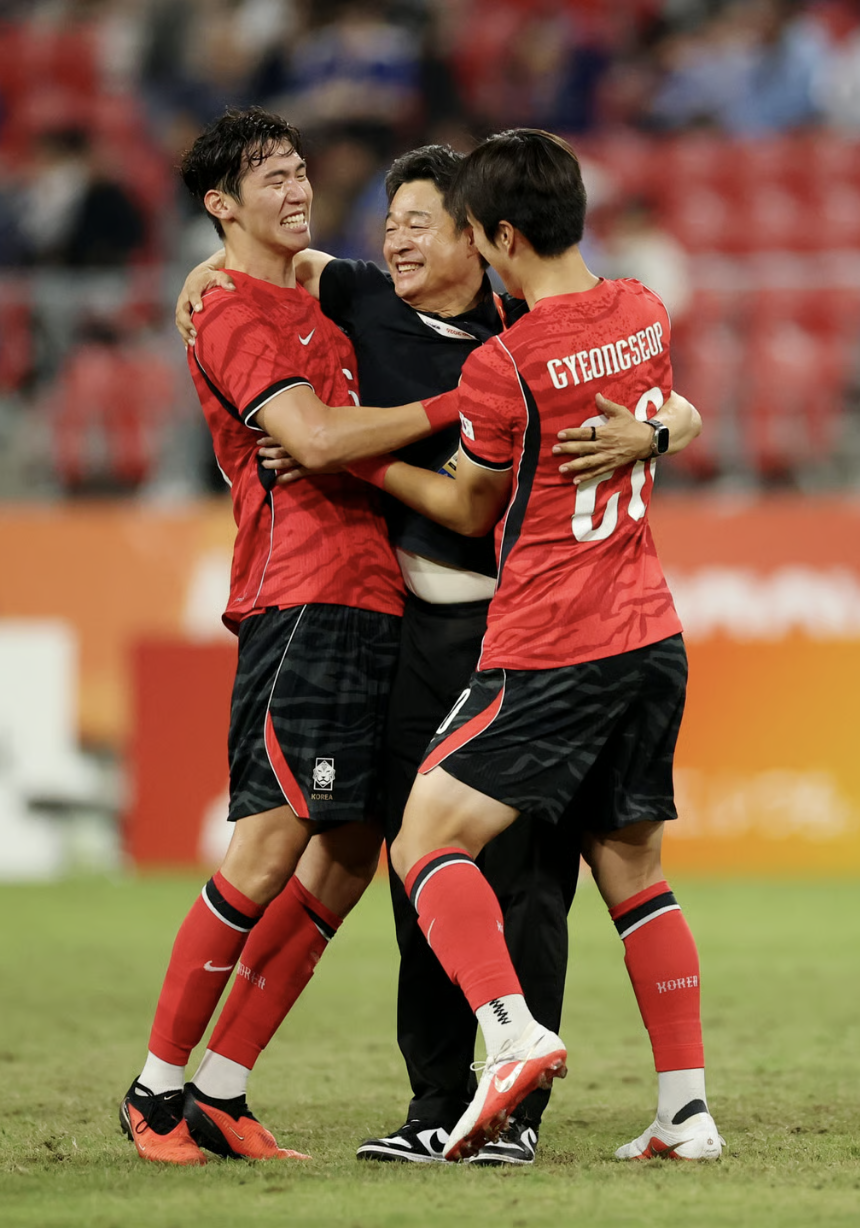 |
Captain Lee Gi-hyuk celebrates with coach Lee Min-sung and Park Kyung-seop. *Reuters*
Following public backlash, Lee, Yang, and Park each issued apologies. Upon the team's return to Incheon Airport on 4/10, Lee admitted that as captain, he should have better understood "the weight of his words", asserting he had no intention of trivializing national defense duties.
Yang also posted an apology on social media, explaining that military benefits were merely one of many motivations for him to achieve better results, but his phrasing led to a misunderstanding of his message. "I sincerely apologize to all those who were hurt and disappointed by my thoughtless statement", the midfielder wrote.
Park deleted the controversial photo, explaining that a fan had given him the hat immediately after the match. Overwhelmed with excitement from the gold medal, he wore it and posted the photo without fully considering its implications. Park affirmed he had no intention of mocking those serving in the military or downplaying their sacrifices.
The Korea Football Association (KFA) later apologized for "some imprudent statements and interviews by players that caused disappointment and offense to the public and active military personnel". The KFA stated it would enhance education on player conduct and ethics, emphasizing that players must fully fulfill the responsibilities of artistic and athletic personnel as regulated.
Yoo Seung-min, President of the Korean Sport & Olympic Committee, also acknowledged that these statements were inconsistent with public sentiment, despite athletes receiving interview guidance before the tournament.
Policy dating back to 1973
South Korea began implementing a special mechanism for artistic and athletic talents in 1973.
Under current regulations, athletes who secure one of the top three positions at the Olympics or an ASIAD gold medal can be reclassified as "artistic and athletic personnel", rather than performing standard active military service.
Therefore, it is commonly referred to as "military service exemption", but legally, their obligation is not entirely erased. This constitutes a special form of service within South Korea's military conscription system.
Son Heung-min is a prominent example in South Korean football, having qualified for this status after winning the ASIAD 2018 gold medal with the Olympic team. Kim Min-jae and Lee Kang-in also resolved their service issues through ASIAD achievements.
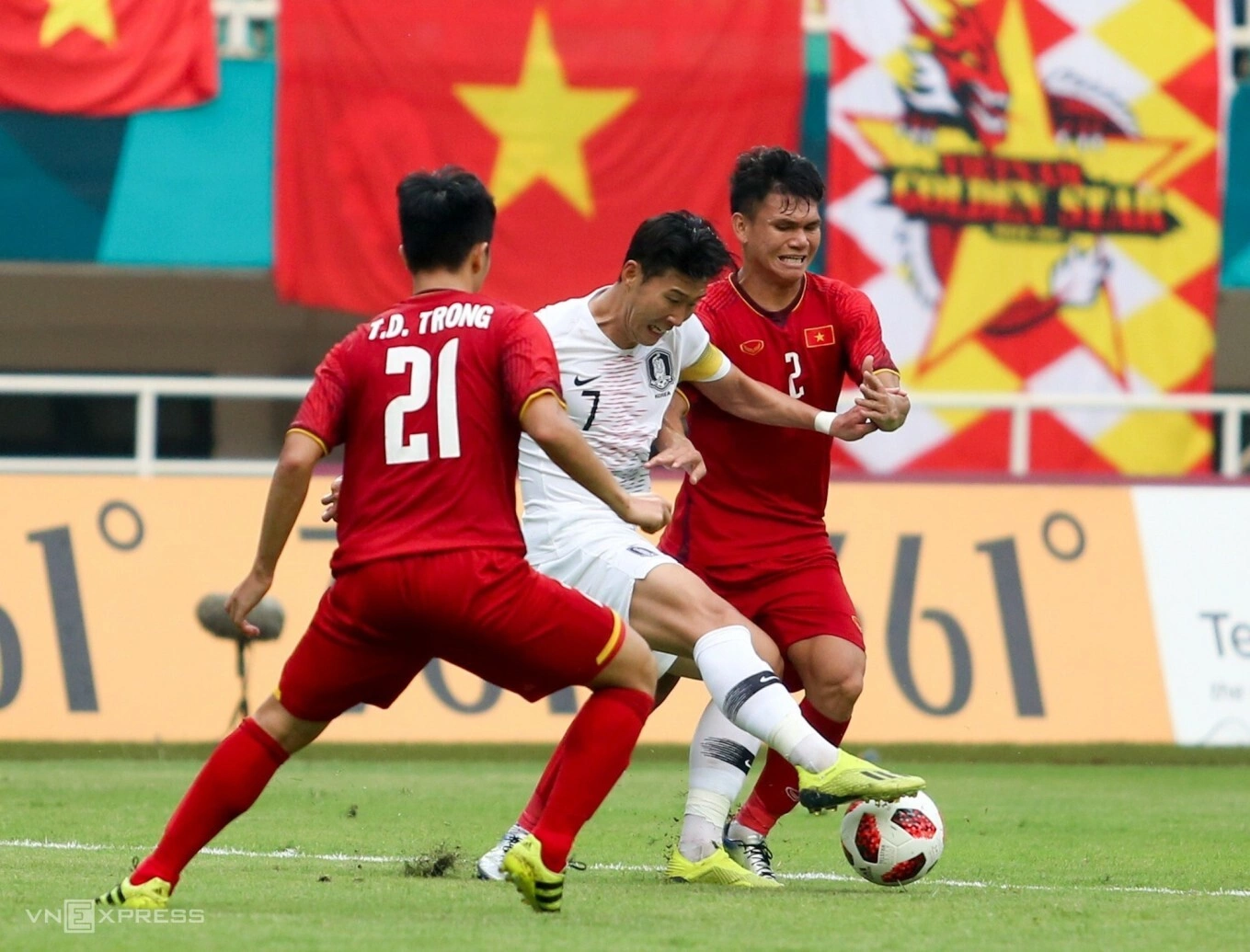 |
Son Heung-min (white jersey) competes against Vietnam in the ASIAD 2018 semi-finals in Indonesia. *Hieu Luong*
The post-final statements reignited debate over this policy. Representative Ahn Cheol-soo questioned: "Is the military such a detestable place?", suggesting that the military preferential treatment for ASIAD gold medalists needs reconsideration.
Representative Na Kyung-won also called for a "fundamental system overhaul", arguing for a military service policy that South Korean youth perceive as fair. She cited BTS as an example of artists who have made significant contributions to the nation's image yet still fulfilled their military duties.
Conversely, some argue that the immature actions of a few players should not invalidate the entire system designed for high-achieving athletes.
On social media, some suggested that only the best players, rather than the entire team, should receive these benefits. Some opinions even proposed that only the three best players from the final match should be eligible for this status.
Another comment raised the point that the policy originated over 50 years ago, when South Korea's international standing was vastly different from today. According to this individual, with K-pop and Korean culture increasingly playing a major role in promoting the country's image, the criteria for evaluating national contributions might also need re-evaluation.
The controversy is not limited to football. Previously, South Korean baseball team captain Noh Si-hwan also faced criticism for stating, "the process is unnecessary, only the gold medal result matters".
Yonhap also pointed out that South Korea is one of the few nations at the ASIAD where athletic achievement can significantly reduce the burden of military service. This makes a gold medal particularly meaningful for South Korean male athletes, especially those pursuing professional careers abroad.
Consequently, this latest controversy has moved beyond the thoughtless remarks of a few players, evolving into a broader discussion about whether an ASIAD gold medal should continue to be directly linked to military service benefits as it currently is.
By Hong Duy