|
Pele - Rivellino
At the 1970 World Cup, Rivellino wore number 11, while Pele wore number 10 as Brazil defeated Italy 4-1 in the final to win their third world title. Pele later retired from the national team, and at the 1974 World Cup, the famous number 10 jersey was given to Rivellino.
This was a special succession because Pele (left - in photo) transformed the number 10 into a global icon. Ironically, he received this number almost by chance at the 1958 World Cup, when Brazil's jersey numbers were assigned without following the usual positional order. After three World Cup championships, the number 10 became synonymous with Pele's name.
Rivellino was also no ordinary successor. He scored 43 goals in 121 matches, was a member of the Brazil team that won the 1970 World Cup, and later participated in the 1974 and 1978 World Cups. FIFA once asked Pele which quality of another player he wished to possess, and the "King of Football" chose Rivellino's left foot.
 |
Diego Maradona - Marcelo Espina
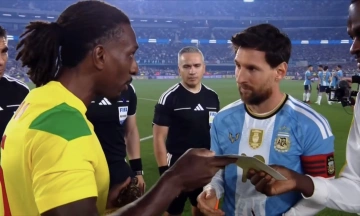
After Maradona, the first player to wear Argentina's number 10 jersey was Espina (right, in photo), in a 3-0 friendly win against Chile in Santiago on 16/11/1994. This also marked Coach Daniel Passarella's debut leading the team, and Espina scored one goal.
Espina later admitted that when he received the number 10 jersey, he did not fully grasp the significance of being the first to wear this iconic number after Maradona. Only many years later did he realize it was one of the most special moments of his career.
Espina did not keep the number 10 for long. According to Clarin, he wore the jersey for four more matches before it was successively given to Marcelo Gallardo and then Ariel Ortega. In the period between Maradona and Lionel Messi, Argentina's number 10 jersey was also worn by players like Pablo Aimar, Andres D'Alessandro, and Juan Roman Riquelme.
With the iconic number 10 jersey, Maradona led Argentina to the 1986 World Cup title and continued to wear it until the final years of his international career. The AFA even wanted to permanently retire the number 10 to honor Maradona, but the plan could not be implemented in FIFA tournaments due to squad numbering regulations.
 |
 |
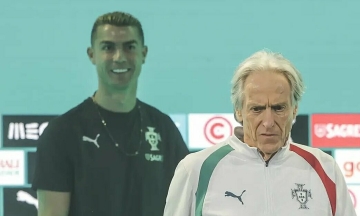
Zinedine Zidane - Julien Faubert
After Zidane left the French national team, the first player to wear "Les Bleus'" number 10 jersey again was an unexpected name: Julien Faubert.
On 16/8/2006, just over a month after the World Cup final between France and Italy, Faubert made his national team debut in a friendly match against Bosnia & Herzegovina. The then 23-year-old player came on for Franck Ribery in the 69th minute, inheriting Zidane's number 10. In stoppage time, he scored the winning goal, securing a 2-1 victory for France.
Faubert recounted that he was shocked to see the number 10 in the changing room. Teammates teased him, saying he wanted to "do everything like Zizou" right after joining the team. Coach Raymond Domenech later explained that giving the number 10 to a player with a completely different position and style from Zidane was a way to help the French national team quickly move into a new era.
However, this succession lasted for only one match. The game against Bosnia was also Faubert's only appearance for the French national team, making him one of the most unique number 10 owners in the team's history: he debuted, scored a decisive goal, and was never called up again.
Faubert later had another notable chapter in his career when he was loaned to Real Madrid from West Ham in 2009. But at the Bernabeu, he also played only two matches, totaling 52 minutes.
 |
 |
Ronaldo - Vagner Love
Brazil's number 9 jersey entered a transition period after the 2006 World Cup, Ronaldo's final tournament with the "Selecao". However, Vagner Love was not the first player to wear this number after Ronaldo. That honor belonged to Fred, in a 1-1 draw against Norway on 16/8/2006, Brazil's first match under Coach Dunga.
Vagner Love later became one of the first notable owners of the number 9 in the post-Ronaldo era. Dunga frequently used him in attack in 2007, and he wore the number 9 in many friendly matches and World Cup qualifiers.
Before the 2007 Copa America, Love admitted that taking over Ronaldo's position brought special pressure. But the striker, then with CSKA Moscow, stated that Ronaldo was "not a ghost," and those who followed needed to focus on scoring goals instead of living in the shadow of the former World Cup champion.
The weight of Brazil's number 9 was immense at the time. Ronaldo wore it in three consecutive World Cups (1998, 2002, and 2006), winning the 2002 tournament where he scored eight goals. After Ronaldo, the jersey was successively worn by many strikers, including Vagner Love, Adriano, Luis Fabiano, Fred, Gabriel Jesus, and Richarlison.
 |
 |
Andres Iniesta - Saul Niguez
After Iniesta's departure from the Spanish national team at the 2018 World Cup, Saul Niguez was the first player to take over the number 6 jersey left by the legendary midfielder.
Iniesta announced his retirement from the national team on 1/7/2018, immediately after Spain was eliminated by host Russia in the World Cup round of 16. He concluded his 12-year career with "La Roja" with 131 matches, one World Cup title, and two Euros. The highlight was his sole goal against the Netherlands in extra time of the 2010 World Cup final, leading Spain to their first world title.
During the October 2018 national team camp, Saul switched from number 7 to Iniesta's number 6, while Alvaro Morata reclaimed number 7. Saul used his new jersey number in matches against Wales and England under Coach Luis Enrique.
The transition also held professional significance. Both Iniesta and Saul played in midfield, but their styles differed: Iniesta was known for his control, ability to evade pressure, and creativity, while Saul was more focused on physicality, tackling, and box penetration. Therefore, the number 6 jersey was inherited, but it did not mean Spain was seeking a replica of Iniesta.
 |
 |
Ronaldinho - Kaka
After Ronaldinho's era as Brazil's creative symbol, Kaka became the most prominent successor to the number 10 jersey. However, the transition was not immediate. At the 2007 Copa America, when neither Ronaldinho nor Kaka participated, the number 10 belonged to Diego Ribas. Brazil still won the tournament, defeating Argentina 3-0 in the final.
Kaka gradually became central to Brazil's playing style under Coach Dunga. He played a key role in the 2009 Confederations Cup victory before officially wearing the number 10 at the 2010 World Cup in South Africa.
This succession was notable because Ronaldinho and Kaka were both part of Brazil's golden generation. At the 2006 World Cup, Ronaldinho wore number 10 while Kaka wore number 8. As Ronaldinho's role in the national team declined, Kaka gradually became the new playmaker and took over the iconic jersey. He concluded his national team career with 88 matches and 28 goals, having won the 2002 World Cup along with two Confederations Cups (2005 and 2009).
 |
 |
David Beckham - Aaron Lennon
After Beckham's time, Lennon became the successor to England's number 7 jersey at the 2010 World Cup.
Beckham was associated with the number 7 in three consecutive World Cups (1998, 2002, and 2006). For over a decade, this jersey became part of the image of the Man Utd and Real Madrid midfielder, alongside his trademark crosses and free kicks.
Lennon received the number 7 at the 2010 World Cup, before the jersey was successively worn by Jack Wilshere in 2014, Jesse Lingard in 2018, and Jack Grealish in 2022.
The transition began before the World Cup. Under Fabio Capello, Lennon gradually took over the starting right midfield position, while Beckham transitioned to an experienced substitute role. In a World Cup qualifier against Belarus in October 2009 – also Beckham's last appearance for England – Lennon started, and Beckham replaced him in the 58th minute.
An Achilles tendon injury while playing for AC Milan subsequently caused Beckham to miss the 2010 World Cup. Lennon was selected for the squad in South Africa and wore the number 7 jersey that once belonged to his senior. Lennon was then 23 years old and one of the fastest wingers in English football. He started two group stage matches against the US and Algeria but could not make a similar impact to his predecessor. England was later eliminated in the round of 16 by Germany.
Therefore, the transition of the number 7 from Beckham to Lennon also marked a generational shift in the England national team: from a midfielder renowned for his long passes, crosses, and free kicks to a winger who relied heavily on speed and dribbling ability.
 |
 |
Paolo Maldini - Francesco Coco
At the 2002 World Cup, Maldini was still Italy's captain and wore number 3, while Coco wore number 4. Italy was eliminated by South Korea in the round of 16, and Maldini concluded his international career with 126 appearances.
By the 2002-2003 season, Coco was given the number 3 for the national team. The succession was even more notable because Coco shared many similarities with his senior. Both grew up at AC Milan and primarily played on the left flank. Coco was later loaned by Milan to Barcelona for the 2001-2002 season before returning to Italy to join Inter in the summer of 2002.
However, the number 3 did not become as iconic for Coco as it did for Maldini. His Italy national team career lasted only 17 matches, whereas Maldini had transformed this jersey into one of the most recognizable numbers in Italian football through many Euros and World Cups.
 |
 |
Franz Beckenbauer - Manfred Kaltz
Beckenbauer made the number 5 an integral part of his image at the 1974 World Cup on home soil, where West Germany defeated the Netherlands 2-1 in the final to claim the title.
At the 1978 World Cup in Argentina, the number 5 was given to Kaltz, a Hamburg defender. He played all six of West Germany's matches in the tournament, in a squad still managed by Coach Helmut Schon.
The succession was not just about the jersey number. West Germany also tried using Kaltz in a libero role to fill the void left by Beckenbauer. However, this experiment was not as successful as hoped, and the reigning champions were eliminated in the second round.
Kaltz still had a significant international career afterward, with 69 matches and eight goals for West Germany between 1975 and 1983. He participated in both the 1978 and 1982 World Cups, but Beckenbauer's number 5 remained too large a legacy for any successor to easily escape comparison.
 |
 |
Johan Cruyff - Jan Peters
Cruyff did not always wear number 14 for the national team. He also used numbers 9, 10, and 7 at different times, but number 14 became his most significant mark, especially at the 1974 World Cup. In that tournament, Cruyff led the Netherlands to the final and also created the famous "Cruyff Turn" while wearing this very number.
After Cruyff gradually left the international stage, the number 14 was given to many other players. Jan Peters was one of those who used it frequently during the transition period of the late 1970s.
Therefore, Peters' case differs from direct successions. He did not simply receive the jersey immediately after Cruyff's last match but was one of the first players to live with the weight of the number 14 after Cruyff had transformed it into a symbol of Dutch football.
Later, the number 14 continued to be used by many Dutch national team players, but almost no one could separate this number from the name Johan Cruyff.
 |
 |
Roberto Baggio - Alessandro Del Piero
Italy's number 10 jersey underwent a special transition in the late 1990s, when Del Piero took over the number associated with Baggio even before his senior left the national team.
At the 1998 World Cup, Del Piero was given number 10, while Baggio wore number 18. This transition reflected a generational shift in Italy's attack. Baggio was the team's biggest icon at the 1994 World Cup, where he led Italy to the final and scored five goals. By the 1998 World Cup, the central role gradually shifted to Del Piero, who was then at his peak with Juventus.
Del Piero then made the number 10 his own for many years with Italy. He continued to wear this jersey in major tournaments, including Euro 2000 and the 2006 World Cup, where Italy triumphed in Germany.
Thus, this is not just a story of one player inheriting a legendary predecessor's jersey. Baggio and Del Piero were teammates in the Italy national team, and the moment the number 10 passed from one to the other occurred in full public view, making the comparison between the two generations even more distinct.
Hong Duy