


 |
Striker Nguyen Dinh Bac celebrates after Vietnam defeated Saudi Arabia 1-0 in the final group A match of the AFC U23 Asian Cup 2026 finals, at Prince Abdullah Al Faisal Stadium in Jeddah, Saudi Arabia on 12/1. Photo: AFC |
* Vietnam - UAE: 22h30, Friday, 16/1, on VnExpress.
Vietnam advanced to the quarterfinals as group A winners after beating Jordan 2-0, Kyrgyzstan 2-1, and host Saudi Arabia 1-0. This marks the first time in history that a Vietnamese men's football team has progressed as group leaders in an Asian-level tournament. In contrast, UAE finished second in group B, with a more challenging and suspenseful journey, securing a 2-0 win against Qatar, a 0-3 loss to Japan, and a 1-1 draw against Syria in their final match – a result just enough to advance.
Beyond the results, Vietnam's performance has earned higher praise, characterized by clear tactical approaches, team spirit, and tight organization. During the press conference on the afternoon of 15/1, UAE coach Marcelo Broli acknowledged, "Vietnam is in good form, with strong defense, quick transitions, and effective counter-attacks".
Coach Kim Sang-sik, however, maintains respect for UAE. Like many West Asian teams, their opponents possess a physical advantage over Vietnam. On average, UAE players stand at 1,793 m, ranking fourth from the bottom. Vietnam's average height is 1,765 m, placing them second to last, only ahead of Thailand. The average age of the UAE squad is 22,13, close to Vietnam's 22,22, placing them among the older teams in the tournament.
In recent years, UAE has sought players of mixed heritage, even recruiting them early to ensure eligibility for naturalization after five years. This policy is evident in the UAE national team and subtly present in the U23 squad, featuring four players: Leonard Amesimeku, Solomon Sosu, Richard Akonnor (of Ghanaian descent), and Junior Salif Ndiaye (French) – a name coach Kim specifically mentioned for the Vietnamese defense to watch out for.
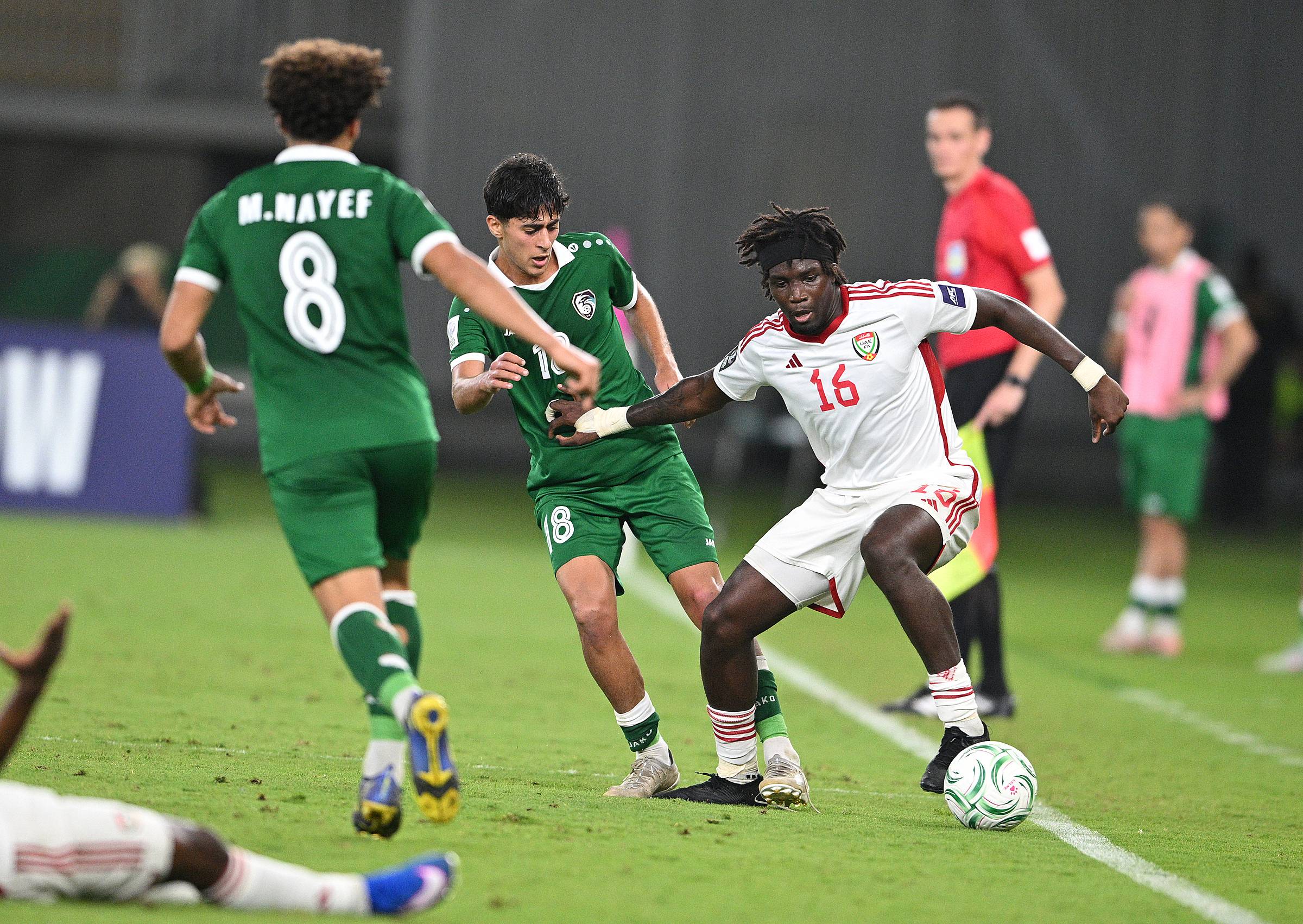 |
French-born UAE striker Junior Salif Ndiaye (number 16) plays in the 1-1 draw against Syria in the final group B match of the AFC U23 Asian Cup 2026, at Prince Abdullah Al Faisal Stadium in Jeddah, Saudi Arabia on 13/1. Photo: AFC |
Historically, UAE holds a clear advantage in head-to-head matches at this level, with five wins and three draws in eight encounters across all competitions. The first match, a 0-0 draw, took place in the group stage of Asiad 14 in Busan, Korea. The other two draws were a 1-1 friendly in 2019 and a 0-0 draw in the group stage of the AFC U23 Asian Cup 2020.
Vietnam's first loss to UAE occurred in the round of 16 of Asiad 17 in Incheon, Korea in 2014. Two years later, coach Toshiya Miura's squad suffered a 2-3 defeat in the AFC U23 Asian Cup group stage, despite goals from Nguyen Cong Phuong and Nguyen Tuan Anh. In 2018, under Park Hang-seo, Vietnam lost 3-4 in a penalty shootout for the Asiad 18 bronze medal in Indonesia. The two most recent encounters also resulted in losses for Vietnam, with scores of 0-3 in 2022 and 0-4 in 2023, both from friendly matches.
UAE is among the opponents Vietnam has faced more than once at the U23 level but has yet to defeat, alongside Uzbekistan and North Korea. Before this year's tournament, Saudi Arabia and Jordan were also on that list. However, in the group stage, Vietnam broke that streak by beating Jordan 2-0 and defeating host Saudi Arabia 1-0.
This marks Vietnam's fifth appearance in the AFC U23 Asian Cup quarterfinals, while it is UAE's fourth. Vietnam's best achievement is finishing as runner-up in 2018, while UAE has never reached the semifinals. Today, an opportunity opens for each team before the tournament transitions to being held only in Olympic years to serve as a qualifier. At that point, competition will intensify significantly.
The winner of this match will advance to the semifinals, scheduled for 20/1, to face either Uzbekistan or China.
Hieu Luong


