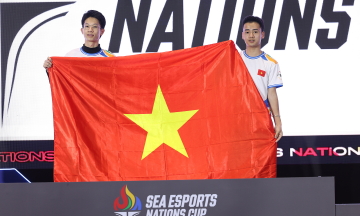
The "eSports Business Connect: A Launchpad for Vietnamese eSports" program took place on 9/5. The seminar aimed to find solutions for developing eSports more professionally and sustainably.
Opening the program, Vu Hoang Son, a member of the Executive Committee of the Vietnam Recreational and Electronic Sports Association (VIRESA), stated that Vietnamese eSports faces a significant opportunity with a large user community and rapid access to high technology. According to him, Vietnam has over 28 million game players and over 10 million regular eSports followers. Many Vietnamese teams have also achieved international success, bringing the name of Vietnamese eSports to the region. However, this large community has not yet translated into commensurate economic value.
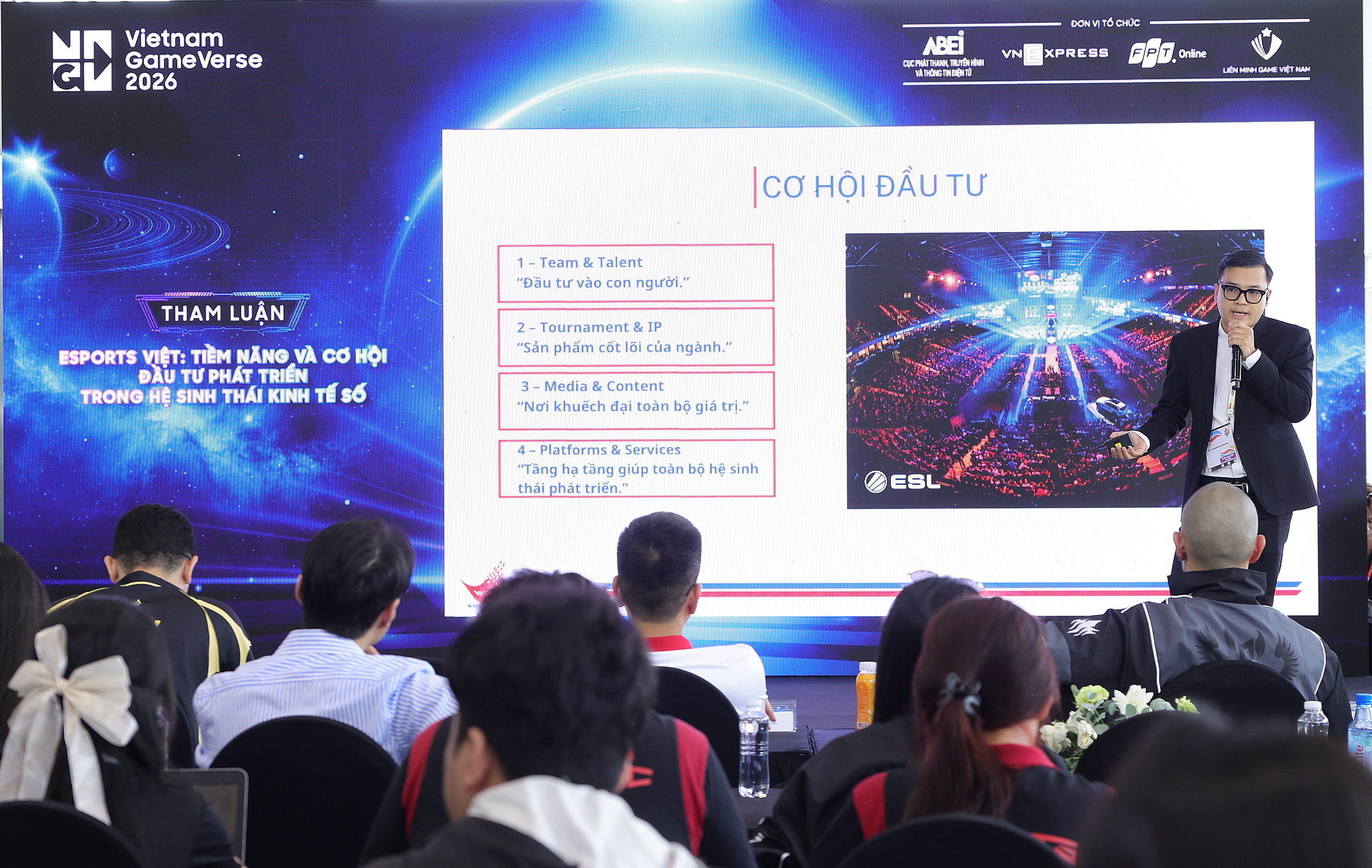 |
Vu Hoang Son, a member of the Executive Committee of the Vietnam Recreational and Electronic Sports Association, spoke at the program. Photo: Vietnam GameVerse 2026
Son noted that most domestic eSports tournaments remain amateur-level, while revenue primarily comes from international sources. "We may be doing well on the grassroots level, but not yet in business," he said. According to the VIRESA representative, to solve this problem, the industry needs to change its perspective on eSports. "eSports is not just about games; it is truly an ecosystem, an intersection of games, content, and eSports," he emphasized.
From a business perspective, Son believes eSports needs to shift its mindset from local to regional and toward the global market through technology, platforms, and partnerships. He also identified four core elements that require synchronized development: a professional tournament and ranking system, human resources and community, and media content and intellectual property (IP) with a distinct identity.
According to him, eSports content extends beyond matches to include sideline stories, player journeys, and community value. Meanwhile, IP will help eSports transcend the confines of games to become a cultural product capable of generating long-term business models.
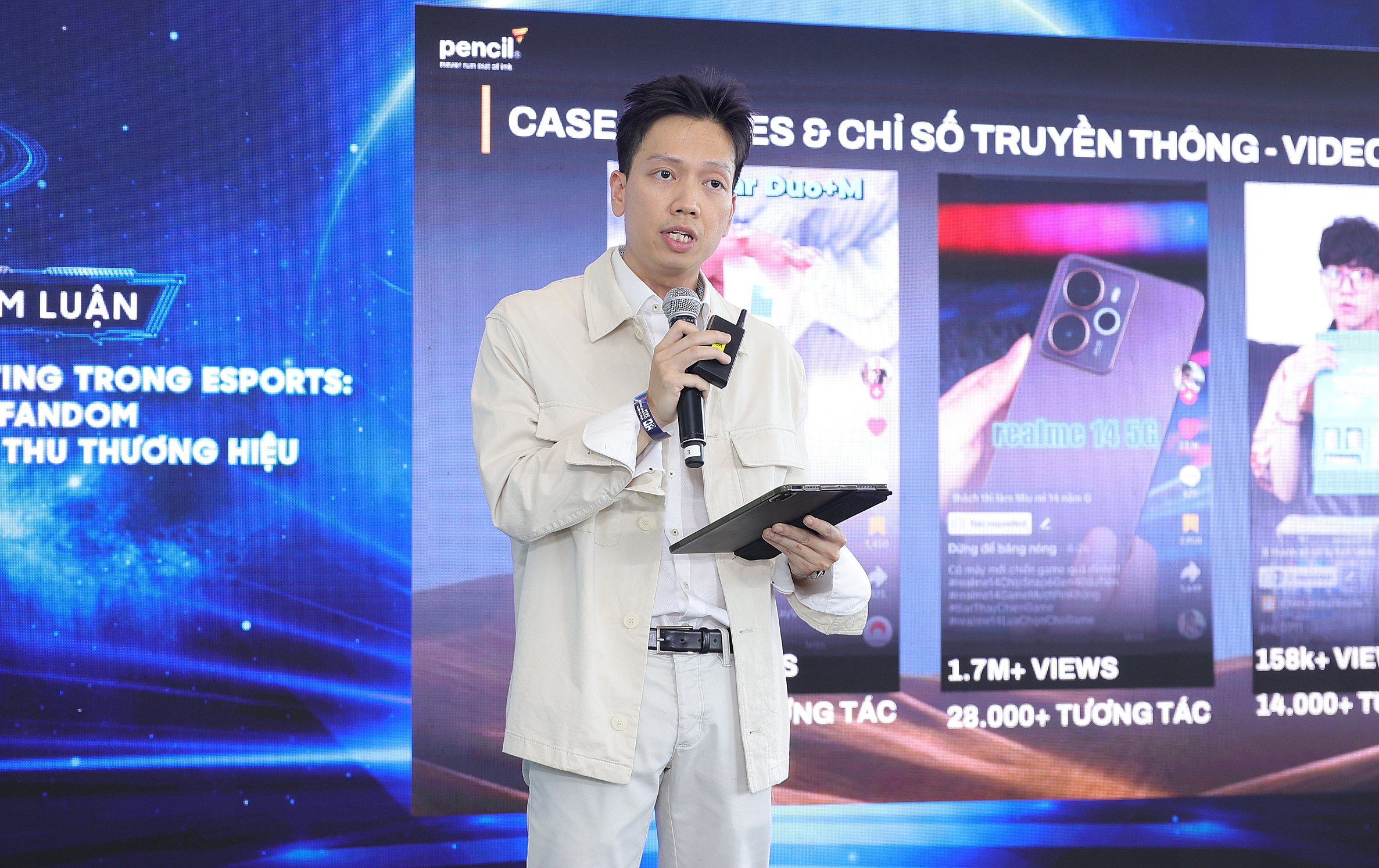 |
Ho Le Tuan presented the challenge of team operations and fan community commercialization. Photo: Vietnam GameVerse 2026
Building on the ecosystem discussion, the program expanded to the challenge of team operations and fan community commercialization. Ho Le Tuan, an eSports expert from Pencel Group and Saigon Phantom, focused his analysis on this topic.
According to Tuan, Vietnamese eSports has a very large viewership, but commercial effectiveness remains low. The average revenue per viewer in Vietnam is only about 0.06 USD, approximately 12 times lower than the global average.
Given this reality, Tuan suggested that eSports needs to shift from a tournament-centric mindset to building a long-term community culture. "Cultural Marketing – transforming fans into customers" is the strategy Pencel Group adopted to develop a sustainable eSports ecosystem. He explained that instead of just promoting products, brands need to invest in culture, emotions, and community identity to foster deeper engagement with fans.
Tuan identified three important pillars: identity, community, and commerce. Teams need to build clear representative values, create platforms for regular fan interaction, and gradually convert community loyalty into revenue through merchandise, fashion, or exclusive products.
Tuan noted that Vietnamese eSports is entering a phase of "professionalization and commercialization," where teams, businesses, and communities need to collaborate more closely to build long-term value rather than focusing solely on short-term revenue. "Cultural Marketing is the key for Vietnamese eSports to truly reach its full potential," he said.
Following the presentations, the panel discussion "Vietnamese eSports: High Potential, Lacking Support" further explored the bottlenecks hindering the rapid development of Vietnamese eSports. Opening the discussion, Do Viet Hung, Chairman of the Vietnam Recreational and Electronic Sports Association (VIRESA), stated that the biggest difficulty for Vietnamese eSports currently lies not in its potential but in its ability to connect ecosystem components. He noted that many eSports-developed countries have faced similar challenges. However, events like GameVerse and specialized dialogues are how the industry is gradually addressing these bottlenecks.
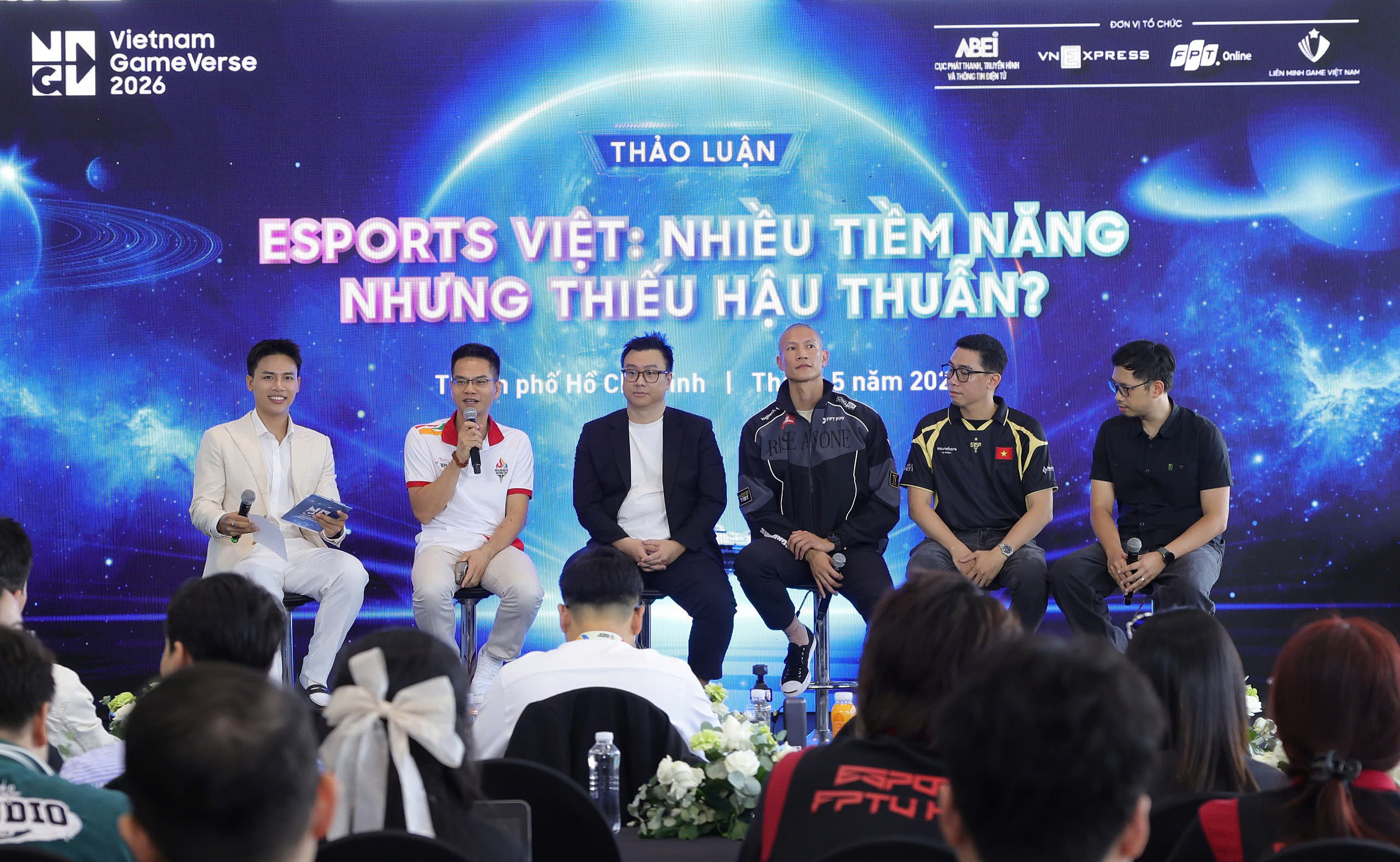 |
Guests at the panel discussion "Vietnamese eSports: High Potential, Lacking Support". Photo: Vietnam GameVerse 2026
From the topic of connectivity, the discussion shifted to the challenge of operating professional teams. TK Nguyen, CEO of GAM Entertainment, stated that sponsorship and prize money still play an important role for teams like GAM, but long-term revenue cannot solely depend on tournaments. According to him, each team needs to build its own IP with a distinct identity and a loyal community. "If we do not own any IP, how can we have a foundation and a community to develop?" he questioned.
From the perspective of tournament organizers, Vu Quoc Hoan, founder of 500BROS, believes Vietnamese eSports lacks business personnel who understand both the market and the industry's specific characteristics. According to him, a sport needs three tiers to develop: amateur players, a professional system, and influential stars. However, Vietnamese eSports currently lacks a seamless transition between these levels.
Adding to this point, Dang Thai Duong, Director of DGaming Entertainment Media Joint Stock Company, stated that the industry needs to invest more in community and semi-professional tournaments. According to him, if the foundation of the ecosystem is not strong enough, professional tournaments will struggle to maintain long-term appeal. The semi-professional system needs to become a bridge for young gamers to view eSports as a serious career path.
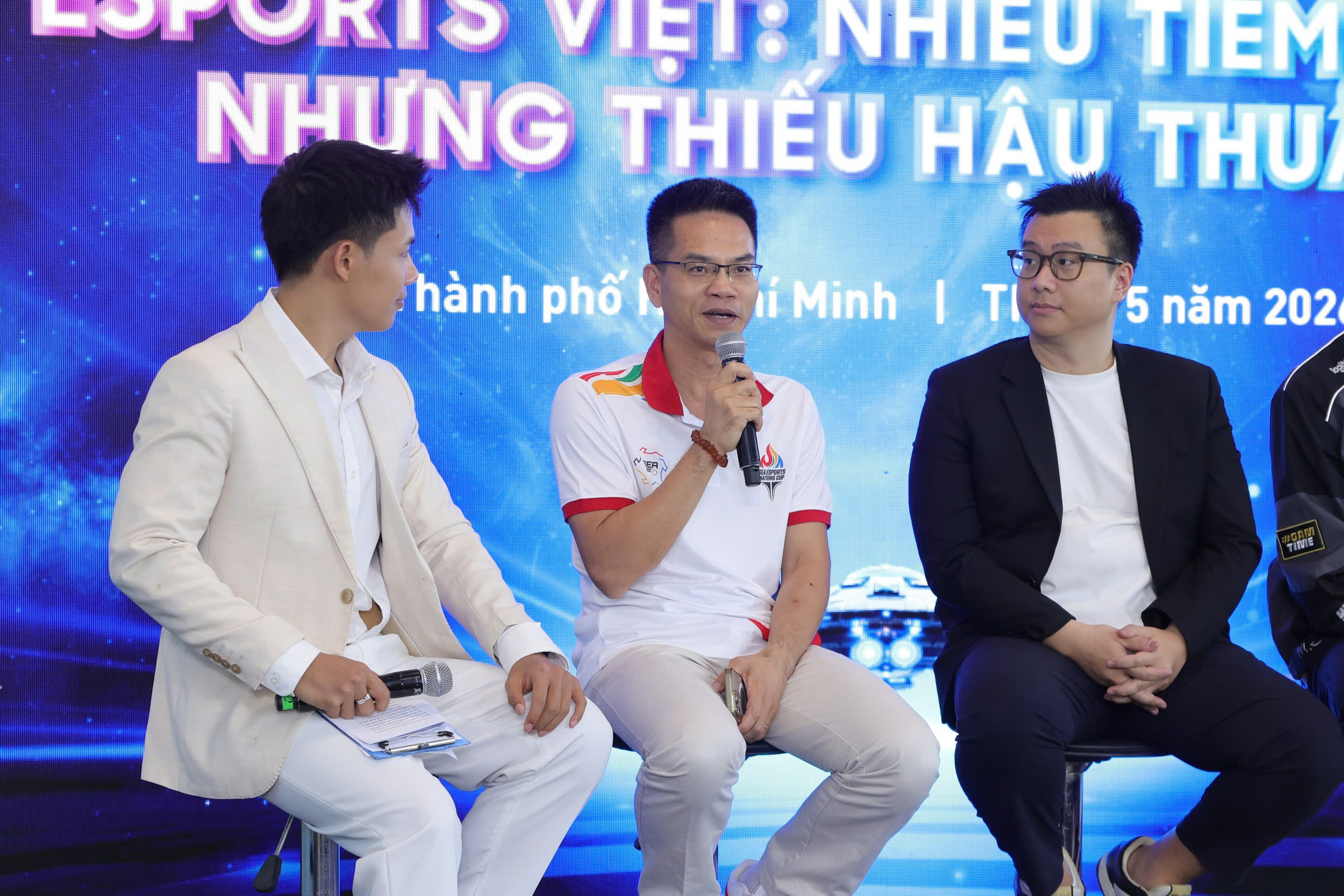 |
Do Viet Hung, Chairman of the Vietnam Recreational and Electronic Sports Association (VIRESA), shared his insights at the panel discussion. Photo: Vietnam GameVerse 2026
From a sponsor's perspective, Nguyen Hong Phuc, Marketing Manager at Monster Energy Vietnam, explained that businesses are interested in eSports not only for its large viewership but also for its ability to convert viewers into customers and communities into brand loyalty. According to him, many proposals still focus on views or impressions but do not demonstrate how to convert these into revenue or long-term brand value. "A language is needed to connect the story of views to revenue," the Monster Energy representative said.
The discussion also highlighted the role of offline experiences in eSports development. Vu Quoc Hoan believes that eSports does not only exist on live streams or social media but is gradually becoming festivals that combine games, music, fashion, and community culture. According to him, this helps sponsors gain more touchpoints with users rather than just appearing as logos on screens.
All guests agreed that Vietnamese eSports does not lack community, viewers, or passion. What the industry needs more is a sufficiently connected ecosystem, clear commercial models, long-term IP ownership, and the ability to create sustainable value for teams, businesses, and the fan community.
Hoang Dan
 |