Graham Scott refereed in the Premier League for over a decade and served as a VAR official in more than 100 matches. His experience indicates that while the technology aims to reduce errors, it has made refereeing more stressful, complex, and susceptible to criticism.
The primary reason referees dislike VAR is the psychological pressure it creates. On the field, officials make split-second decisions based on their direct view and feel for the game. This process, despite potential errors, feels natural and flows with the match's rhythm. However, the environment in the VAR room transforms everything.
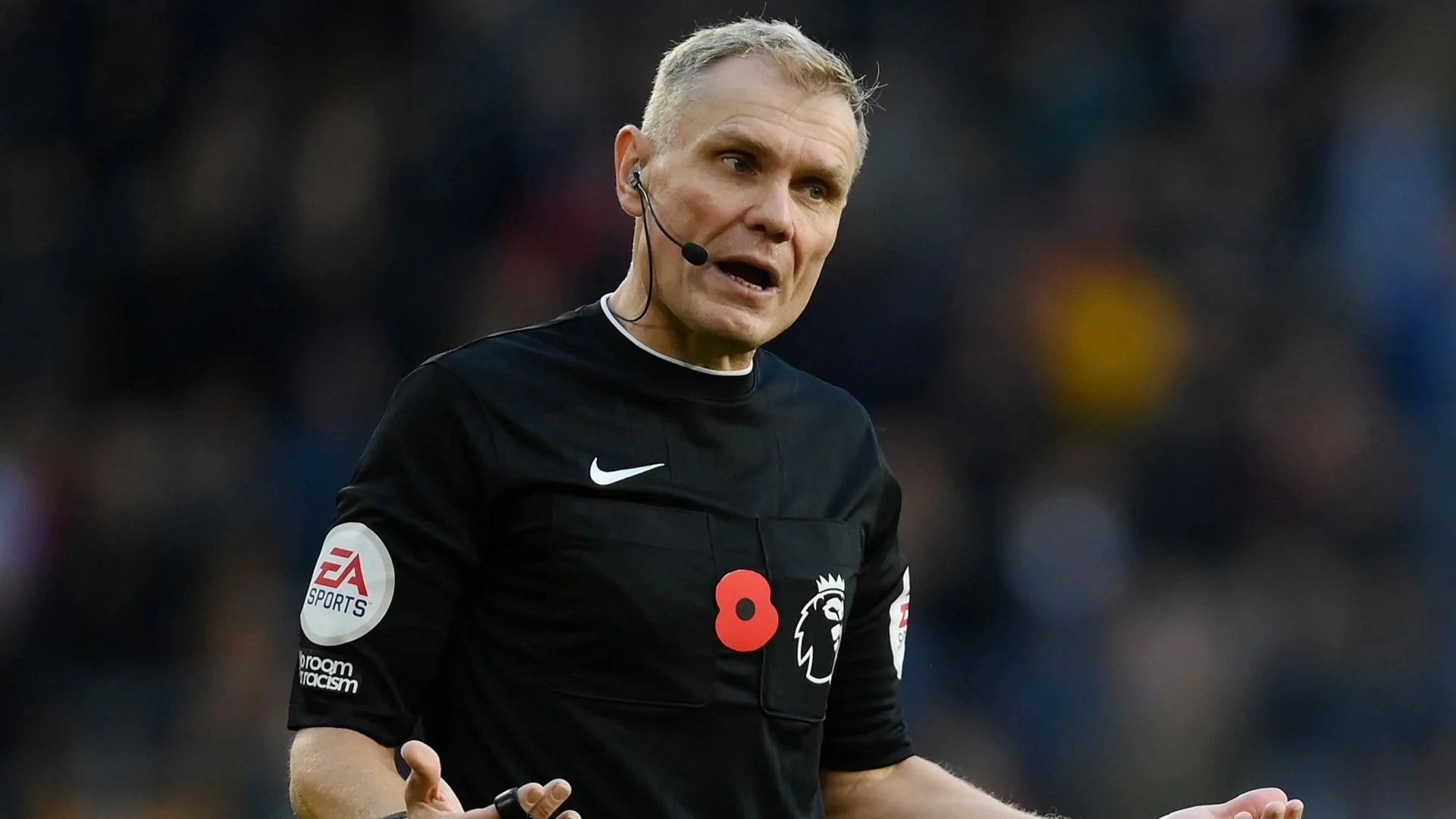 |
Referee Graham Scott during his time in the Premier League. *Photo: NewcastleUnited*
Officials must simultaneously monitor multiple camera angles, slow down every detail, and even freeze frames for analysis. A seemingly simple incident can become a complex problem with numerous potential infringements. Scott describes the feeling as being "trapped within four walls," experiencing an increased heart rate and immense pressure. Notably, he never felt this way during his 20 years of on-field refereeing.
A second reason is the cumbersome review process. Contrary to what viewers might believe about VAR simply reviewing a few angles, the reality demands a stringent procedure. For offside situations, referees cannot apply a "clear and obvious" error criterion; instead, they must meticulously check every detail because such incidents are definitively right or wrong, not subjective.
Missing even one camera angle or making a premature conclusion could expose VAR to severe criticism if contradictory evidence later emerges. Consequently, officials are compelled to conduct thorough checks, even if it means prolonged waiting times. These incidents can take three to four minutes, or even longer, as they have no other option.
The most evident consequence is that VAR disrupts the match and breaks emotional flow. A goal, inherently an explosive moment, becomes frozen during the review process. By the time a final decision is reached, the initial excitement has often dissipated. Even if the goal stands, the joy feels incomplete.
Scott admits that referees themselves find this frustrating. They do not want to be "spoilers," but VAR's role inadvertently places them in that position. In the eyes of spectators, VAR diminishes emotions, even though it is simply following established procedures.
Another issue is the misunderstanding surrounding VAR. Many believe referees deliberately scrutinize plays to disallow goals. However, VAR's objective is to uncover the truth, not to "nitpick." Multiple checks merely ensure decision accuracy.
Nevertheless, the audience's perception differs. The longer the review takes, the more suspicious they become. When a goal is disallowed, VAR almost automatically becomes the scapegoat, regardless of the decision's correctness.
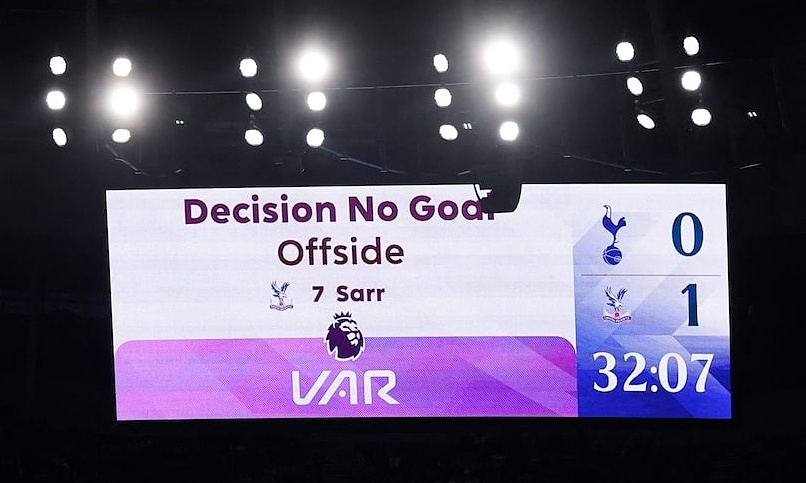 |
A VAR announcement displayed on the big screen during the match between Tottenham and Crystal Palace at Tottenham Hotspur Stadium, London, England, 5/3. *Photo: Reuters*
A major point of contention is the overly strict application of the laws. VAR allows for the detection of minute infringements, such as a body part being offside by a few centimeters. Such decisions often cause frustration because they contradict viewers' common sense.
Referees also dislike such situations. They do not want to disallow a goal simply because a knee or a toe is out of position. However, when the laws are clearly stipulated, they are compelled to apply them. This highlights that the core issue lies primarily in how the laws are structured and enforced.
Furthermore, VAR technology is not yet perfect. In crowded situations, the semi-automated offside system still struggles to determine who touched the ball first or the exact moment of a pass. This leads to unusually prolonged decisions, sometimes extending to 6 or 7 minutes, further increasing frustration.
Another significant factor is the lack of transparency for spectators. Inside the stadium, viewers often have little idea what VAR is checking. Even the main referee lacks complete information during the waiting period. This ambiguity makes the crowd impatient and prone to negative reactions.
If football is to use technology, it needs to adopt greater transparency, similar to some other sports. Publicizing the review process might not eliminate controversy, but it would at least help people understand what is happening.
Finally, what makes VAR a burden for referees is the inherent nature of their job. An ideal referee is "invisible," not mentioned after the match. Their success is measured by avoiding errors and not becoming the center of attention.
VAR has altered this. Every decision can be scrutinized, debated, and widely disseminated. Instead of remaining in the background, referees are now frequently pushed into the public spotlight, in a role they never desired.
By Hoang An (Source: *The Athletic*)