Hopes for an end to the Russia-Ukraine conflict emerged early this year after US President Donald Trump took office, pledging to swiftly bring both sides to the negotiating table.
The war was then entering its third year, with fierce fighting on the battlefield. Russia was countering Ukrainian forces in a offensive operation in Kursk province while simultaneously advancing on other fronts.
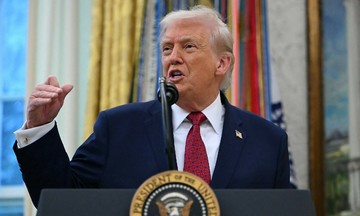
Ukrainian President Volodymyr Zelensky visited the White House on february 28 to meet President Trump, hoping to secure continued US support for the costly war of attrition. However, the meeting between the two leaders quickly devolved into an argument, leading to a several-week suspension of US military aid and intelligence support. This significantly impacted Ukraine on the battlefield.
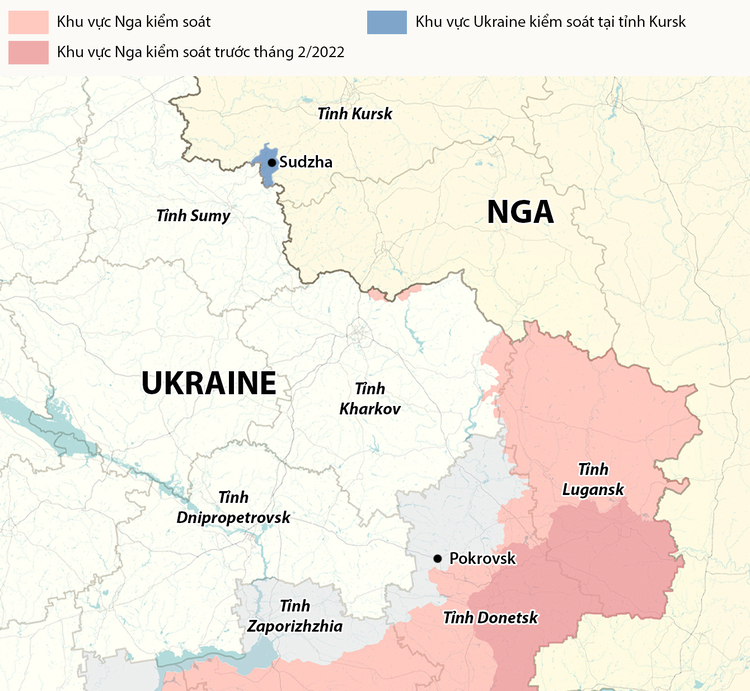
With assistance from North Korean units, the Russian army launched a large-scale counter-offensive in Kursk province on march 6, recapturing the strategic town of Sudzha seven days later. On april 26, Russia declared the complete liberation of Kursk province.
 |
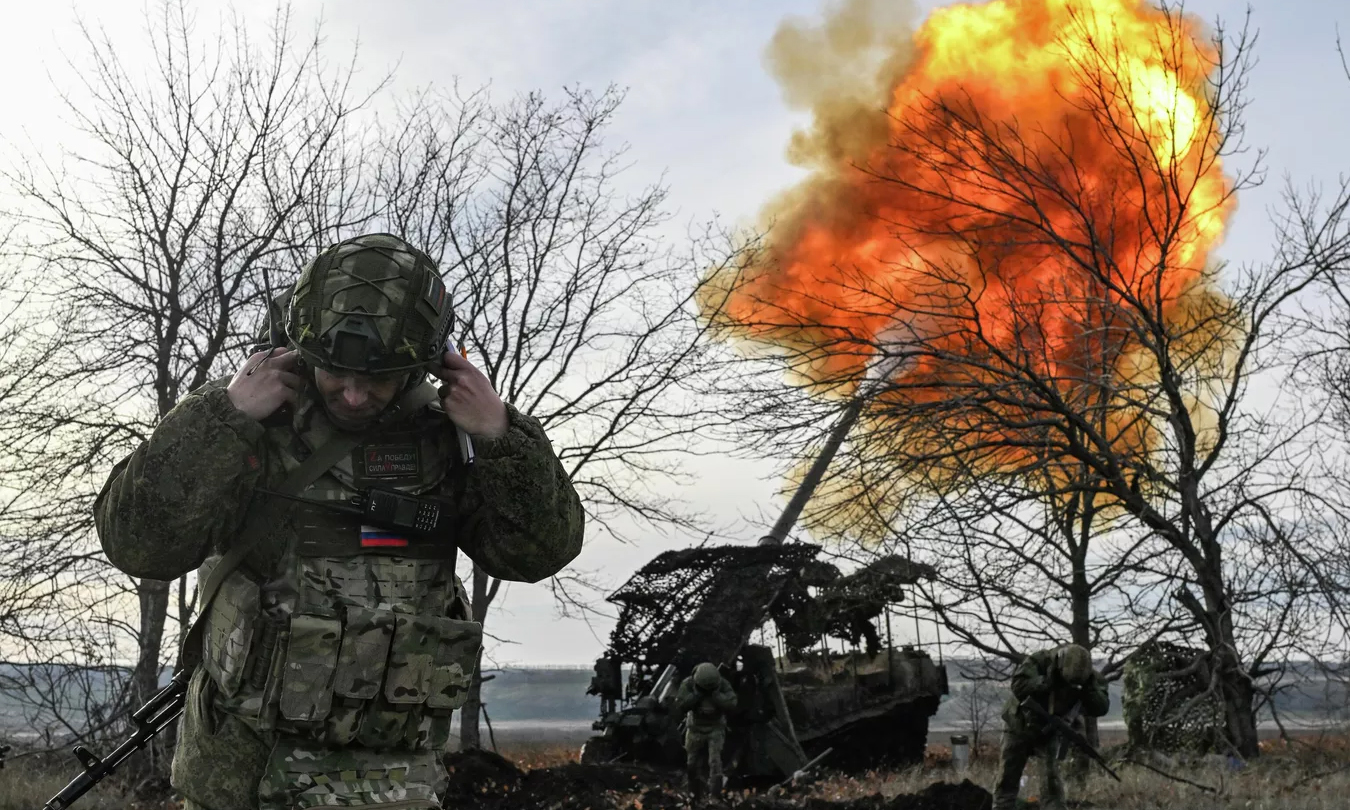
Russian 2S7 Pion self-propelled artillery attacks Ukrainian positions on the Kupyansk front, Kharkov province on 15/11. *Photo: Russian MoD* |
The military situation in Russia-Ukraine in january and december. *Graphics: RYV*
Concurrently with the Kursk operation, Russian forces crossed the border into Sumy province in northern Ukraine on february 19. After over nine months of fighting, Russian forces only controlled a few border villages and could not advance further to the provincial capital of Sumy, halted by Ukrainian units.
In mid-may, some Russian units advanced from Donetsk province into Dnipropetrovsk for the first time. Dnipropetrovsk is a key province in central Ukraine and a vital mining and industrial hub. Ukraine was forced to redeploy units to bolster its defensive lines in Dnipropetrovsk.
Amidst intense fighting on the ground, Ukraine’s Defense Intelligence (GUR) launched Operation Spider Web. This involved simultaneous drone attacks on five Russian strategic airbases on june 1.
This unprecedented long-range attack demonstrated a high degree of secrecy and audacity. GUR smuggled drones into Russian territory, camouflaging them in wooden crates transported by trucks to locations near strategic bases. From there, the drones were remotely piloted into Russian bombers parked on the airfields.
GUR claimed to have hit 41 Russian aircraft, destroying 13. However, US officials estimated that Ukraine hit only 20 targets and destroyed 10 Russian aircraft. According to US media, seven to eight Tu-95MS bombers and four Tu-22M3 aircraft were damaged in the attack. This represented the heaviest losses for Russia’s strategic bomber fleet since the conflict began.
Operation Spider Web boosted Ukrainian morale but did not alter the battlefield situation. On the Pokrovsk front, where Russia began its offensive in july 2024, Moscow concentrated manpower and resources to seize the stronghold in western Donetsk province, which blocked Ukrainian supply routes.
A turning point on the Pokrovsk front occurred in august when Russia’s 132nd Guards Motor Rifle Brigade advanced towards Dobropillia city, north of Pokrovsk, penetrating 15 km deep. This was Russia’s largest advance in over one year, forcing Ukraine to redeploy experienced defensive forces from Pokrovsk to fill the gap in Dobropillia.
By late october, the Dobropillia breakthrough was halted. However, this appeared to be a feint designed to stretch Ukrainian forces, allowing Russia to increase pressure on Pokrovsk.
Facing continuous assaults from small Russian assault units and overwhelming drone forces, defensive units in Pokrovsk could not hold their lines due to a lack of reinforcements and severed logistics. In late october and early november, the General Staff of the Ukrainian Armed Forces first acknowledged that Russian soldiers were present within Pokrovsk city.
On december 1, Russia claimed full control of Pokrovsk and the encirclement of the neighboring city of Myrnohrad. However, Ukraine denied the encirclement and affirmed it still held some areas in Pokrovsk.
Western experts note that the Russian army made battlefield gains this year due to important adjustments. Instead of large-scale human wave attacks, Russia improved its unmanned combat capabilities, targeting Ukrainian drone operators and cutting off Ukrainian logistics.
Sam Cranny-Evans, an expert at the Royal United Services Institute (RUSI), believes Russia, with its numerical advantage, is using small assault teams to infiltrate enemy positions and then regroup to attack.
"This activity is combined with drone and artillery strikes against Ukrainian positions, especially logistics routes," Cranny-Evans said. "When successful, they push Ukrainian vehicles and electronic warfare equipment further behind the front lines."
Despite Russia’s slow advance, Ukraine struggled to resist due to disadvantages in manpower and firepower. The Ukrainian army faces severe difficulties in recruitment and preventing desertions, creating gaps in their defensive lines that Russia can exploit.
 |
Michael Kofman, an expert at the Carnegie Endowment for International Peace, assessed that Russia succeeded in reducing Ukraine's advantage in unmanned combat due to its superior manufacturing capacity.
Following Russian forces' advances on the battlefield, President Vladimir Putin affirmed, "our army maintains an undeniable strategic initiative everywhere."
In a june 21 interview, President Trump warned, "Ukraine will lose the rest of the Donbass region very soon," referring to Donetsk and Lugansk provinces. This is why President Trump urged Ukraine to accept concessions and sign a peace agreement quickly to "keep what it can." Russia welcomed President Trump's stance.
However, Ukraine and its European allies are negotiating with the US for a less disadvantageous peace agreement with stronger security guarantees. After two days of talks in Berlin, the US and Ukraine made "substantial progress," and President Trump declared a peace deal "closer than ever."
Nevertheless, Russia is unlikely to accept Ukraine's refusal to relinquish territory in Donbass, making the chances of an agreement fragile. The conflict will likely extend into its fourth year.
Experts predict that despite slow progress in recent years, the battlefield situation could change rapidly in 2026 if Russia maintains its current momentum while the US significantly reduces support for Ukraine.
Vladislav Inozemtsev, a special advisor for the Russia Media Studies Project at the Middle East Media Research Institute (MEMRI) in Washington, believes President Vladimir Putin thinks that if the war continues for one or two more years, Ukraine will become exhausted and forced to accept Russia's terms.
"Ukraine is facing an escalating crisis, and President Putin understands that very well," said Tatiana Stanovaya, a researcher at the Carnegie Russia and Eurasia Center. "For the Russian President, waiting for Ukraine to weaken further could yield greater concessions at the negotiating table."
Nguyen Tien (According to RIA Novosti, AFP, AP, Washington Post)