Japan's National Diet approved the first amendment to the Imperial House Law since 1947 on 17/7, aiming to halt the decline in the size of the nation's more than 2,600-year-old hereditary dynasty.
Under Japan's Constitution, the Emperor serves as a national symbol without political power. All internal matters, from succession to imperial family membership, are governed by the Imperial House Law.
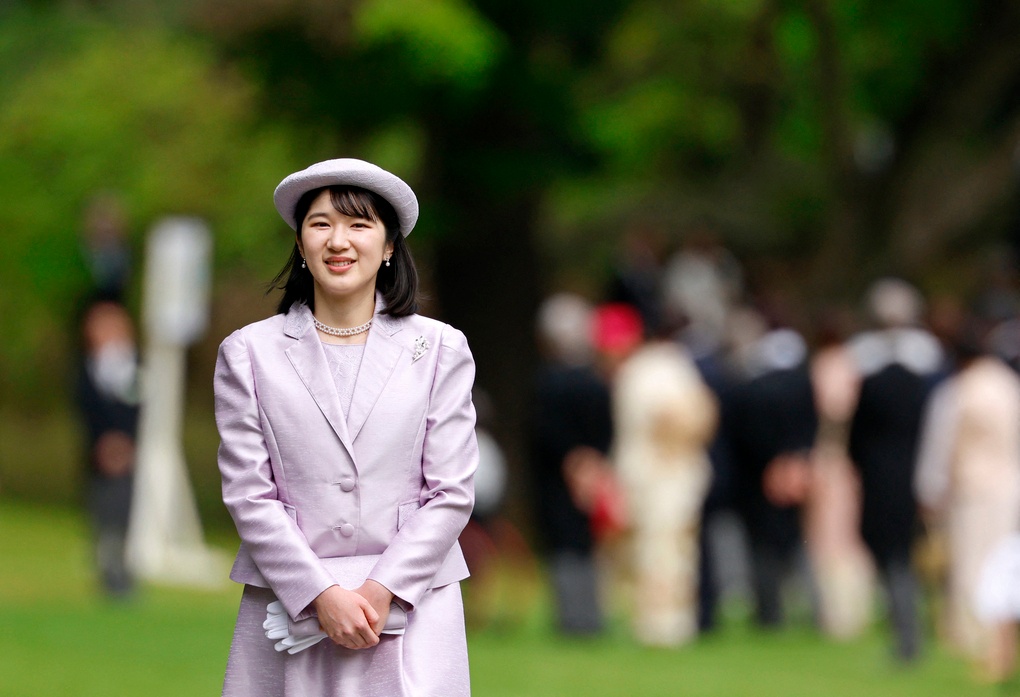 |
Princess Aiko, the Emperor's only daughter, attended a spring garden party at the imperial garden of Akasaka Palace in Tokyo on 17/4. *AFP*.
After World War II, the Imperial House Law enacted in 1947 compelled 51 members from 11 collateral branches to relinquish their titles and become commoners. This provision drastically reduced the size of Japan's imperial family from 67 members in 1947 to 16 currently.
The new law introduces two landmark solutions to address the crisis of a dwindling number of individuals performing imperial duties.
The first solution allows female members of the imperial family to retain their titles after marrying commoners. This new provision reverses the previous law that forced Princess Mako to leave the imperial family and relinquish all her titles when she married a commoner classmate in 2021. However, under the new law, the princess's husband and children will still not be recognized as imperial family members.
The second solution permits males from the 11 former branches, dispossessed after World War II, to rejoin the imperial family through adoption.
However, the new law retains the old rule prohibiting women from ascending the throne. Consequently, Princess Aiko, Emperor Naruhito's only child, remains ineligible to inherit the throne from her father.
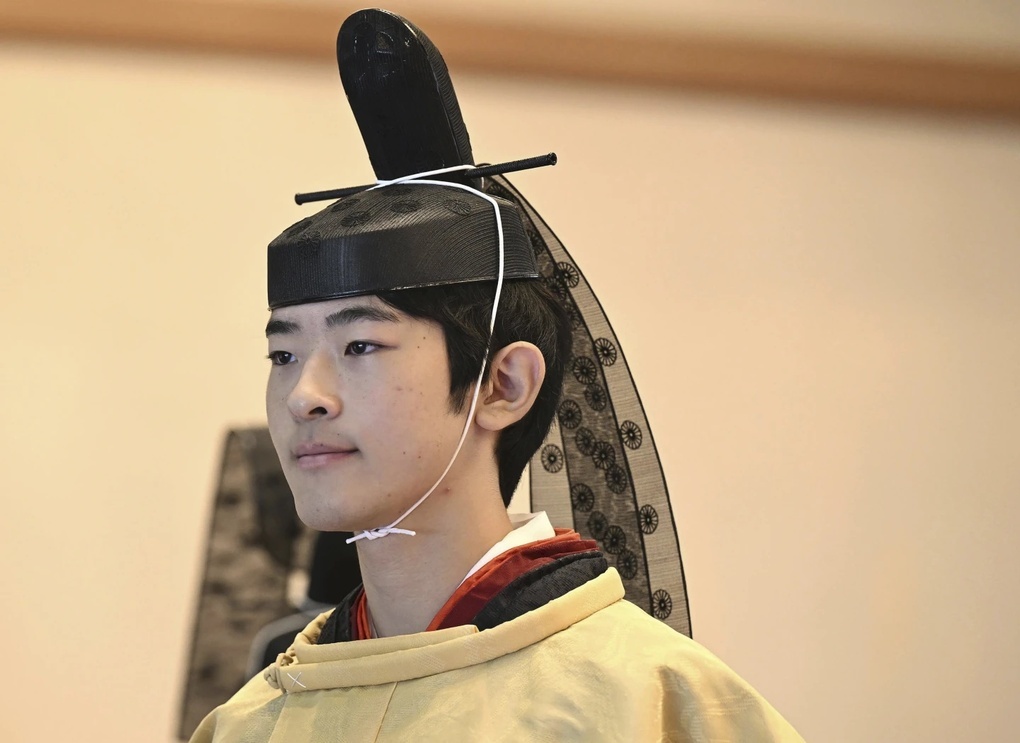 |
Prince Hisahito attended his coming-of-age ceremony in Tokyo on 6/9/2025. *Kyodo News*.
The current list of eligible heirs to the Japanese throne includes three individuals: Crown Prince Fumihito, 60, the Emperor's younger brother; Prince Hisahito, 19, Crown Prince Fumihito's son; and Prince Hitachi, 90, the Emperor's uncle.
Many observers warn that if Prince Hisahito does not have a son in the future, the male line of succession for the Japanese imperial family faces the risk of complete cessation.
The new law highlights a deep divide between the will of lawmakers and the wishes of the majority of the Japanese public.
Prime Minister Sanae Takaichi and conservative leaders firmly defend the male-only succession rule. They argue that upholding the tradition of passing the throne through the male line for 126 continuous generations is the supreme source of the Emperor's legitimacy and authority.
In contrast, the Japanese public shows overwhelming support for the nation having a female emperor. According to a June survey by Mainichi Shimbun, over 70% of participants supported a female monarch. Another poll by Kyodo News even recorded a support rate of 83%.
Experts consider this amendment to the Imperial House Law historic, yet only a temporary solution intended to "buy time". It does not fully resolve the existential problem regarding the long-term future of the Japanese throne.
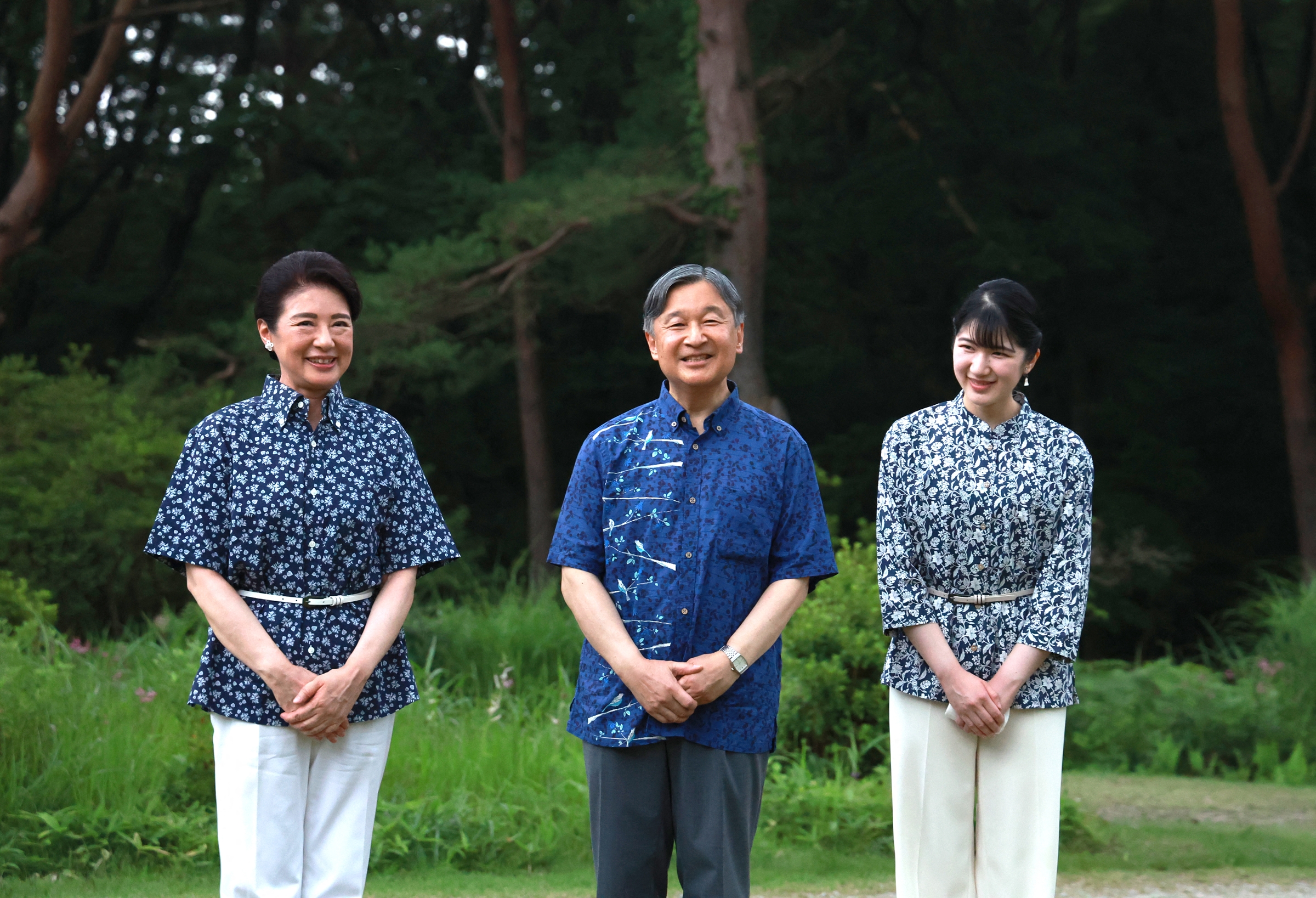 |
Emperor Naruhito, Empress Masako, and Princess Aiko conversed with the media after a stroll at the Nasu Imperial Villa in Nasu, Tochigi prefecture on 15/7. *AFP*.
By Hong Hanh (According to BBC, Nikkei)