The USS Gerald R. Ford aircraft carrier is expected to dock in Haifa, Israel, today, arriving amidst heightened tensions with Iran. Its presence significantly enhances the US's capacity for long-range airstrikes in the region. Haifa city authorities, in western Israel, on 27/2 issued a welcome message for visitors to see the carrier, stating, "Those coming to Haifa to view the Ford carrier can also visit our restaurants, cafes, museums, shopping centers, and beaches."
The Times of Israel reported that the Ford was off the coast of Haifa. The USS Gerald R. Ford carrier strike group had previously been anchored at Souda Bay naval base on Crete, Greece, departing on 26/2 for Israel.
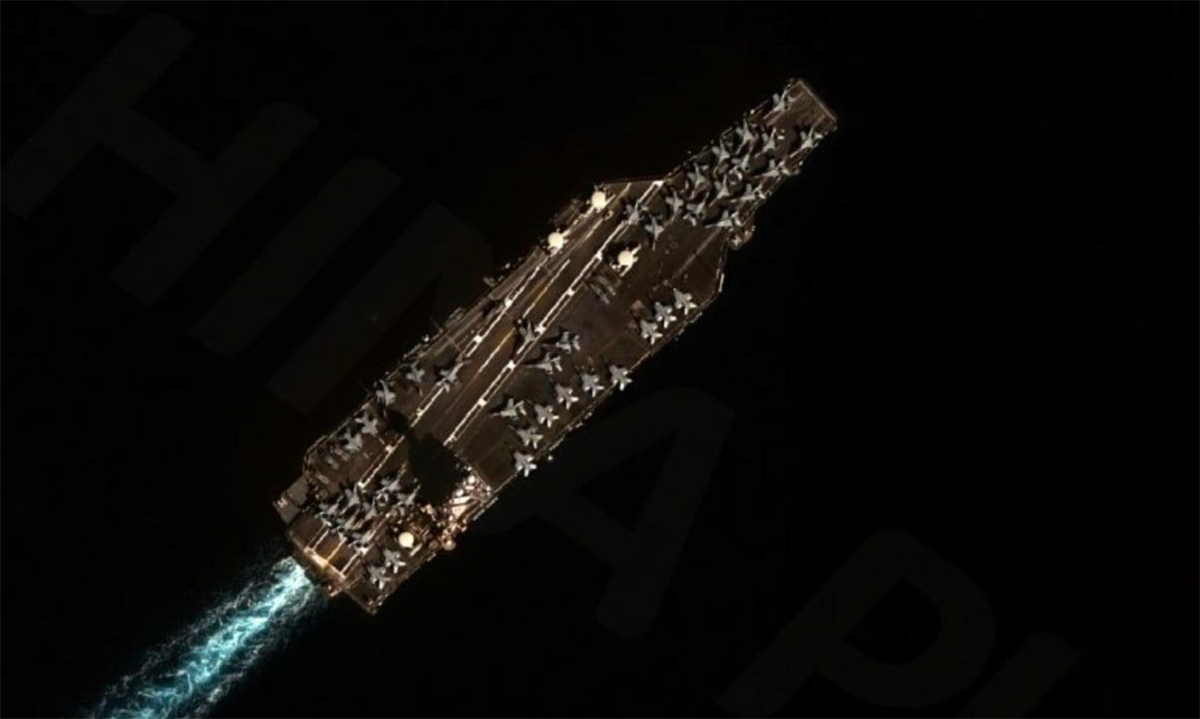 |
The USS Gerald R. Ford aircraft carrier departing Crete, Greece, in an image released on 27/2. Photo: MizarVision
Chinese company MizarVision on 27/2 released satellite images of the Ford as the warship left its Crete base. The deck showed about 40 F/A-18 fighters parked alongside four aircraft with circular domes, likely E-2 Hawkeye early warning planes.
Haifa is one of the closest Mediterranean locations to Iran accessible by the Ford. The distance from Haifa to Tehran, Iran's capital, is about 1,500 km, within the operational range of F/A-18 fighters with aerial refueling.
The Ford's arrival in the Middle East coincides with the US withdrawing non-essential personnel and diplomatic families from two embassies in the region, citing security concerns amid escalating tensions with Iran.
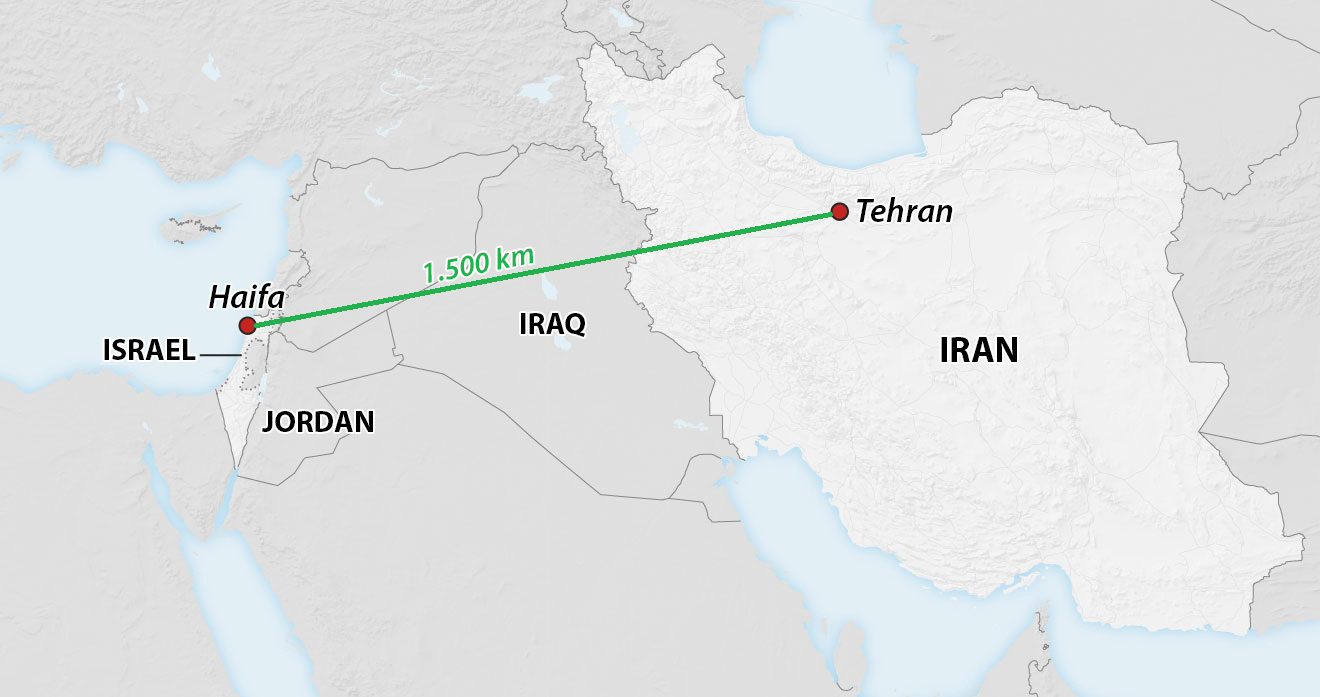 |
Location of Haifa city, Israel, and Tehran, Iran. Graphic: CNN
Other nations have taken similar precautions against a potential US-Iran conflict. The UK on 27/2 announced it had withdrawn embassy staff from Tehran due to security reasons, while China and Canada advised their citizens to leave Iran immediately.
US President Donald Trump on the same day expressed dissatisfaction with the ongoing negotiations between the two countries, stating he would await the outcome of future discussion rounds. "Iran is unwilling to meet our needs. Let's wait and see what happens, we will talk later", Trump said. He added, "Iran cannot possess nuclear weapons."
When asked about the risks of a US attack on Iran and the potential for a prolonged Middle East conflict, Trump replied, "That is always present." He further stated, "Anything can happen during wartime, both good and bad." US Vice President JD Vance previously asserted that any military action by the US would not result in a prolonged conflict. Vance affirmed, "The scenario of the US engaging in an endless war in the Middle East will not happen."
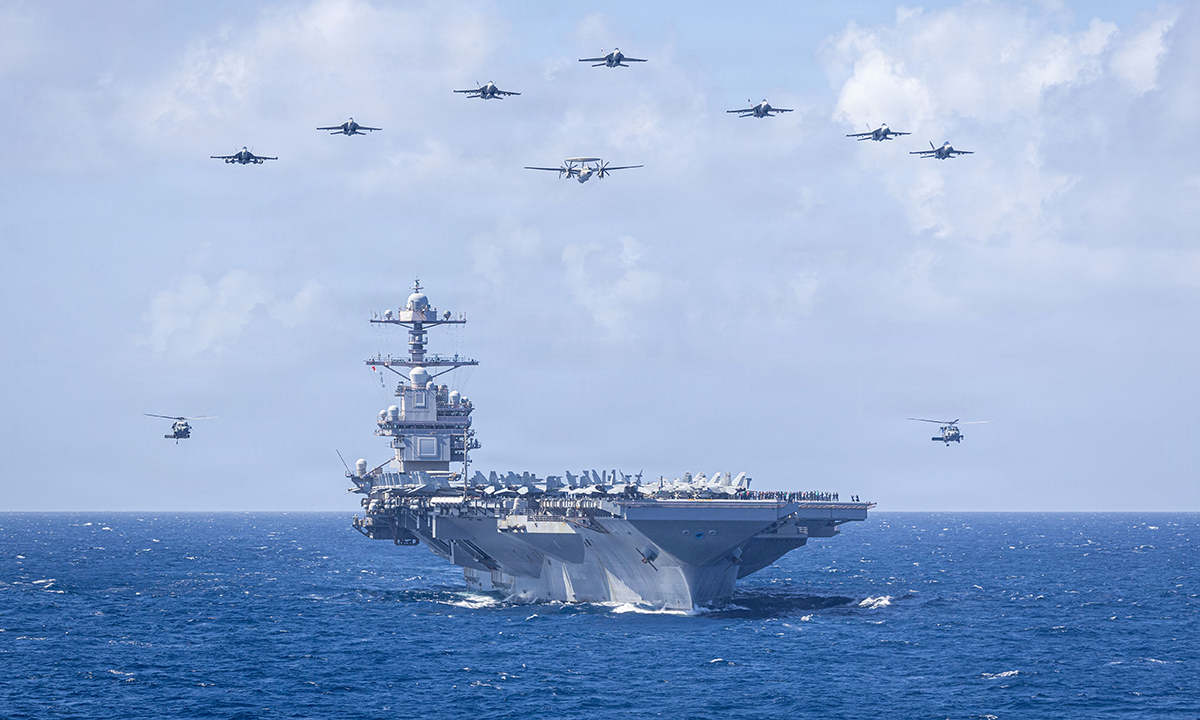 |
The USS Gerald R. Ford aircraft carrier in the Caribbean Sea on 19/1. Photo: US Navy
Negotiations between the US and Iran in Geneva, Switzerland, mediated by Oman, concluded on 26/2 without a breakthrough. However, Omani Foreign Minister Badr bin Hamad al-Busaidi indicated that Iran is prepared to make significant concessions in subsequent negotiation rounds to reach an agreement. These concessions include diluting Iran's enriched uranium stockpile, which contains 440 kg of high-grade material sufficient for about a dozen nuclear weapons. Additionally, Iran would agree not to stockpile enriched uranium in the future, a change from the 300 kg low-grade limit in the 2015 agreement, which was enough for one nuclear weapon, al-Busaidi stated. "This is completely new", Foreign Minister al-Busaidi commented. He added, "If enriched uranium is not stockpiled, nuclear bombs cannot be built."
Delegations from both countries are expected to meet in Vienna, Austria, on 2/3 to discuss details of sanctions relief for Iran if an agreement is reached, as well as specific steps Tehran could take to limit its nuclear program. Iranian Foreign Minister Abbas Araghchi stated that a new meeting with the US delegation might occur this weekend. The White House has not commented on this information.
Nguyen Tien (According to AFP, AP, PBS, WSJ)