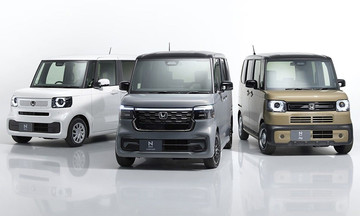
The start/stop (or idling stop) feature is increasingly common in cars and moto, aiming to reduce fuel consumption and emissions in urban traffic. This technology automatically turns off the engine during temporary stops and restarts it when the driver resumes motion. However, many users worry that frequent engine shutdowns and restarts will quickly degrade the battery, leading to more frequent replacements and higher costs compared to the fuel saved.
The start/stop button in a car. Photo: Practical Motoring |
The start/stop button in a car. Photo: Practical Motoring
In principle, start/stop increases the number of engine starts during a trip, meaning the battery must discharge at high currents more often than in vehicles without this feature. To meet this demand, manufacturers do not use conventional lead-acid batteries but rather specialized types such as EFB (Enhanced Flooded Battery) or AGM (Absorbent Glass Mat). These batteries are designed for frequent charge-discharge cycles, tolerate high starting currents, and recover quickly after each engine start.
The difference between a regular battery and a start/stop battery lies in their structure and load capacity. Regular batteries are designed for vehicles that start only a few times per trip, with limited deep discharge and continuous current discharge capabilities. If subjected to continuous engine shutdowns and restarts, the internal plates and lead materials quickly degrade, causing a sharp drop in capacity after a short period.
In contrast, EFB and AGM batteries used for start/stop systems feature improved designs and materials. These enhancements increase their ability to withstand high charge-discharge cycles and meet the demands of continuous starting better than conventional batteries. Beyond engine cranking, these batteries also supply sufficient power to peripheral devices like air conditioning, entertainment systems, ECUs, cameras, and other electrical components while the engine is off.
In addition to specialized batteries, vehicles with start/stop systems integrate an energy management system. A control unit continuously monitors the battery's voltage, remaining capacity, ambient temperature, and the vehicle's power consumption. If the power level is insufficient for the next start, the system automatically deactivates the start/stop function. This mechanism prevents deep discharge, which can affect battery longevity, and ensures the vehicle always has enough power to start at any time.
Regarding the cost savings from using the start/stop feature, consider a B-C segment gasoline car primarily driven in urban areas, with a fuel consumption of about 8 liters per 100 km. Over a distance of 10,000 km annually, the vehicle consumes approximately 800 liters of gasoline. Estimates suggest start/stop saves 5-10% of fuel, translating to 40-80 liters saved each year. This is equivalent to approximately one to two million Vietnamese dong at current gasoline prices. Meanwhile, EFB or AGM batteries for start/stop systems typically cost three to four million Vietnamese dong and last for two to four years, averaging an annual cost of one to 1,5 million Vietnamese dong. Thus, the fuel savings from start/stop are essentially equivalent to or greater than the battery depreciation cost.
Problems only arise when users replace the battery with an incorrect type. Installing a regular battery in a vehicle designed for start/stop can rapidly reduce its lifespan, as standard batteries are not built for continuous, high-intensity charge-discharge cycles. In such cases, the vehicle may experience weak starting, frequent deactivation of the start/stop system, or error messages on the dashboard.
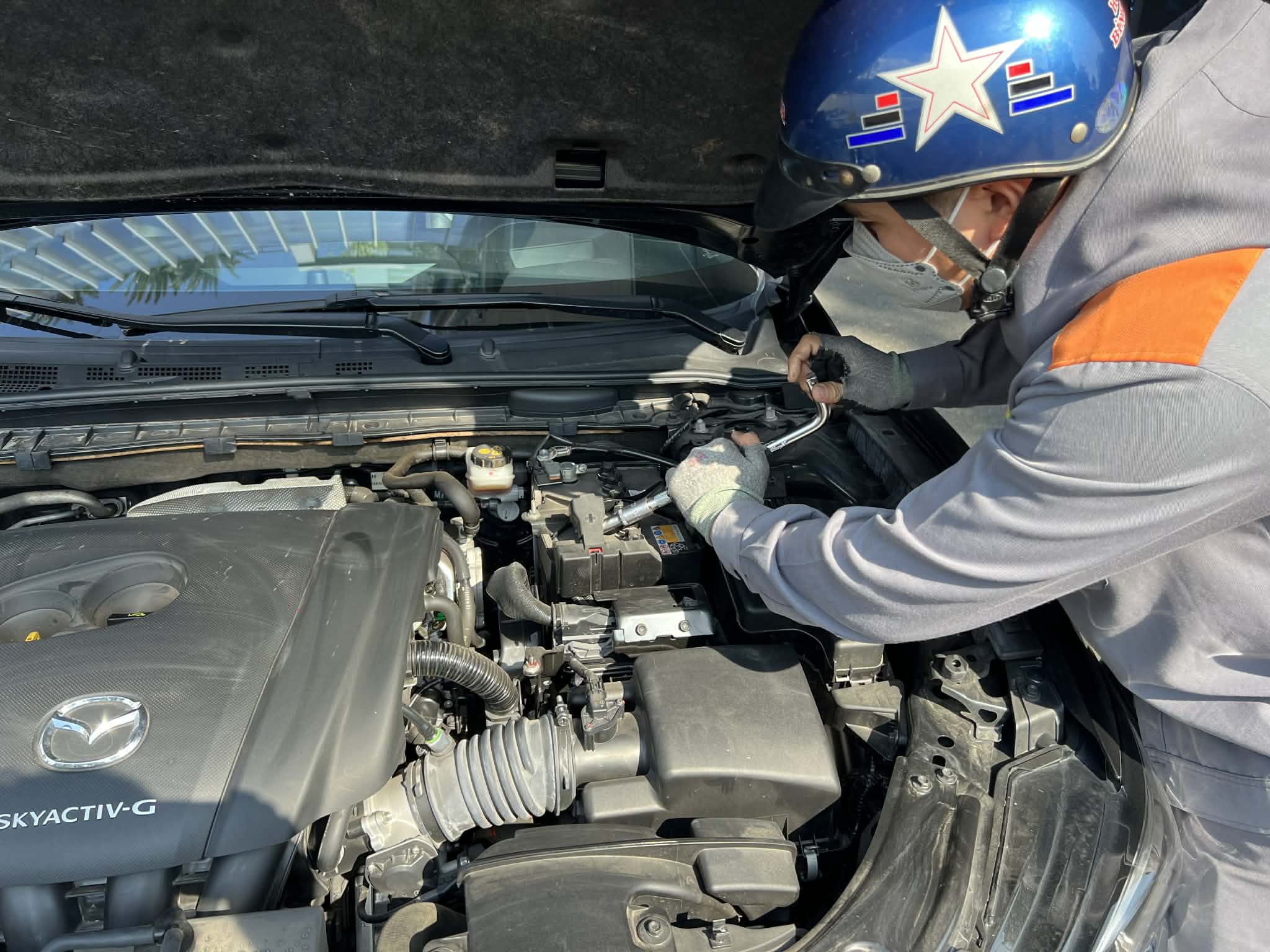 |
A vehicle with the start/stop feature having an AGM battery replaced. Photo: Ho Tan |
A vehicle with the start/stop feature having an AGM battery replaced. Photo: Ho Tan
For moto, scooter models with idling stop are equipped with higher-capacity batteries and enhanced discharge capabilities, along with compatible chargers and control units. If the battery power is low, the system will prevent automatic engine shutdown to ensure it can restart.
In conclusion, the start/stop feature does not shorten battery life if the vehicle uses the correct battery type and the original electrical system as designed by the manufacturer. Conversely, using the wrong battery type or neglecting regular maintenance is the main cause of reduced battery life, leading to the perception that start/stop harms the battery.
Ho Tan