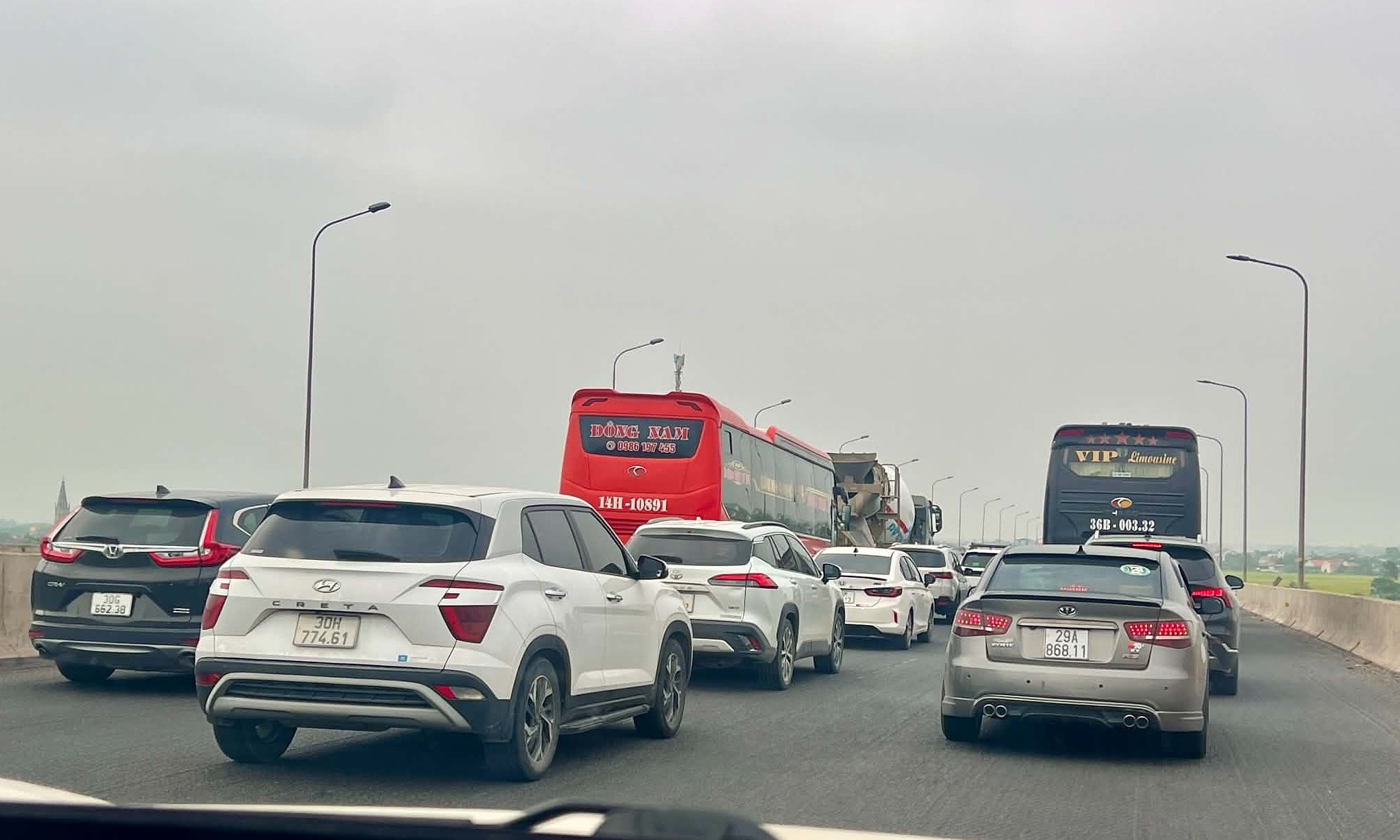
A shattered stone bench, a large glass panel fallen from the building, and a dislodged spare tire were the remnants of an oto that a security guard backed into on 3/5 at an apartment complex in Ha Noi. Residents reported that people often rested on that stone bench, and it was fortunate no one was present during the accident. While the damage this time was limited to property, that reversing maneuver could easily have turned into a tragedy if, as usual, someone had been sitting on the bench. This is not an isolated incident; similar events occur frequently, yet many car owners remain overly careless with their assets and the safety of the community.
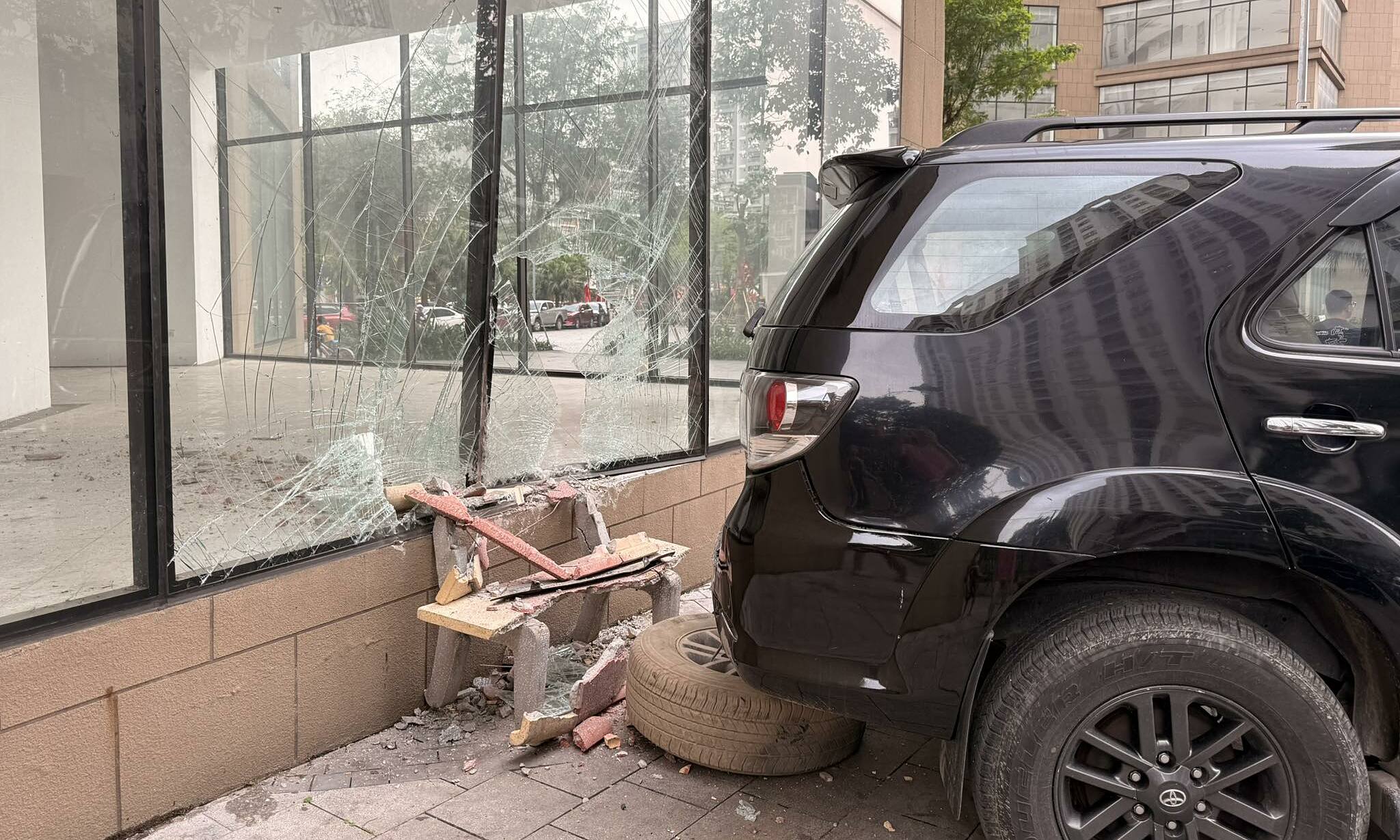 |
The vehicle driven by the security guard broke the apartment building's glass. *Minh Khoi* |
I frequently witness scenes at restaurants, cafes, apartment complexes, and car washes where car owners, immediately after stopping, quickly step out and casually toss their keys to security guards with a phrase like, "Please park the car for me!". Many even consider this an essential service they are entitled to. In other locations, due to limited parking, security personnel request keys to arrange vehicles. I often wonder: can these individuals truly ensure the safety of the vehicle?
The inherent danger stems from the significant differences in vehicle handling and the often-unqualified nature of the personnel tasked with driving. Each car model has varying accelerator and brake sensitivity, as well as distinct blind spots. A security guard accustomed to maneuvering motorbikes, when stepping into a high-clearance SUV or a vehicle with high acceleration, can easily mistake the accelerator pedal. Furthermore, many security personnel at businesses today are seasonal workers, elderly individuals, or young people who have not undergone driving training, and some even lack a driving license.
When collisions occur, determining compensation is extremely complex. Security guards typically have low incomes, making it impossible for them to afford significant sums to compensate for a car with a smashed front or rear, or a damaged tempered glass panel of a building. However, the most tragic outcomes are accidents causing injuries or fatalities. In such cases, neither apologies nor money can undo the damage.
To mitigate these risks, both drivers and establishment management must adopt more responsible practices and implement stringent safety regulations. If parking is available, drivers should take the wheel themselves. It may only take an additional 5-10 minutes, but it allows them to control the situation. If handing over the car is unavoidable, ensure the recipient possesses a valid driving license and adequate skills. For management boards and business owners, strict regulations are essential. Absolutely no staff without a driving license or proper training should be allowed to drive customer vehicles.
Ultimately, an oto should be treated with the seriousness of a potentially dangerous instrument, and its control entrusted only to qualified individuals. Handing car keys to someone who cannot drive is like giving a loaded gun to an untrained individual. Safety is paramount; do not sacrifice a lifetime of regret for temporary convenience.
Reader Minh Khoi