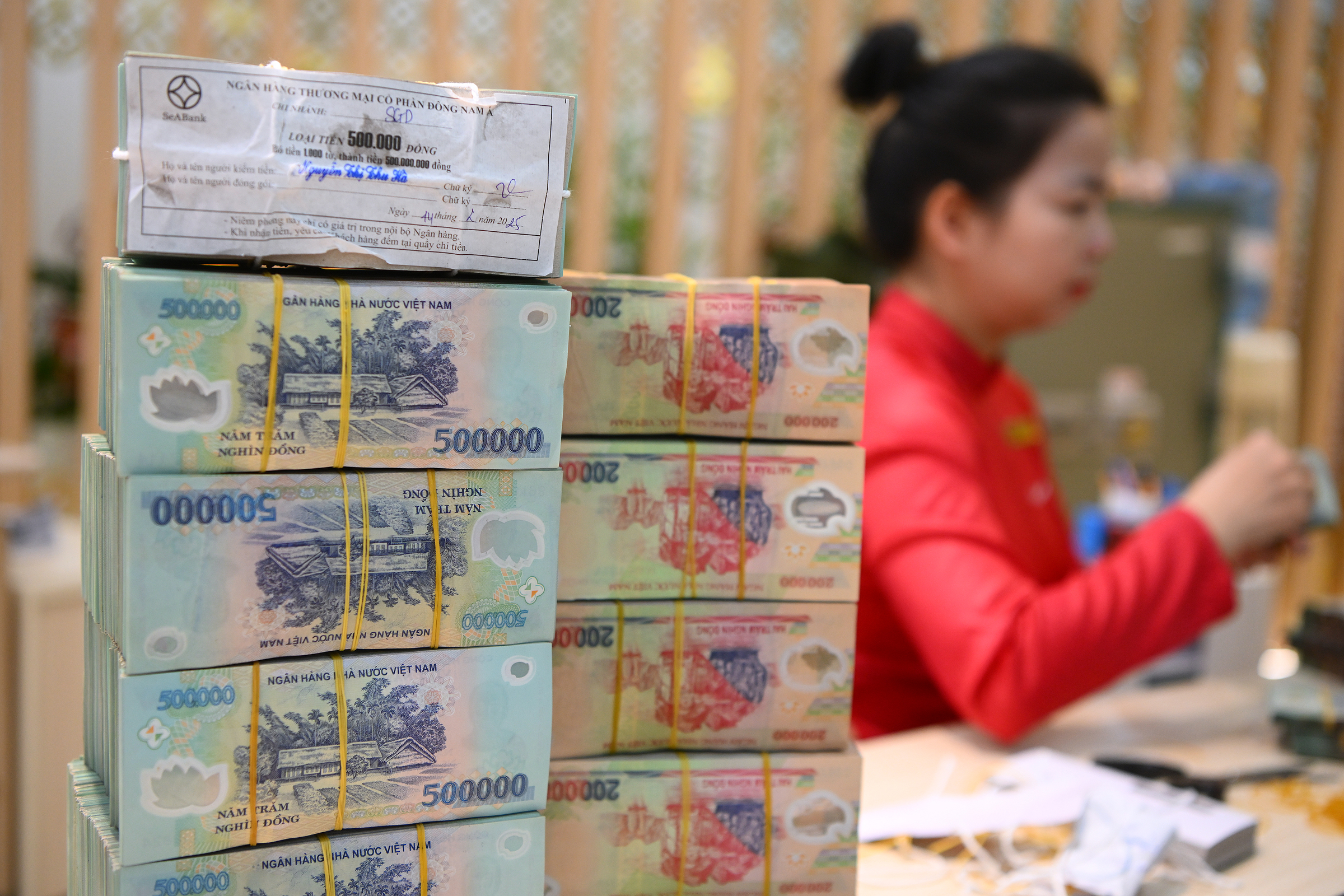
According to VnExpress statistics, in the latter half of last month, 18 tranches of bank bonds were successfully offered with a total value exceeding 19,400 billion dong. The average interest rate established a new benchmark at 8,7% for the first interest period (12 months), approximately 3 percentage points higher than savings deposits of the same tenor. No bank, state-owned or private, listed bond interest rates below 8%.
A common characteristic among banks leading in issuance rates is their medium and small capital size. Vietbank topped the list, offering 9,7% interest for two bond tranches totaling 1,500 billion dong. The bank calculated a floating rate with an average reference of 5,9% for the first period, plus a margin of 3,8%. This margin significantly increased compared to the 2,5% typically applied to previous bond tranches.
Bao Viet Bank mobilized 2,000 billion dong through bonds at an interest rate of 9,63%. Subsequently, TPBank offered a floating rate of 9,3% for its latest bond tranche, an increase of 0,3 percentage points compared to the issuance one week prior.
For larger banks such as MB, VPBank, or LPBank, interest rates for capital mobilization via bonds are ranging from 8,6-8,7%. Notably, these banks offer fixed rates, meaning they will maintain high interest rates for the next three years, regardless of market fluctuations.
According to experts, bank bond interest rates rose sharply in Q2, especially in the final weeks of June, due to a growing imbalance between the pace of capital mobilization and credit growth. Bonds are a crucial supplementary capital channel as retail mobilization faces difficulties and the interbank market approaches its limits.
Beyond higher interest rates compared to deposits of the same tenor, bank bonds are attracting investors for several other reasons. Banks are institutions with higher creditworthiness than businesses and are tightly regulated and supervised by the State Bank of Vietnam. Consequently, bank bonds suit the conservative appetite of many investment funds, securities firms, and insurance companies, especially those subject to strict risk management requirements.
In a report published last week, analysts at Yuanta Vietnam Securities Company stated that banks' capital cost pressure will remain high. They added that the State Bank of Vietnam currently has limited room to ease monetary policy due to inflation pressure, exchange rates, and the U.S. Federal Reserve (Fed) showing no signs of cooling interest rates.
Some experts believe there is a "relatively close link" between bond, interbank, and deposit interest rates, as all are influenced by system liquidity and capital demand. All three interest rate types are forecast to remain high in the short term as many banks face tight liquidity.
Phuong Dong