In early april, residents in Quang Ngai spread chilies to dry along a 2 km stretch of Truong Sa road, on the southern bank of the Tra Khuc river. Truong Sa road, passing through An Phu commune, is a renowned chili-growing area in the province, so sidewalks are often used for drying chilies. When prices drop, the volume of chilies dried by the roadside increases.
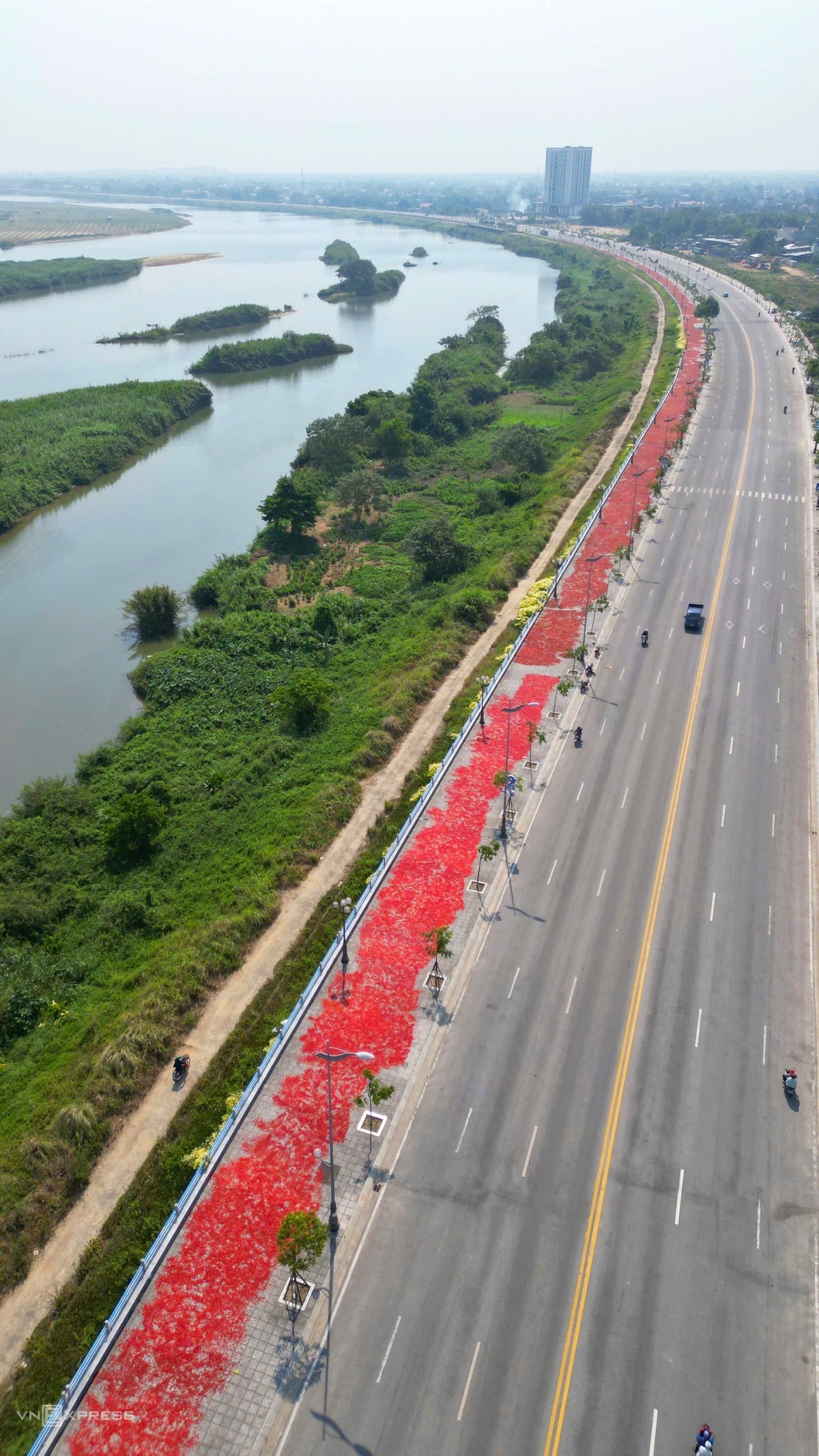 |
Residents dry chilies on Truong Sa road, Quang Ngai, stretching for about 2 km. *Pham Linh* |
Nguyen Van Anh, who owns a 750 m2 chili field in An Phu commune, stated that fresh chili prices have never dropped so drastically. Last year, chilies averaged 50,000 dong per kg, sometimes exceeding 70,000 dong, earning him about 50 million dong for nearly 1 ton. This year, early season prices were only 14,000 dong, falling to 5,000-7,000 dong per kg by 9/4.
Similarly, a subdued atmosphere pervades the fields along the Tra Bong river in communes like Binh Chuong, Binh Son, and Binh Minh. "Investment costs are about 5 million dong per sao (500 m2), and hiring pickers costs about 250,000-300,000 dong per day. With current chili prices, we cannot afford labor costs", said Tran Van Thanh, a chili farmer.
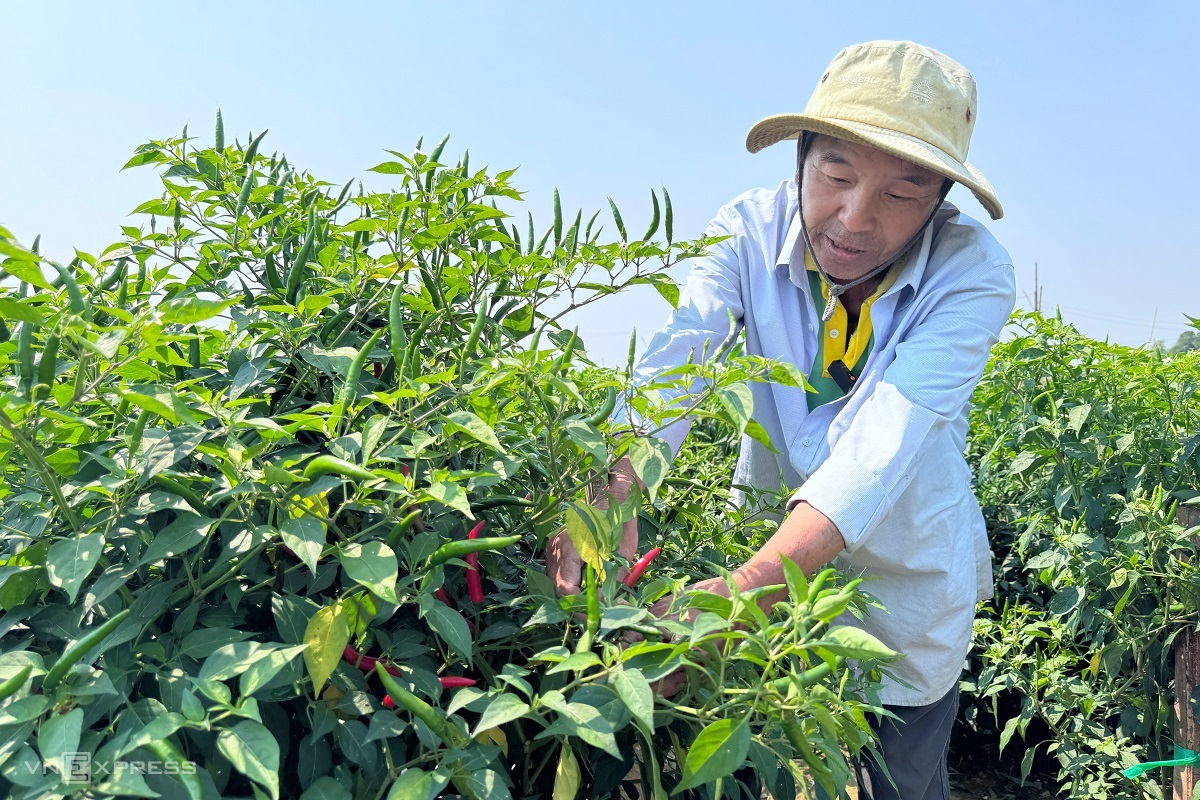 |
Nguyen Van Anh harvests chilies in a field in An Phu commune. *Pham Linh* |
According to traders, chilies from Quang Ngai are mainly exported unofficially to China. Chili prices have fallen due to reduced import demand from China, coupled with increased transportation costs, causing domestic traders to buy only intermittently.
Regarding transportation costs, a one-way trip for a container truck from Quang Ngai to northern border gates (a distance of about 1,000 km) typically consumes about 500-700 liters of diesel. In early april, diesel prices sometimes exceeded 40,000 dong per liter, double last year's price, adding approximately 12-15 million dong to the one-way cost per container. Consequently, the round-trip cost for each shipment from Quang Ngai to the north increased by nearly 30 million dong. By the afternoon of 9/4, diesel prices had dropped to 32,960 dong per liter, reducing transportation costs, but they remained one and a half times higher than last year.
As a result, the number of container trucks transporting fresh chilies is not as bustling as last year. Farmers are also delaying harvest, hoping for higher prices, or drying chilies for storage. This situation forces some drivers to park their container trucks for days to gather enough fresh chilies and wait for lower fuel prices before heading north.
According to the Sub-Department of Crop Production and Plant Protection of Quang Ngai province, the province has a large chili cultivation area. For this year's Winter-Spring crop alone, farmers cultivated over 1,000 hectares, with an average yield of about 21,000 tons per year. However, chili cultivation is fragmented and small-scale, without forming large specialized farming regions. Currently, chili prices are volatile, depending on export capabilities to China and primarily relying on traders for purchase. The absence of stable off-takers (buyers) leads to high risks when the market halts imports. Facing sharply declining chili prices, some purchasing facilities are storing chilies in cold storage, waiting for prices to rise, or drying them.
The agency proposes developing large, concentrated production areas, establishing market information systems to connect farmers with businesses, and forming production linkages to mitigate price volatility risks.
Pham Linh