On the 28th day of the twelfth lunar month, people rushed to buy fruits for Tet offerings. Observations at traditional markets in Hanoi, Ho Chi Minh City (TP HCM), and Quang Ngai showed a 200-300% increase in purchasing power compared to normal days. Despite no sudden surge in overall spending, symbolic fruits for the *mam ngu qua* (five-fruit tray) remained a priority for shoppers, quickly leading to shortages of many varieties.
In Hanoi, mini young coconuts were priced at 30,000-35,000 VND per fruit, an increase of three times compared to normal days and double the price from the same period last year. Small green papayas, typically less consumed throughout the year, now cost 20,000 VND, while larger ones ranged from 50,000-60,000 VND.
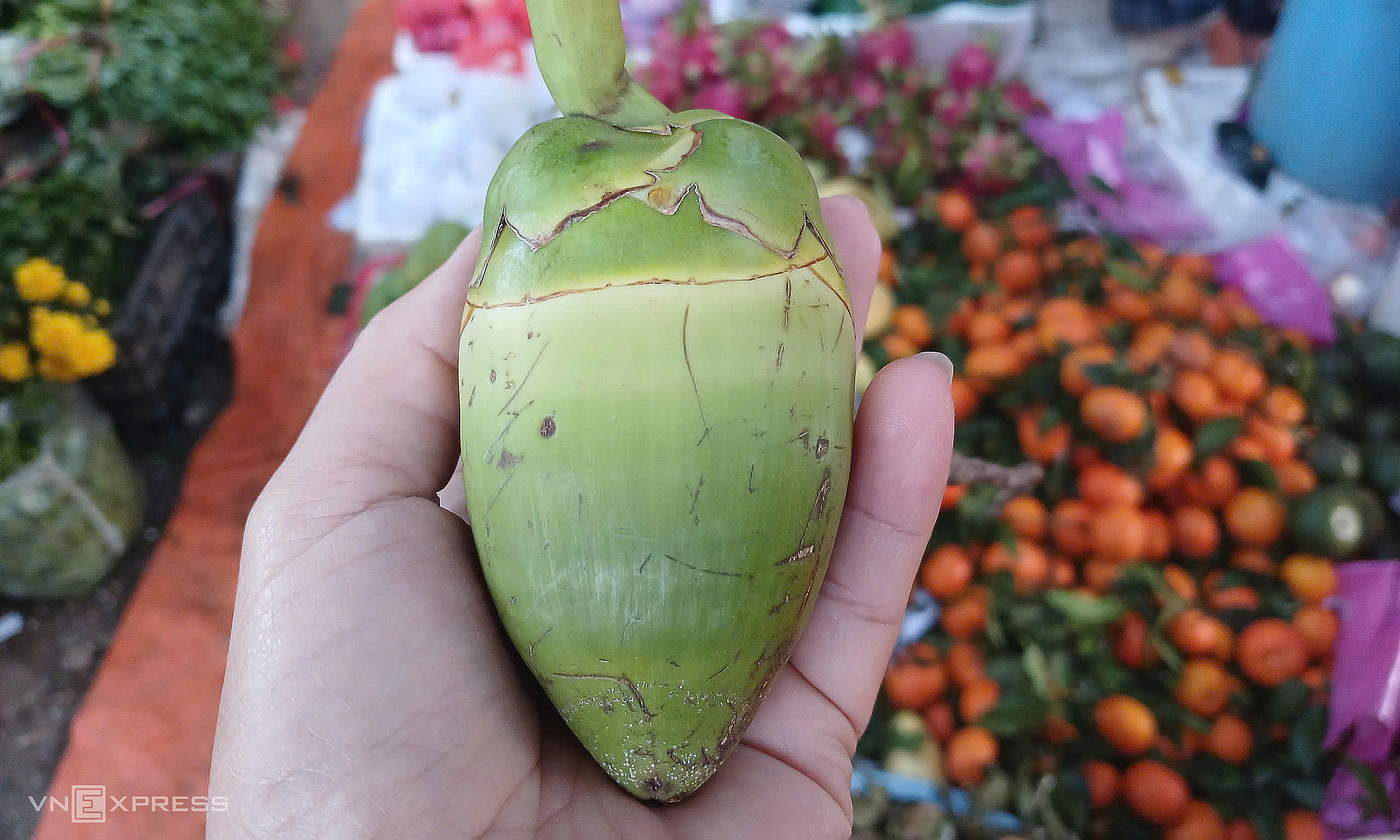 |
Mini young coconuts were priced at 25,000 VND per fruit at Dak Ha market (formerly Kon Tum) on the morning of the 28th of Tet. Photo: Thi Ha
Mini pineapples, previously 10,000-15,000 VND per fruit, now fetch 30,000-40,000 VND. Green bananas cost 10,000-12,000 VND per fruit, equivalent to 120,000-150,000 VND for a bunch with an even number of fruits. Bunches with an odd number of fruits (15, 17, 19, etc.) were significantly more expensive. Other varieties like Hoa Loc sand mangoes, dragon fruit, and star apples also saw new price levels, double their usual rates.
Similarly, in Ho Chi Minh City, fruits for the five-fruit tray also experienced sharp price increases. Buddha's hand fruits averaged 100,000-150,000 VND each, a 30% increase from the same period, while premium ones cost 500,000 VND to one million VND. Soursop prices doubled to 100,000 VND per kg. Oranges, mandarins, apples, pears, grapes, and kiwi also increased by about 30%.
Ms. Hoa, a vendor at Ba Chieu market (TP HCM), stated that buying power in the days leading up to Tet doubled. Customers prioritized soursop, coconuts, papayas, mangoes, and figs, wishing for prosperity. "Customers often buy early to choose the best items, so closer to Tet, it becomes harder to find all the desired varieties, and prices increase daily," she said.
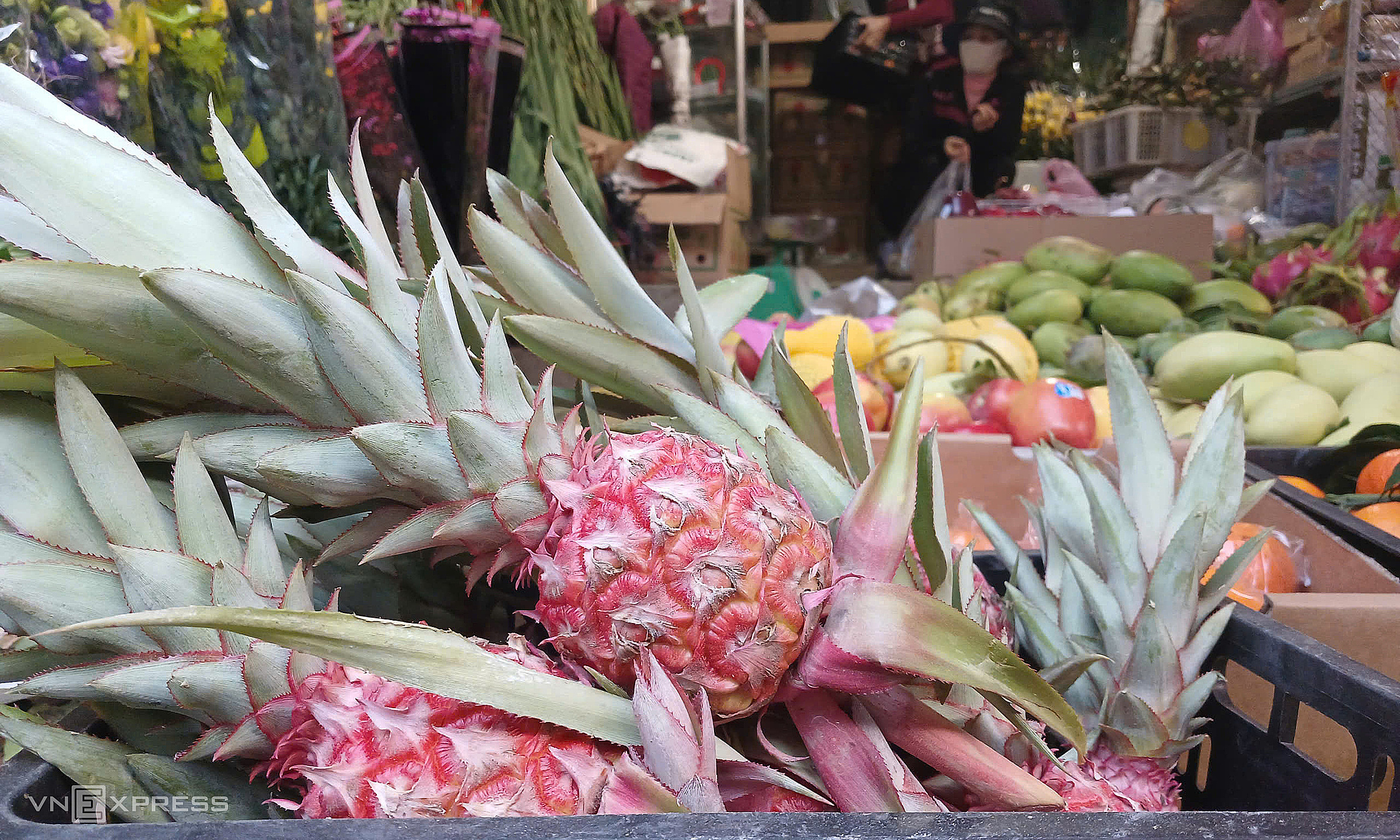 |
Mini pineapples priced at 35,000 VND per fruit were sold on the morning of the 28th of Tet at Dak Ha market (formerly Kon Tum). Photo: Thi Ha
The upward trend in prices for Tet *mam ngu qua* fruits also occurred in many other localities, including Quang Ngai and Dak Lak. Mini coconuts, green bananas, and figs saw the largest increases in purchasing demand.
According to Ms. Loan, a vendor at Dak Ha traditional market (formerly Kon Tum, now part of Quang Ngai), Tet fruit yields decreased by 10-30% due to adverse weather and reduced cultivation areas. Limited supply, coupled with increased transportation and labor costs during the peak season, caused retail prices to soar, especially for small-sized fruits.
In the Mekong Delta fruit hub, supply was also not abundant. Prolonged unseasonal rains led to a reduced fruit-setting rate, directly impacting fruits intended for Tet displays.
Mr. Hoang, a farmer in Ben Tre, noted that high prices for raw coconuts meant farmers prioritized growing larger fruits for export companies. Consequently, the quantity of mini young coconuts – which are typically substandard or thinned from bunches – was lower than in previous years.
Business experts predict that prices for these items will remain high until New Year's Eve due to limited supply, then quickly decrease once the demand for Tet displays subsides.
Thi Ha