On the afternoon of 20/10, the National Assembly held a group discussion on the draft Law amending and supplementing a number of articles of the Electricity Law.
Why the Electricity Law needs amendment
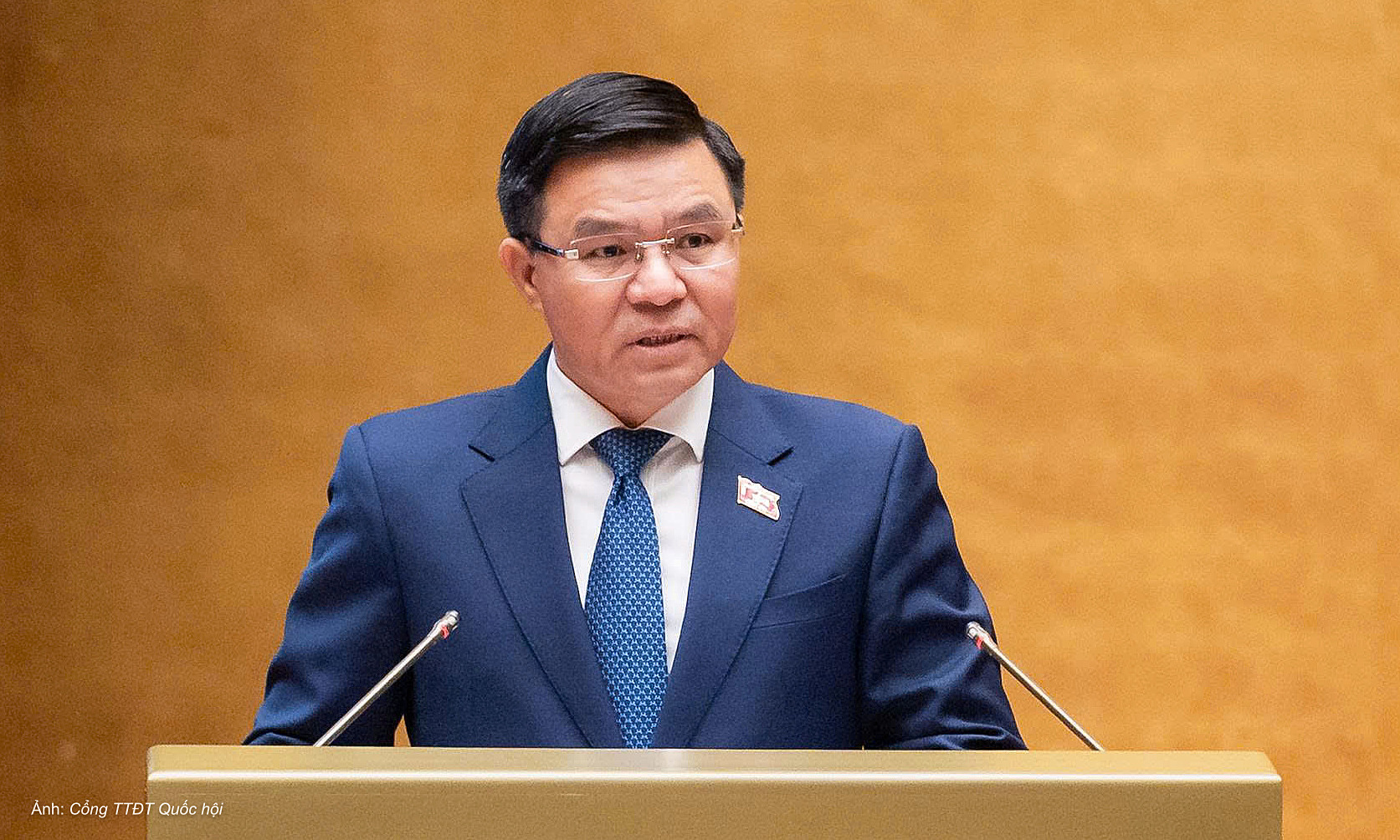
At the Hai Phong group, Prime Minister Le Minh Hung explained the reasons for amending this law and the orientation for power energy development in the coming period.
According to the Prime Minister, Vietnam aims for two-digit growth based on science and technology and digital transformation, requiring significant investment in data centers. Not only the nation, but ministries, sectors, and localities also need data centers, leading to very high energy demands.
In the US, President Donald Trump also asked leaders of major technology corporations investing in data centers to ensure sufficient power. Otherwise, the pressure on electricity prices would be substantial.
 |
Prime Minister Le Minh Hung spoke on the afternoon of 20/10 during the group discussion. Photo: Anh Tu
In addition to developing science and technology, Prime Minister Le Minh Hung affirmed the need to ensure electricity supply to attract foreign investors to Vietnam.
"This is one of the requirements related to Resolution 70 of the Politburo on ensuring national energy security. It primarily ensures development goals, and then the development of science and technology," he stated.
According to a report from the Ministry of Industry and Trade, hydropower development has reached its limit. For thermal power, Vietnam is also restricted to a very limited scale due to its commitment to net-zero emissions. Therefore, the Prime Minister outlined a strategy to focus on domestic gas power, liquefied natural gas (LNG) power, wind power, solar power, and offshore wind power.
However, he noted that the proportion of each power source must be carefully calculated, as some sub-sectors have very high cost structures. The Prime Minister gave an example: high LNG prices would drive up electricity prices. "This is also a point that will need adjustment in the Electricity Law," the head of Government stated.
The Prime Minister analyzed why a large power source demand is needed. Video: Anh Tu
The law's amendment also aims to simplify investment procedures. According to him, foreign investors require a predictable, competitive investment market that ensures the safety of their capital. Investing in the energy sector involves projects that demand significant time and costs, including foreign bank loans.
The Prime Minister has discussed with several investors, including a company that spent 10 years on procedures for an offshore wind power project. Therefore, administrative procedure reform could reduce the processing time by one-half. He asserted that the law must be amended to address investors' concerns; otherwise, large resources cannot be mobilized.
"The State must also ensure the rights and interests of the State and its citizens in accessing electricity at a reasonable price. We must find a balance between investors' interests and the interests of the State and the people," the Prime Minister shared.
Feasible projects to be added to Power Development Plan VIII
Speaking at the group discussion, Minister of Industry and Trade Le Manh Hung further explained to delegates the major issues in the Law amending and supplementing a number of articles of the Electricity Law.
The Minister said the law will encourage the development of certain power sources to ensure national interests. According to him, domestic natural gas power is prioritized for maximum mobilization based on gas supply capacity to develop the oil and gas industry and generate budget revenue. For imported LNG power, Power Development Plan VIII (adjusted for the 2025-2035 period) includes approximately 21 LNG projects with a scale of 36,000 MW.
To attract investment, Mr. Hung stated that the draft law stipulates a capacity payment mechanism in addition to the energy price, compensating power sources that are ready to generate. This aims to protect investors' rights without significantly impacting the overall electricity price. Furthermore, the law also designs policies for offshore wind power development and a renewable electricity credit market, moving towards the goal of net-zero emissions by 2050.
Prime Minister Le Minh Hung further informed that the Government is directing the Ministry of Industry and Trade to coordinate with ministries, sectors, and localities to review and adjust, updating Power Development Plan VIII. The Prime Minister also shared that investors are very interested in the amendment of the Electricity Law and Power Development Plan VIII.
According to him, the plan needs to ensure that all projects added and implemented are feasible. "Any project that falls behind schedule immediately affects electricity supply and capacity release," he said.
The adjustment of Power Development Plan VIII is being considered as some key energy and power projects are behind schedule or not progressing as planned, risking delays in meeting targets.
Statistics show that by the end of 2025, the total power capacity of the entire system will reach approximately 87,600 MW, an increase of about 6,400 MW compared to 2024. To meet growth targets, according to the Plan, the total power capacity of the entire system is expected to reach approximately 183,000-236,000 MW by 2030. Regarding the grid, Vietnam plans to develop tens of thousands of kilometers of 500 kV and 220 kV transmission lines, along with many large-scale substations, to increase transmission capacity between regions.
Regarding Vietnam Electricity (EVN), the Prime Minister stated that all accumulated losses have been resolved, with only some amounts related to exchange rate adjustments remaining. Therefore, EVN can continue to invest in new power projects and grid projects.
The Prime Minister noted that Vietnamese businesses are investing in many strategic energy projects in Laos, but also need to invest in transmission lines. Similarly, Vietnam needs to continue building many power transmission systems from the Central region to the North, and in major economic zones, both power sources and grids require synchronous investment.
Anh Tu