Specifically, on 3/4, the Dapeng Princess vessel arrived at the Thi Vai liquefied natural gas Terminal, delivering approximately 32,700 tons of liquefied natural gas from Malaysia. On 8/4, the Kool Blizzard vessel from Brunei was received, adding about 27,300 tons.
According to Petrovietnam Gas Corporation (PV GAS), year-to-date cumulative liquefied natural gas imports reached over 123,000 tons, equivalent to about 167 million standard cubic meters of natural gas. After regasification, this gas is fed into the system to supply power plants and industrial customers.
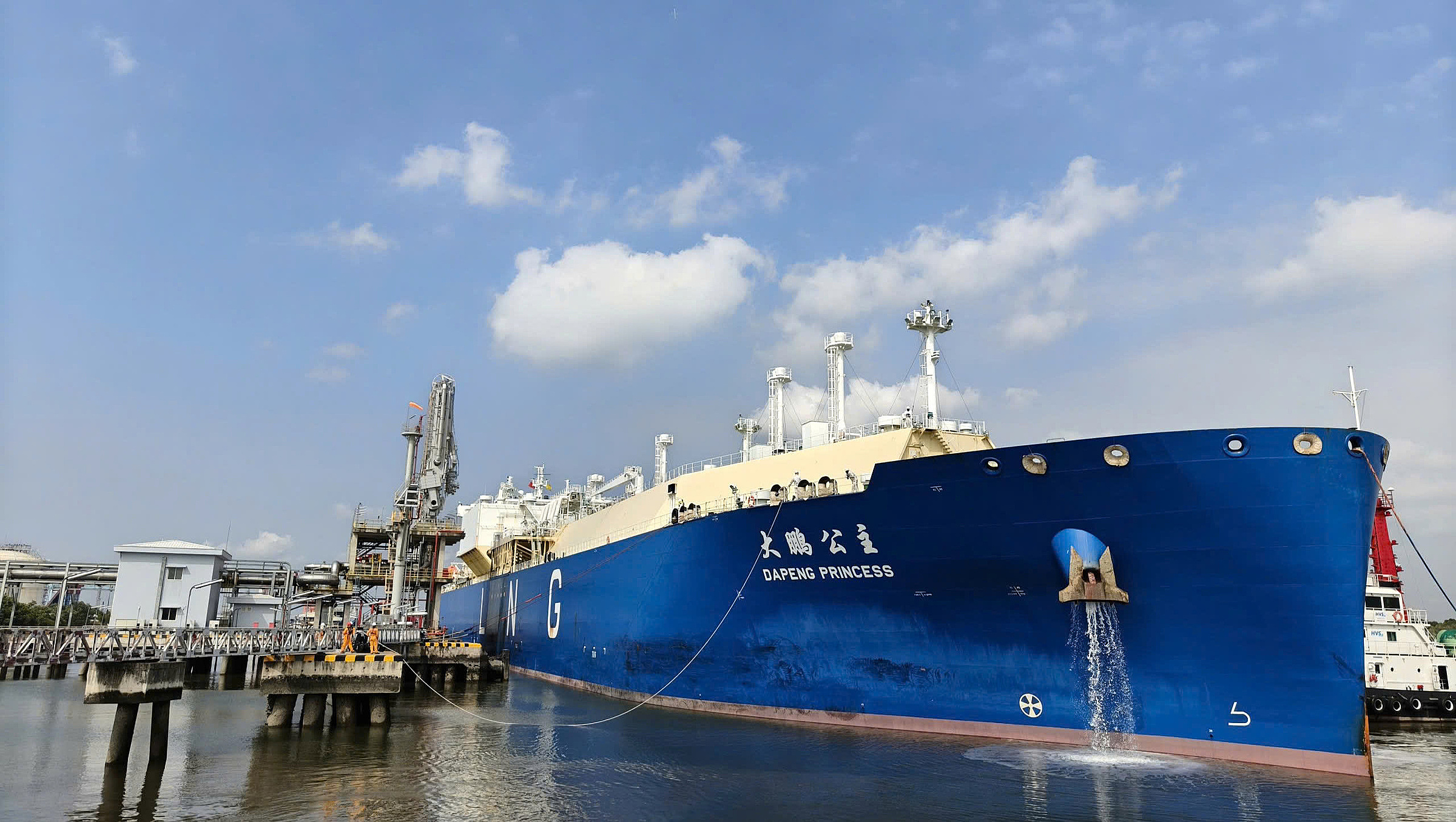 |
The DAPENG PRINCESS vessel from a Malaysian loading port on 3/4 carrying approximately 32,700 tons. *Photo: PV GAS* |
This increase in imports occurs as domestic gas supply declines, while electricity demand typically rises during the dry season when hydropower plants face water shortages.
Additionally, the company increased regasification capacity at the Thi Vai liquefied natural gas Terminal to 288 tons per hour, equivalent to about 9.5 million standard cubic meters per day, to enhance liquefied natural gas reception and processing capabilities.
Earlier, since March, PV GAS developed a liquefied natural gas import plan for the first half of the year. The company proactively arranged shipments early, before world prices sharply increased, and sought additional suppliers to diversify sources.
From May, the company expects to further expand import sources and increase domestic gas mobilization to meet consumption demands.
Regarding liquefied petroleum gas, PV GAS is reducing reliance on Middle Eastern sources by expanding imports from other markets, increasing output from domestic plants, and flexibly coordinating between domestic and export markets. The company also implemented an integrated energy supply model, allowing customers to switch between liquefied petroleum gas and other gas forms, such as compressed natural gas and liquefied natural gas, when needed.
Thi Ha