


The State Bank of Vietnam (SBV) provided this information in response to queries from voters in Hanoi regarding the reasons for the increase in gold prices and measures to stabilize them, ensuring prices reflect the true value of the commodity and maintain people's livelihoods.
According to the regulator, global gold prices have been consistently volatile since 4/2025, primarily trending upwards due to escalating geopolitical tensions and armed conflicts in various regions. The SBV explained that "domestic SJC gold bar prices have also increased significantly, mirroring the global upward trend."
At the close of trading last week, on 24/1, SJC gold bar prices continued to set new records, with selling prices exceeding 174 million dong per tael. Spot global gold also rose by $46, reaching $4,983 per ounce. Converted at Vietcombank's selling exchange rate, global gold was equivalent to 158.5 million dong per tael, creating a difference of nearly 16 million dong compared to domestic prices.
In addition to the global price increase, the SBV noted that many forecasts indicating a continued rise in global gold prices have prompted holders of the precious metal to limit sales. Meanwhile, the SBV stated that other domestic investment channels, such as a sluggish corporate bond market, high real estate prices, and low deposit interest rates, have contributed to an increase in "speculative and hoarding sentiment for gold."
"Vietnam is not a gold-producing nation, so the supply of gold primarily comes from imports. However, the supply of imported gold bars from the State Bank of Vietnam is limited as foreign currency needs to be prioritized for more essential demands," the SBV stated.
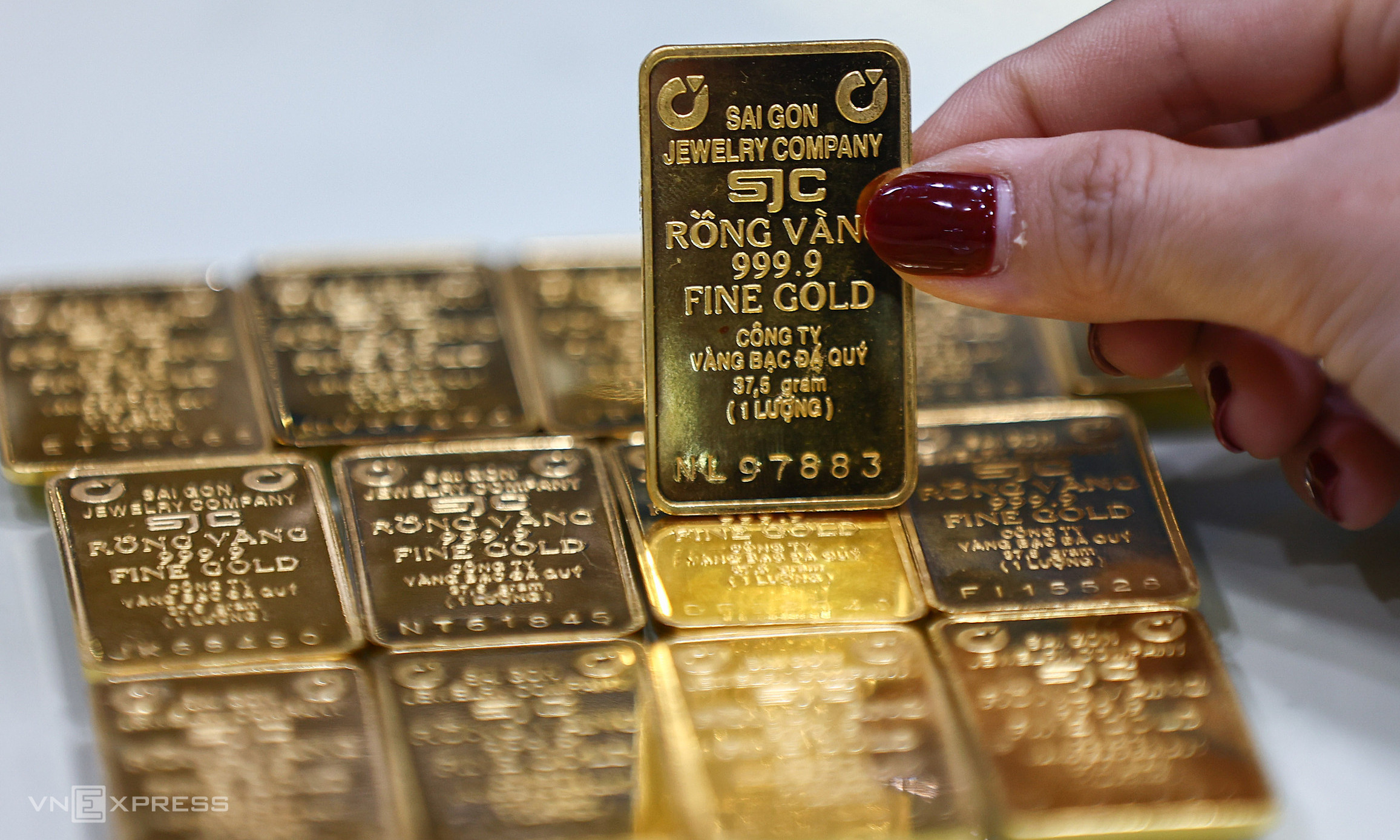 |
Gold bars at the SJC headquarters in District 3, 3/2025. *Photo: Quynh Tran* |
Responding to voters in Lam Dong province, the agency also clarified that gold is not an essential commodity and is not subject to price stabilization regulations under the law. Therefore, the State Bank of Vietnam only intervenes to stabilize this market if price fluctuations adversely affect the foreign exchange market, exchange rates, and monetary policy. Currently, buying and selling prices for gold are proactively listed by credit institutions and businesses in accordance with regulations.
The SBV reported that it has collaborated with ministries, agencies, and localities to implement market stabilization measures and address the significant disparity between domestic and global prices. Since late last year, the state's monopoly on gold bar production has been abolished, allowing eligible businesses and banks to participate. According to the regulator, this change will offer consumers more choices, foster a competitive and transparent market, and help narrow the price gap between domestic and global gold, as well as among different gold brands.
In a directive issued on 24/1, the Prime Minister also instructed the State Bank of Vietnam to finalize research documents and consider proposing the establishment of a national gold exchange or trading floor, with a report due in January.
The establishment of a gold exchange has been proposed by experts for many years, with the expectation that it would provide an accessible platform for individuals to buy and sell the precious metal, linking domestic prices with the international market. Recently, this idea has been materialized by regulators for the first time.
The State Bank of Vietnam plans to pilot the exchange in three phases: initially focusing on physical gold products. In phase two, the regulatory body will expand to include gold bars. In the final phase, various types of gold circulating domestically, fund certificates, and derivatives will be introduced and connected internationally.
Anh Tu


