


US Treasury Secretary Scott Bessent is set to convene a meeting on 11/1 with finance officials from G7 nations, the European Union (EU), Australia, India, South Korea, and Mexico. The primary agenda is to accelerate global efforts to reduce dependence on Chinese critical minerals, which currently fulfill 60% of the world's essential mineral needs, according to a senior US official cited by Reuters.
The urgency of this issue will be a central theme of the discussions. A senior US official emphasized that this "very large task" requires quicker action due to its broad implications for various nations. China's significant control over critical mineral supply chains underscores this concern; the International Energy Agency (IEA) reports that China refines 47-87% of the world's copper, lithium, cobalt, graphite, and rare earths. These minerals are vital for defense, semiconductor production, renewable energy components, batteries, and industrial refining processes.
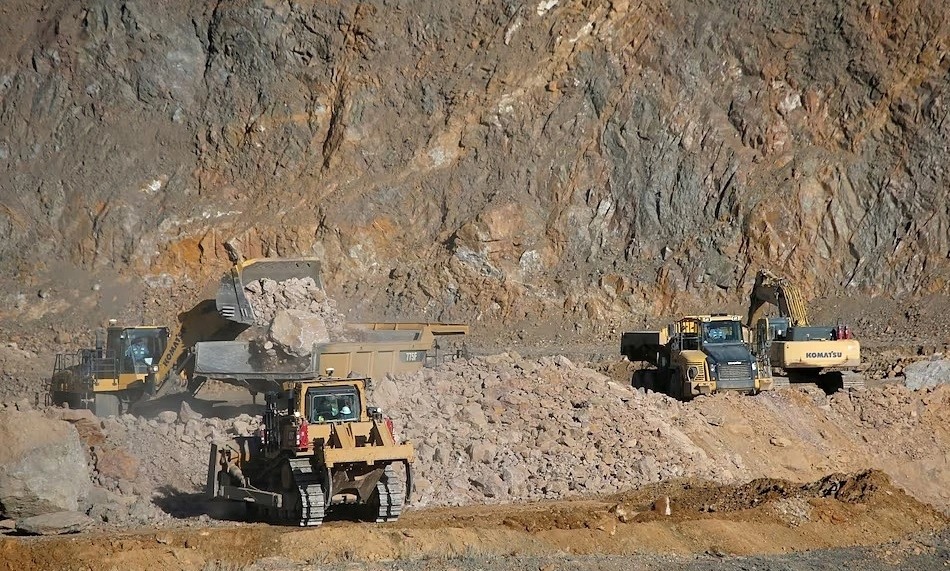 |
Machinery operating at a rare earth mining site in Mountain Pass, US, 1/2020. *Photo: Reuters*
This isn't Bessent's first attempt to address the issue. He previously called for a dedicated meeting after the G7 Summit in Canada last June, where he spoke to G7 and EU leaders about rare earths. While leaders agreed on an action plan to secure supply chains, Bessent felt the follow-through lacked urgency. Japan is an exception, having acted after China's abrupt mineral supply cut in 2010; however, other G7 nations remain heavily reliant on China.
Washington has recently intensified domestic mineral extraction and sought to diversify its supply chains through agreements with Australia, Ukraine, and other global suppliers. The 11/1 meeting follows recent reports that Beijing has begun restricting exports of rare earths and rare earth magnets to Japan. Despite this timing, US officials clarified that the meeting had been planned for an extended period. Notably, China continues to fulfill its commitments to purchase US soybeans while supplying essential minerals to Washington.
While the US anticipates issuing a statement after the discussions, the official acknowledged that a specific, unified action from all participating countries is unlikely. The US aims to foster solidarity, provide leadership, and share strategic direction. "We are ready to cooperate with those who also feel the urgency, while others may join after realizing the severity of the issue," the official remarked, indicating a phased approach to broader international cooperation.
Ha Thu (according to Reuters)


