TP HCM Television filmed the work in black and white nearly 50 years ago. Due to limited recording equipment and tape degradation, subsequent digitized versions suffered from errors and poor quality, hindering broadcast. The restoration team utilized AI and other tools to colorize and enhance the resolution, planning its broadcast for Hung Kings Commemoration Day and 30/4.
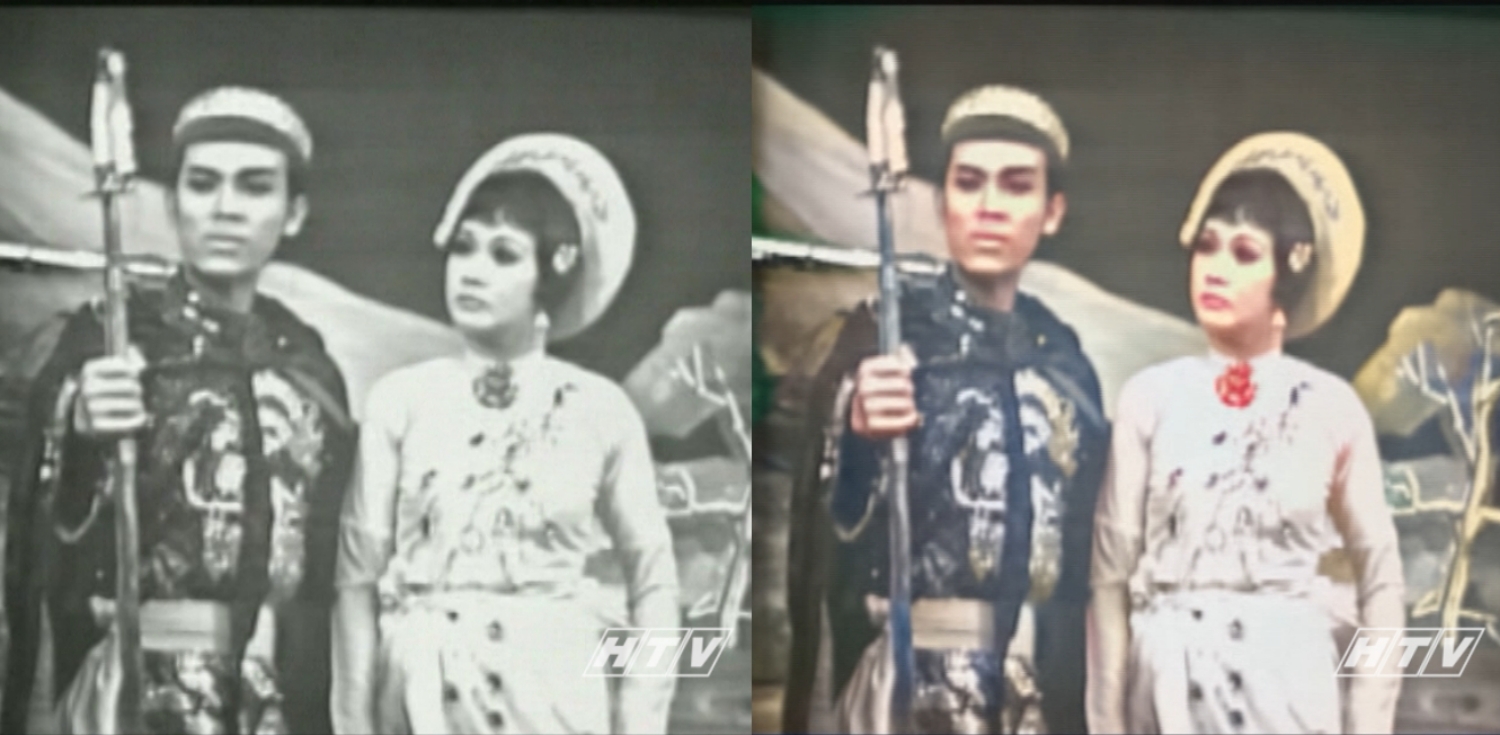 |
One scene from “The drum of Me Linh” before and after restoration. Photo: Provided by unit
The 150-minute color version underwent a multi-step process. Le Phuoc Hieu Trung, deputy director of HTV-TMS, the company behind the project, detailed the process: first, editors determined costume colors. Editing techniques then divided the play into hundreds of small segments per shot. The technical department used AI, based on these defined colors, to color a reference image, which they then applied to the corresponding black and white video. Finally, technicians merged the segments, completed processing, and produced the final product.
The team had envisioned this project for years, only now launching it with current technology. Editors thoroughly researched old documents and consulted relevant artists to determine the authentic colors, patterns, and styles of costumes, man (traditional headwear), and mao (crowns) before proceeding with colorization. They upheld the principle of respecting the original, ensuring no alterations to the script, staging, or misuse of AI. This play initiates a series of projects aimed at restoring classic works and honoring the enduring value of cai luong.
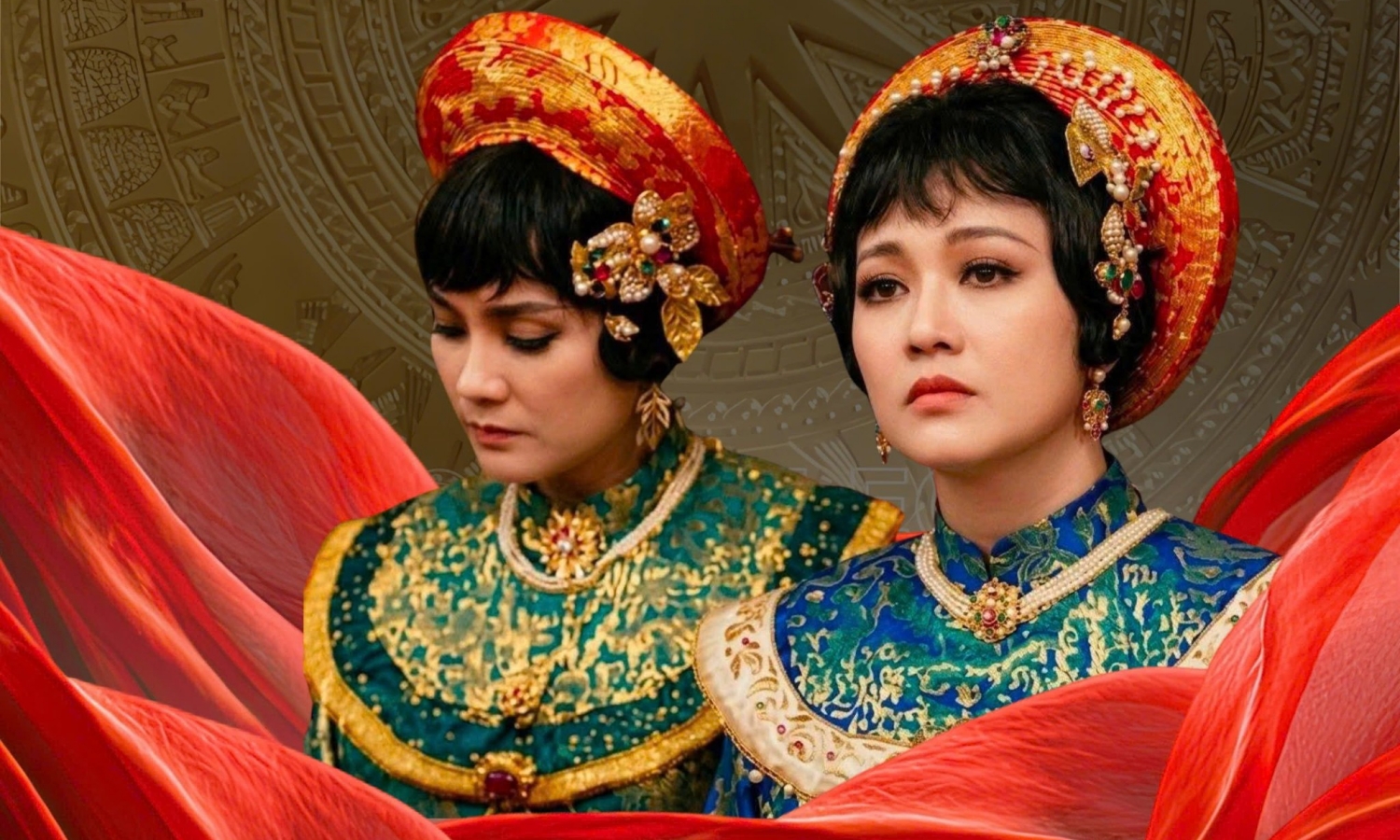 |
Poster introducing the restoration project for the play “The drum of Me Linh”. Video: Provided by unit
“The drum of Me Linh” first premiered in 1977, centering on the Hai Ba Trung uprising. The play gathered many renowned actors, including Thanh Nga, Hung Minh, Bich Son, Thanh Sang, and Bao Quoc, all of whom had won Thanh Tam awards. The work helped establish Thanh Nga (as Trung Trac) and Thanh Sang (as Thi Sach) as leading names in cai luong during its golden age.
Director Ngo Y Linh's production is considered a benchmark for subsequent generations of artists re-staging the play. In 2025, the play was voted one of the 10 outstanding stage works of TP HCM, commemorating 50 years of national reunification. Excerpts have been staged and filmed by many generations of artists and film crews, appearing on stage and screen to pay tribute to the golden age of cai luong.
An excerpt from “The drum of Me Linh” old recording - performed by Thanh Nga and Thanh Sang. Video: TP HCM Television
Artist Thanh Nga, born in 1942, rose to fame after winning the Thanh Tam Trien Vong award in 1958 for her role as the mountain girl Pha Ca in the play "Nguoi vo khong bao gio cuoi" (written by Kien Giang - Quy Sac). The 1960s marked the most brilliant period in Thanh Nga's career, as she partnered with Thanh Sang, creating a "storm" through a series of roles. Beyond her acting and singing talent, she was admired as a beauty icon, inheriting her striking looks from her mother, Bau Tho.
In addition to cai luong singing, she was also prominent in cinema, becoming a beloved face through films such as "Loan mat nhung", "Xa lo khong den", "Sau gio gioi nghiem", and "Lan va Diep". For decades, many admirers have mourned the sudden passing of the renowned singer on 26/11/1978, at the peak of her career.
In recent years, many organizations have applied AI to restore classic stage and film recordings. During a workshop on digital transformation in broadcasting, organized by the Ministry of Culture, Sports and Tourism in 10/2025 in TP HCM, several excerpts from "Biet dong Sai Gon" were screened. Scenes featuring characters Sau Tam (played by Thuong Tin), Ngoc Lan (Thuy An), and Ngoc Mai (Ha Xuyen) were enhanced with high definition and more vivid faces. Experts suggest that by upgrading old content, organizations can increase the value of digital assets and extend the lifespan of works.
Mai Nhat