


According to Jimu News on January 7, the "Han Wu Hung Phong" sculpture, located in Guazhou district, Gansu province, has sparked tens of thousands of comments regarding its aesthetics. Many opinions suggest the statue creates the impression of a figure "buried alive" because only its head emerges from the rocky mountain surface.
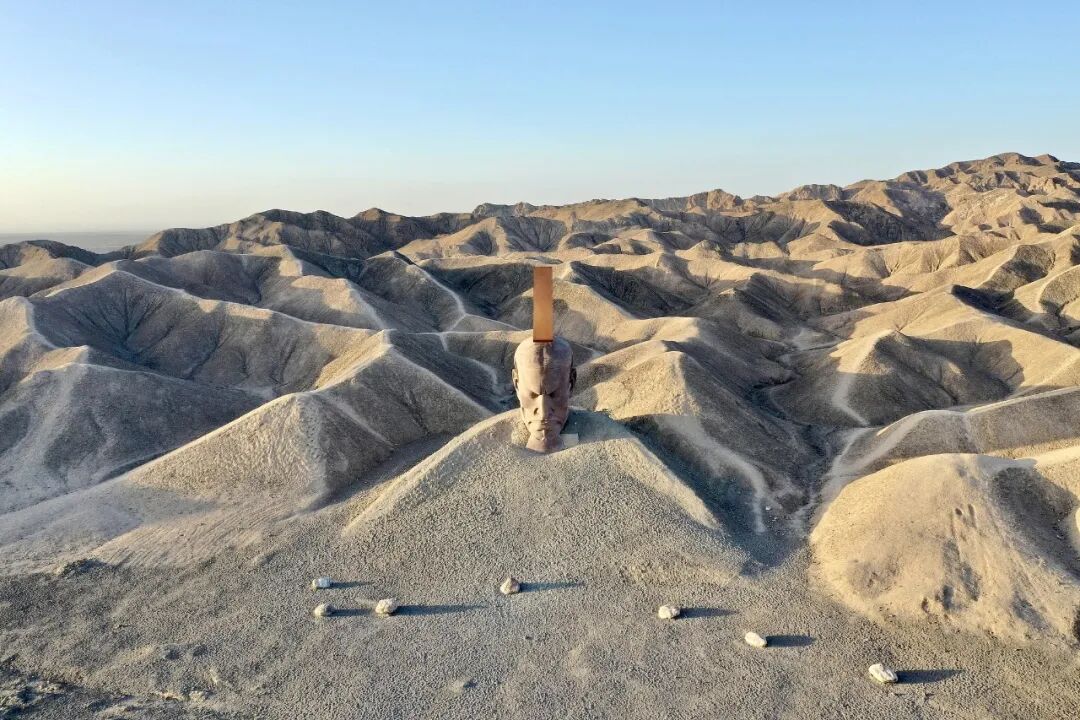 |
The "Han Wu Hung Phong" sculpture. Photo: Ifeng. |
The "Han Wu Hung Phong" sculpture. Photo: Ifeng.
The statue, completed in 2020, stands 13 m tall and is crafted from ancient red sandstone. Its body is concealed beneath the desert, with only the head visible. This piece is part of the "Wilderness Art Plan", initiated by Professor Dong Shubing of Tsinghua University. The artist, Zhang Wanxing, a graduate of Hebei University of Technology, works at Professor Dong Shubing's sculpture studio.
Writing in iNews Week, photographer Chen Lin stated that while artists have freedom of expression, they must also respect culture and historical figures. A Beijing art professor, upon seeing the work firsthand, expressed feeling overwhelmed. He noted the piece features a modern artistic language. According to him, Zhang Wanxing's intention is to convey the ebb and flow of history.
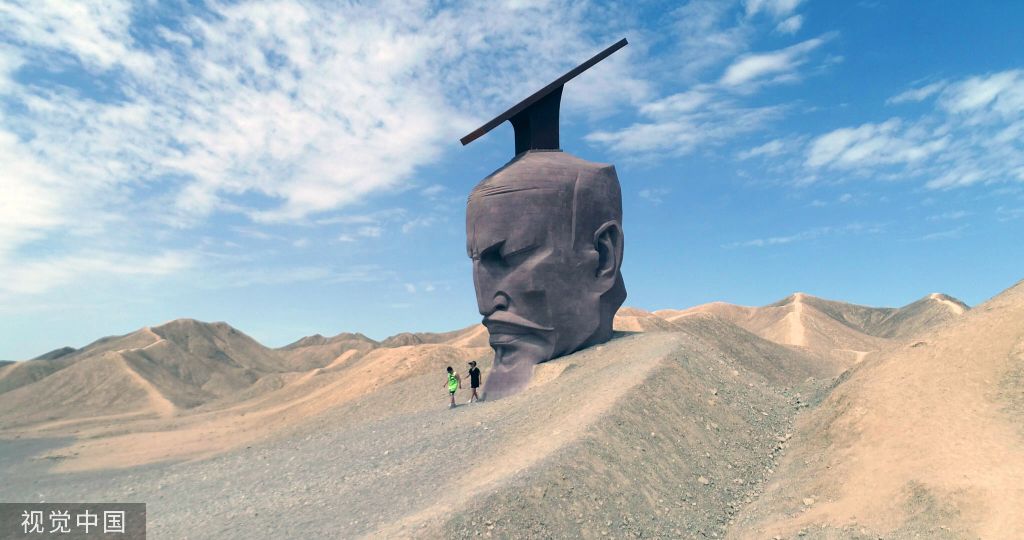 |
Many people commented that the statue is "culturally inappropriate". Photo: Ifeng. |
Many people commented that the statue is "culturally inappropriate". Photo: Ifeng.
Han Wudi (156-87 BC) was the seventh emperor of the Han dynasty. He ascended the throne at 16 years old and ruled for 54 years, the longest reign in Han dynasty history.
Responding to the debate, a representative from the Guazhou District Culture and Sports Bureau explained the sculptor's concept: transforming the mountain and desert into the figure's body. This design aims to highlight Han Wudi's historical role and symbolize that "all are children of the earth".
Bj News highlighted that the incident reflects a conflict between public art creation, cultural heritage dissemination, and public aesthetics. Artistic creation should serve as a tool to support cultural transmission, not an obstacle. Therefore, local tourism authorities should provide explanations about the artwork. Despite the controversy, the debate surrounding the sculpture may also draw more attention to Guazhou, encouraging people to explore the local tourism, history, and culture.
Nhu Anh


