


The Vietnam Television (VTV) Culture and Entertainment Department, producer of the series, announced plans for a new program. This new show, tentatively titled "Spring Square", will feature modern, youthful content, blending comedic elements.
The news follows earlier statements from artists involved in the show. Artist Van Dung expressed regret on her personal page about the absence of "Tao Quan 2026". Other artists, including Quang Thang and Chi Trung, confirmed they had not received invitations for rehearsals, as they typically would each year.
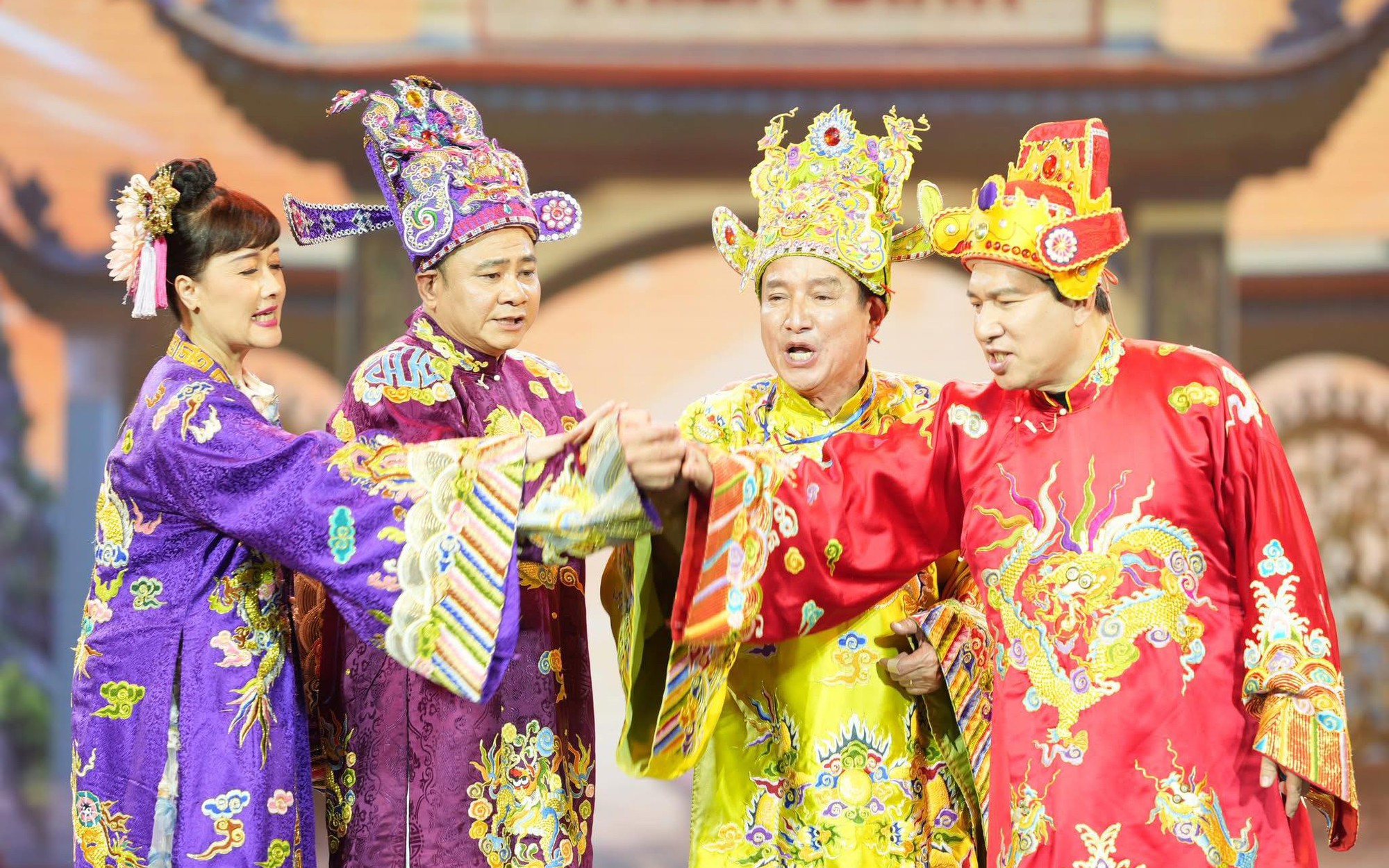 |
From left: Artists Van Dung, Tu Long, Chi Trung, Quang Thang in "Tao Quan 2025". Photo: VFC
This is not the first time "Tao Quan" has paused production. In 2020, VTV launched "Tao Quan Vi Hanh", broadcast on the 23rd day of the 12th lunar month, featuring a completely different script. However, it failed to gain significant public interest. The original program returned a year later, airing consistently until 2025.
Excerpt from "Tao Quan 2025". Video: VFC
In recent years, the program has garnered mixed reactions. Long-time viewers consider it an indispensable part of their Lunar New Year's Eve celebrations. Conversely, some critics found the content increasingly "bland". The absence of familiar faces, including artists Cong Ly (who played Bac Dau) and Xuan Bac (who played Nam Tao), also disappointed audiences. While newer artists like Thai Son, Trung Ruoi, and Duy Nam have made efforts, they have not fully replaced the veteran cast.
Khai Hung, the "father" of "Tao Quan", noted that in recent years, the show had "stagnated". He stated, "After 10 years producing 'Tao Quan', director Do Thanh Hai's energy and creativity naturally waned. Objectively, I see the program leveling off, neither improving nor worsening."
"Tao Quan - End of Year Gathering" is a television comedy program that traditionally airs annually on Lunar New Year's Eve. First produced in 2003, the show uses the folk tale of the Kitchen Gods (Tao Quan) reporting to the Jade Emperor (Ngoc Hoang) on their yearly observations. Through this narrative, the program satirizes prominent economic, cultural, and educational issues.
Ha Thu


