


Nguyen Phat developed scattered red patches that spread, sometimes scratching his skin until it bled. Traditional medicine offered temporary relief, but symptoms would then return more severely.
Doctor Nguyen Phuc Tan, Department of Clinical Immunology, Tam Anh General Hospital TP HCM, diagnosed Nguyen Phat with chronic atopic dermatitis. His skin lesions were prolonged, characterized by numerous papules, oozing yellow fluid and pus, and crusting in patches. There were signs of secondary infection due to excessive scratching.
 |
Doctor Tan advises Nguyen Phat on treatment methods. *Photo: Tam Anh General Hospital*. |
Doctor Tan stated that the condition is related to a disordered skin barrier and immune response. Incorrect treatment, focusing only on symptom relief or misusing folk remedies, prolongs the condition and makes it difficult to control.
Doctor Tan treated Nguyen Phat with oral immunosuppressants combined with specific topical medications to control inflammation and itching. Concurrently, he received guidance on proper skin care and long-term monitoring to prevent recurrence. After over three months of treatment, his condition improved significantly, with itching and skin lesions reduced by about 80%. Nguyen Phat no longer suffered from insomnia and resumed normal activities.
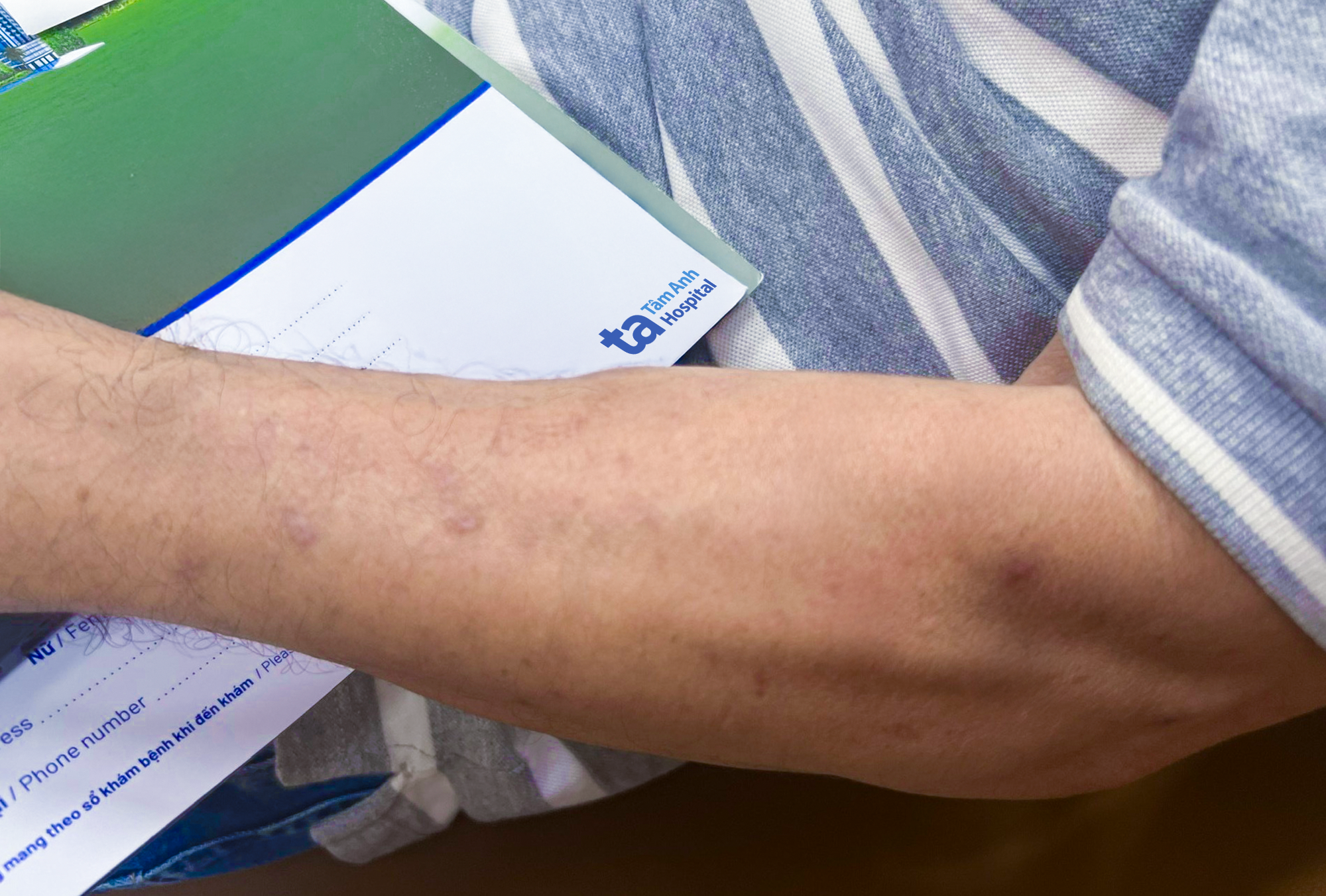 |
Nguyen Phat's skin lesions significantly reduced, and itching stopped after three months of treatment. *Photo: Tam Anh General Hospital*. |
Atopic dermatitis can begin in childhood or adulthood, characterized by intense itching, dry, peeling skin, and frequent flare-ups. It is not contagious but often lasts for years if not properly managed.
According to Doctor Tan, a common mistake for individuals with atopic dermatitis is self-treating, using unverified remedies, or stopping treatment prematurely once symptoms improve. This not only increases the risk of recurrence but also heightens the chance of skin infection complications. Therefore, when prolonged itching occurs, patients should visit a hospital for diagnosis and appropriate treatment. Chronic atopic dermatitis cannot be fully cured but can be well-controlled with proper treatment and adherence to a doctor's regimen.
*Minh Huong*.
*Name of character has been changed.*


