


Doctor Tran Thi My Linh, a specialist in Dermatology - Aesthetic Dermatology at Tam Anh General Hospital, Ho Chi Minh City, stated that Hung suffers from androgenetic alopecia. This condition occurs when hair follicles become sensitive to the hormone dihydrotestosterone (DHT), causing hair strands to gradually thin, weaken, and fall out prematurely, while also reducing their ability to regrow. Typical signs include thinning hair on the forehead and temples, forming an M-shape, which then gradually spreads to the crown. The severity of baldness usually increases with age and rarely shows rapid, significant changes in a short period.
At just 19, Hung represents a very early onset and unusually rapid progression of the condition, with noticeable baldness appearing in just over one year. Tam Anh Hospital has treated cases of androgenetic alopecia in young individuals, but most begin after age 30 and progress subtly over many years. "Cases with such an early onset, starting in late adolescence, and progressing so quickly and severely as Hung's, are rare," Doctor Linh said.
Initially, Hung attributed it to academic stress, but his condition did not improve despite using oral and topical medications. The doctor explained that hair loss is not solely due to hormones but also involves other factors such as seborrheic dermatitis of the scalp, hair cycle disruption from stress, or micronutrient deficiencies (iron, zinc, vitamin D) that weaken hair follicles and make them more prone to shedding. When these factors coexist, the condition tends to progress rapidly, become more severe, and is harder to control.
Some cases may involve mild scalp fungus or transient hormonal imbalances, disrupting hair growth. If not detected and treated early, hair follicles will gradually shrink and become difficult to restore.
The doctor prescribed a combined treatment for Hung, using 6D laser therapy to stimulate hair follicles and platelet-rich plasma (PRP) injections.
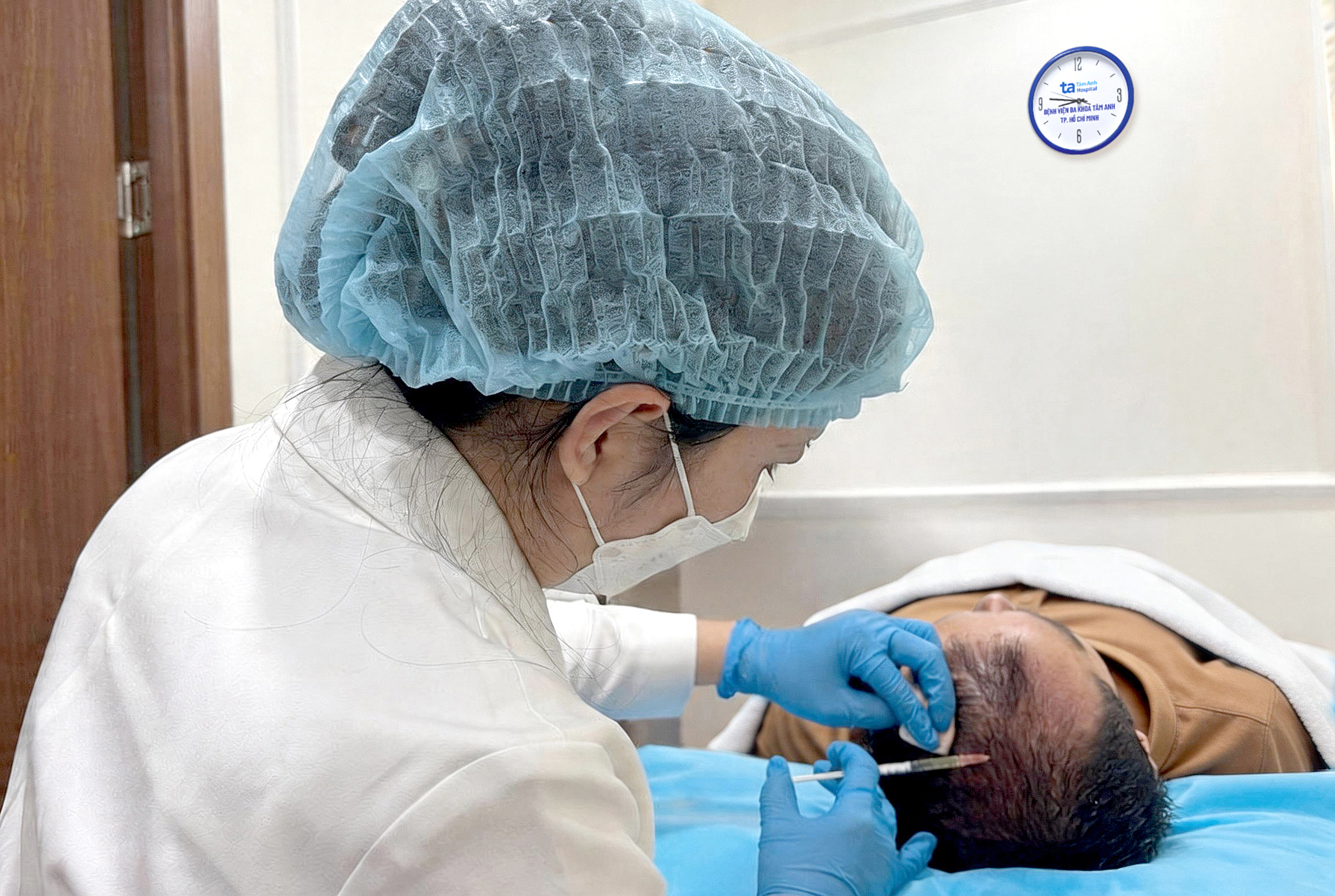 |
A doctor administers PRP injections to improve Hung's hair loss. *Photo: Tam Anh General Hospital* |
6D laser uses low-intensity light to improve microcirculation in the scalp and increase nutrient supply to hair follicles, thereby stimulating them to enter the growth phase. PRP, on the other hand, provides autologous growth factors, contributing to the recovery and nourishment of hair follicles.
The combined approach not only helps reduce hair loss but also improves hair strand quality, allowing new hair to grow and develop steadily over time. After 4 treatment sessions, Hung's hair loss significantly decreased, and new hair began to regrow.
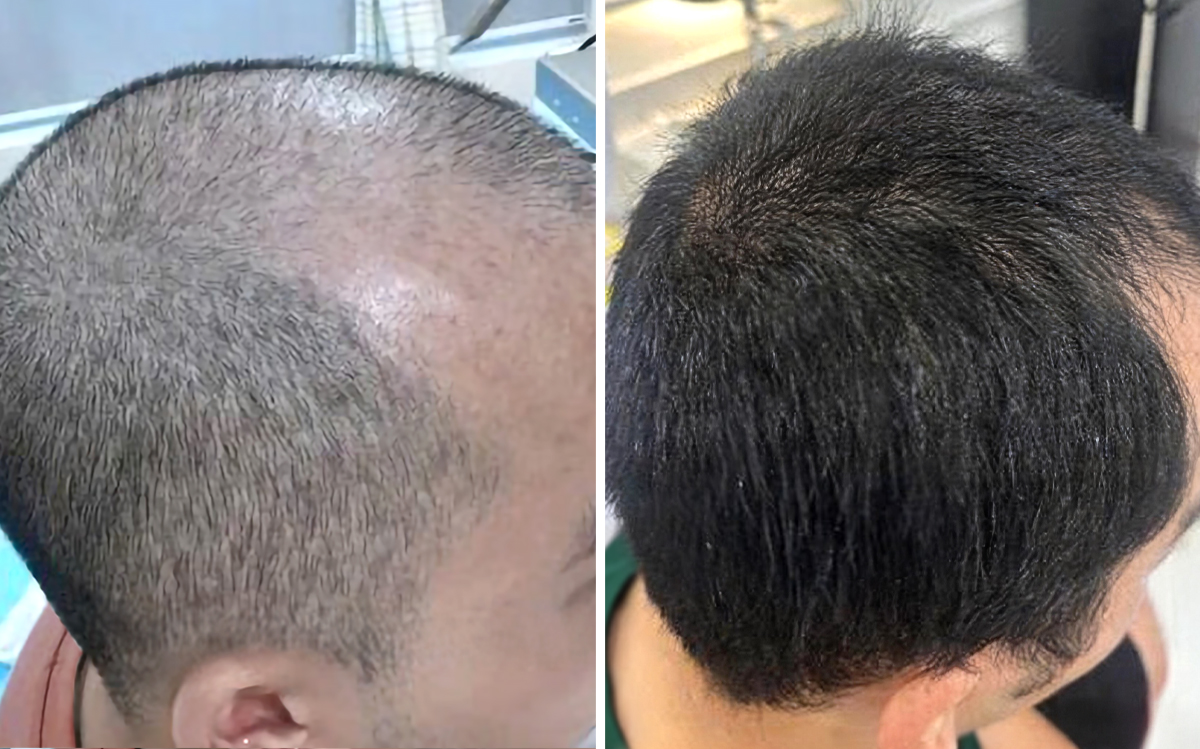 |
Hung's hair regrows after 4 treatment sessions. *Photo: Tam Anh General Hospital* |
Doctor Linh noted that many patients, especially younger ones, tend to be impatient when treating hair loss. Many self-medicate for a short period without achieving results, then stop using the medication or hesitate to seek early medical attention. This causes them to miss the "golden window" for treatment, reducing the potential for hair restoration.
When persistent, unusual hair loss is noticed, especially on the forehead or crown, patients should visit a hospital early for timely diagnosis and treatment, to limit the risk of severe baldness.
Minh Huong
*Character's name has been changed*


