Doctor of Medicine, Level II, Tran Tuan Anh, from the Orthopedic Trauma Department at Tam Anh General Hospital Hanoi, reported that ultrasound, X-ray, and MRI results revealed a mobile bone fragment measuring 3,6x1,6 mm. This fragment caused ankle impingement syndrome accompanied by synovitis of the ankle joint.
The doctor attributed the fragment to cartilage that detached when Huong fell from her vehicle a year prior, gradually calcifying. During her movements, this bone or cartilage piece would occasionally lodge between the joint space or ligaments, causing sharp pain. Over time, the foreign body would drift from its position, leading to Huong's pain spontaneously resolving and her ability to move normally. This random process meant that episodes of pain appeared and disappeared unpredictably, lasting one to two days or even a week; some months she experienced no pain, while others had multiple painful episodes. Recently, even a slight touch of her foot to the ground caused intense pain, making walking impossible.
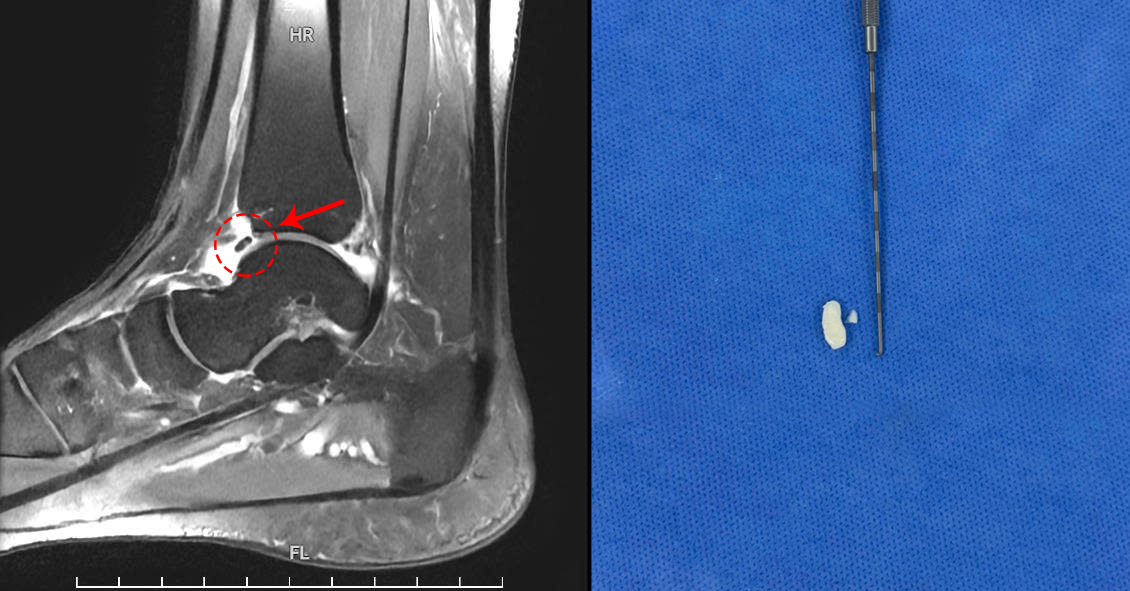 |
Loose bone and cartilage fragments in the patient's joint on an MRI scan (left) and after surgical removal (right). *Photo: Tam Anh General Hospital* |
Doctor Tuan Anh performed arthroscopic surgery on Huong to remove the bone and cartilage fragments. He utilized ankle arthroscopy, making two small 0,5 cm incisions, one anteromedial and one anterolateral to the ankle joint. A trocar and camera were inserted to assess the damage. The doctor then resected the inflamed synovium, extracted the bone and cartilage fragments, confirmed no foreign bodies remained in the joint, and closed and bandaged the incisions.
Post-surgery, Huong experienced no pain and was discharged after one day. Two weeks later, her incisions had healed, she walked normally, and her ankle pain did not recur.
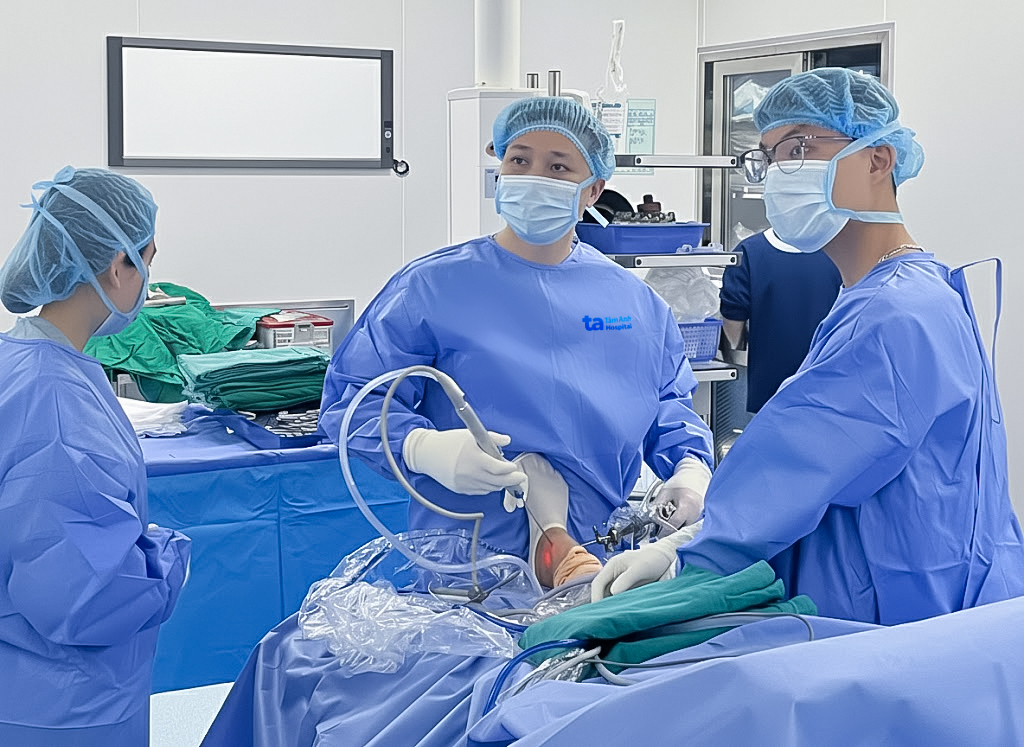 |
Doctor Tuan Anh performing arthroscopic surgery on Huong. *Photo: Tam Anh General Hospital* |
Ankle impingement syndrome commonly occurs after trauma resulting from traffic accidents, occupational accidents, daily activities, or sports. Strong impact on the ankle joint can dislodge a small bone or cartilage fragment, allowing it to float freely. Synovial fluid, being a calcium-rich environment, causes these cartilage and bone fragments to gradually calcify, becoming harder and increasing in size, making them prone to getting trapped and difficult to dislodge.
Symptoms of ankle impingement syndrome include ankle pain even after the initial injury has healed, particularly when lifting the foot, climbing stairs, walking uphill, or squatting. Patients may experience sharp pain, sensitivity to movement, pain upon initial contact with the ankle, or slight foot movement. When experiencing these symptoms, individuals should seek examination at a reputable hospital with a specialized orthopedic trauma department to avoid delay and missing the "golden" window for treatment. If detected early, patients may only require conservative treatment such as physical therapy, ankle bracing, or joint injections.
Arthroscopic or open surgery is indicated for severe cases where conservative treatment has failed. Adhering to the correct treatment protocol provides patients with a good prognosis, early restoration of mobility, full recovery, and no recurrence.
Thanh Long
*Patient's name has been changed
| Readers can submit questions about musculoskeletal diseases here for doctors to answer. |