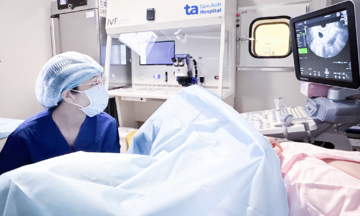
Ms. Hang shared that she opted for treatment in Vietnam due to prolonged waiting times for diagnostic tests in the US and concerns about potential malignancy. At Tam Anh General Hospital HCMC, Doctor of Clinical Oncology II Nguyen Ba My Nhi, Director of the Department of Obstetrics and Gynecology, diagnosed Ms. Hang with grade 3 uterine prolapse. This condition occurs when the uterus descends from its normal anatomical position due to weakened pelvic floor muscles and supporting ligaments.
Master of Science, Doctor Nguyen Thi Thanh Tam, from the Department of Obstetrics and Gynecology, explained that uterine prolapse is categorized into various degrees, ranging from mild (grade one) to severe (grades 3-4). In advanced stages, the uterus can fully protrude from the vagina, leading to pain, bleeding, recurrent infections, and bowel or bladder dysfunction. Patients with mild prolapse may receive conservative treatment, including pelvic floor rehabilitation, pessary placement, or appropriate hormone therapy. However, for severe uterine prolapse, as in Ms. Hang's case, surgery is the most effective treatment method.
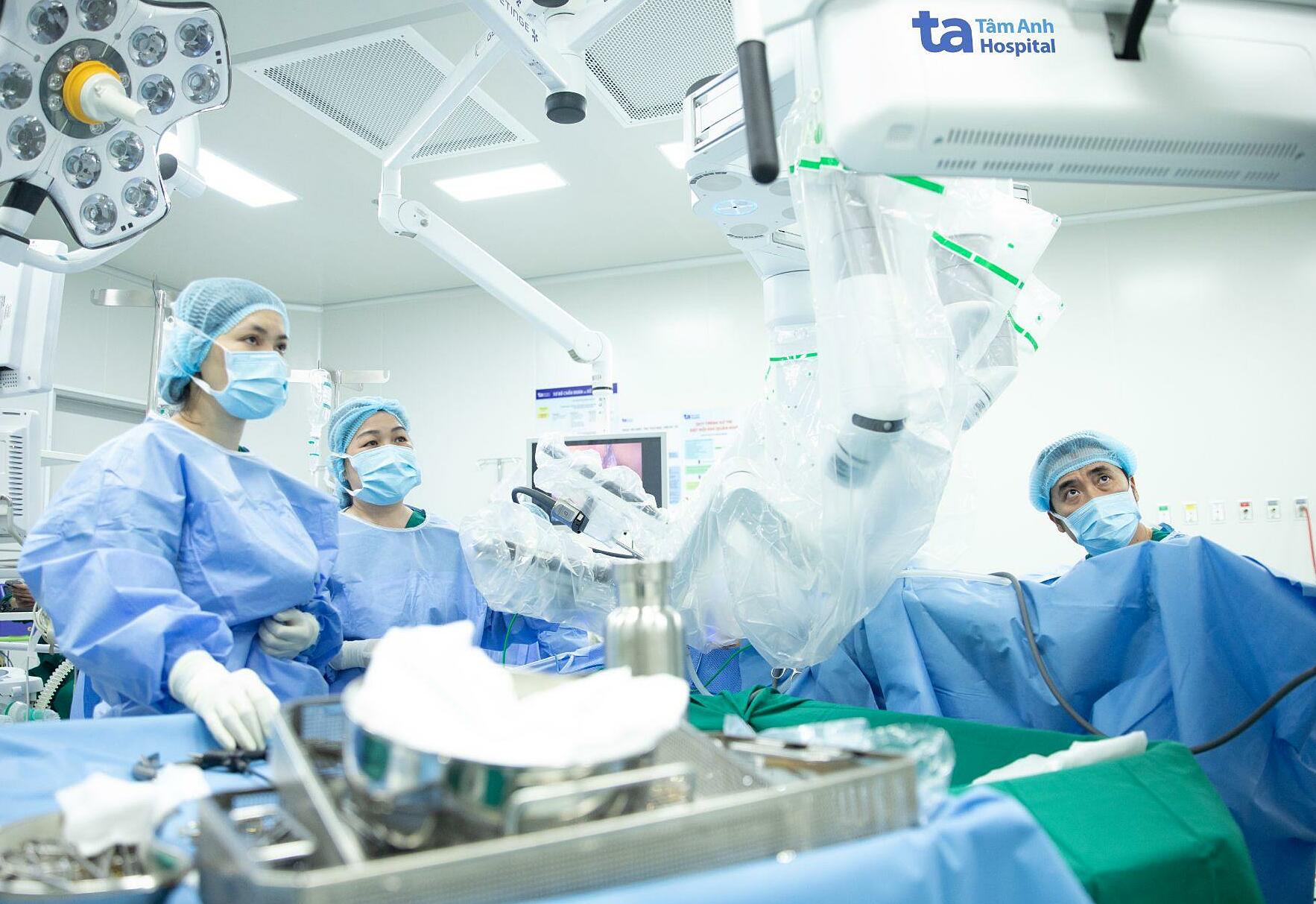 |
_Doctor Thanh Tam (center) and the team performing robotic uterine prolapse surgery on Ms. Hang. Photo: Trung Vu_
The medical team decided on Da Vinci Xi robotic surgery for Ms. Hang to minimize invasiveness, enhance precision, and shorten recovery time. In the operating room, Doctor My Nhi operated from a console, where a 3D magnified view (10-15 times) clearly displayed pelvic structures. The robot's arms, capable of 540-degree rotation, allowed for precise maneuvers within the narrow, hard-to-reach pelvic cavity. The entire prolapsed uterus was suspended and secured using an artificial graft, eliminating the need for removal. The two-hour surgery was completed successfully, and Ms. Hang recovered with minimal pain.
 |
_Ms. Hang extends her gratitude to the doctors for her successful surgery. Photo: Tue Diem_
Uterine prolapse is common among women who have had multiple vaginal births, engage in heavy labor, are obese, or are post-menopausal due to declining estrogen levels. Women can prevent the condition by protecting their pelvic floor, limiting heavy lifting, performing pelvic floor exercises, managing weight, and treating chronic cough or constipation.
The condition does not resolve on its own, making early treatment essential. Prolonged or severe uterine prolapse increases the risk of requiring a hysterectomy. Early-stage treatment is often simpler, involves fewer complications, and has a shorter recovery period. Women who have had multiple births or are post-menopausal should seek medical examination immediately if they experience symptoms such as a heavy sensation in the pelvic area, a visible mass in the vagina, abnormal bleeding, or urinary dysfunction.
Doctor Nhi noted that the cost of robotic surgery in Vietnam is only about 30-40% of that in the US or Europe, despite utilizing the same new-generation robotic system. Currently, robotic surgery costs range from 15,000-22,000 USD in the US, approximately 10,000 USD in Thailand, and 22,000-60,000 USD in Singapore. In contrast, the cost in Vietnam is only about 5,000-7,000 USD (equivalent to 120-180 million VND).
Tue Diem
| Readers can submit questions about obstetrics and gynecology here for doctors to answer |