


Dr. Duong Minh Hung, a first-degree specialist in pediatrics at Tam Anh General Hospital, TP HCM, stated that upon admission, Binh had a fever of 39,7 degrees Celsius. He experienced a generalized seizure lasting less than one minute, which caused difficulty breathing, a rapid pulse of 178 beats per minute, and an SpO2 level of 89%. Dr. Hung explained that fever is a reaction of the immune system to invading pathogens. Children between six months and 6 years old can experience seizures when they develop a fever. Prompt management of seizures and fever reduction is essential, as prolonged seizures can cause permanent brain damage.
The boy received oxygen support and a comprehensive examination. After careful observation of his skin symptoms, Dr. Hung diagnosed the boy with hand, foot, and mouth disease, grade IIA, accompanied by superinfected atopic dermatitis.
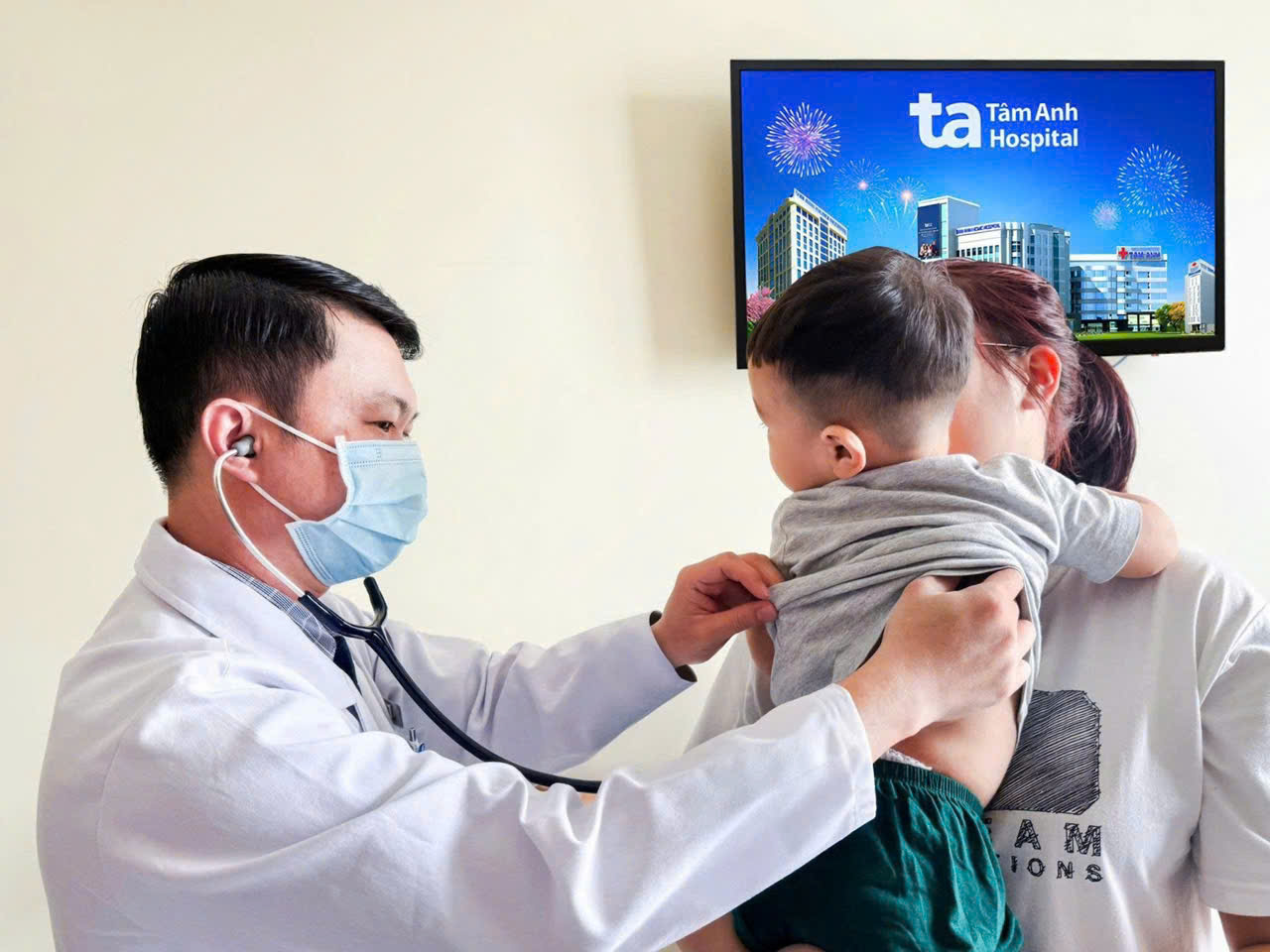 |
Dr. Hung examines Binh. Photo: Gian Don |
Hand, foot, and mouth disease is a viral infection common in children under 5 years old, characterized by fever, sore throat ulcers, and fluid-filled blisters on the palms, soles, knees, and buttocks. The disease can progress rapidly, causing dangerous neurological and cardiovascular complications in children. Atopic dermatitis, a chronic skin condition, makes a child's skin sensitive, dry, itchy, and prone to red rashes and bacterial superinfections. These two conditions present overlapping skin manifestations.
Binh received antibiotics to treat the secondary infection and antihistamines to manage his skin inflammation symptoms. The seizure was determined to be benign and fever-induced, not a complication of hand, foot, and mouth disease. Consequently, after three days in the hospital, his health stabilized, his fever subsided, and he was discharged.
Dr. Hung advises that when a child has mild hand, foot, and mouth disease alongside atopic dermatitis, parents can care for them at home by: using prescribed medications (moisturizers, anti-itch creams), providing appropriate nutrition, and maintaining good personal hygiene. Children should eat soft, liquid, and easily digestible foods, rinse their mouths frequently with physiological saline, and bathe gently with warm water. Avoid spicy, sour, or hot foods that can aggravate mouth sores. Children's fingernails should be kept short to prevent scratching, which can cause skin abrasions and increase the risk of superinfection.
Parents should not ignore any skin abnormalities in their child, especially when accompanied by fever. If a child experiences a febrile seizure, parents should calmly place the child on their side to prevent aspiration, avoid putting anything in the child's mouth, and promptly take them to a medical facility for timely assistance.
Gian Don
*Patient's name has been changed
| Readers can submit questions about neonatology here for doctors to answer |


