


Dr. Sayan Chakraborty, an infectious disease specialist, confirmed on 26/1 that the two positive cases are nurses working at Narayana Multispeciality private hospital in Barasat, 25 km from the capital Kolkata. The current outbreak is under control, with no signs of widespread transmission.
A representative from the West Bengal Health Agency stated that the two female nurses worked the same night shift from 28/12/2025 to 30/12/2025. Symptoms of high fever and respiratory failure appeared on 31/12/2025, rapidly worsening and leading to their admission to the intensive care unit (ICU) on 4/1. As of now, one person has been weaned off the ventilator and is recovering, while the other remains in critical condition.
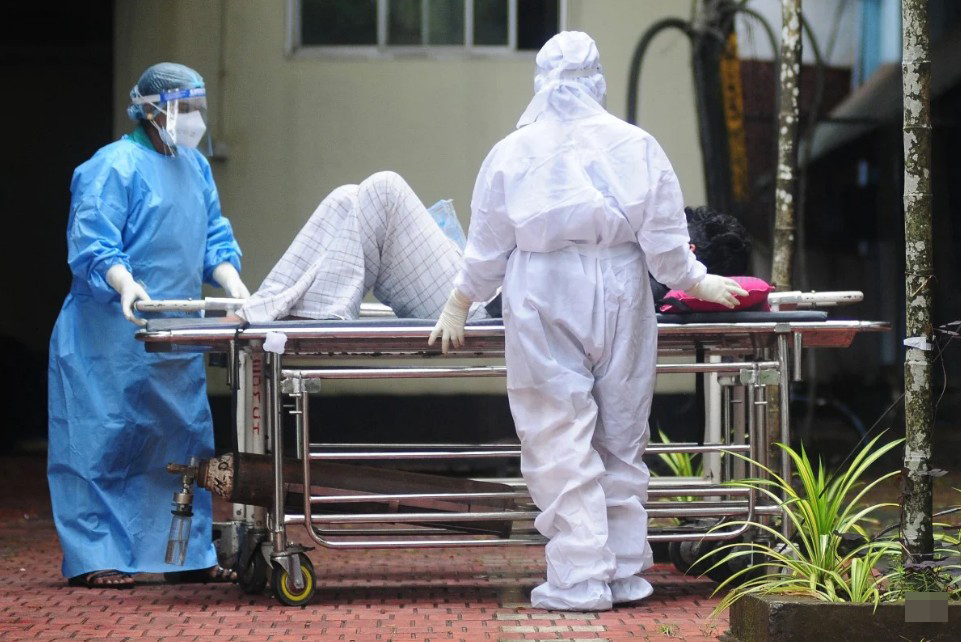 |
Healthcare workers in Kerala, southern India, wearing protective gear while caring for a man with suspected Nipah virus symptoms in September 2023. Photo: AFP |
Epidemiological investigation results point to two hypotheses regarding the source of infection. The most likely scenario focuses on nurse A, who is in critical condition. This patient attended a wedding in the India-Bangladesh border region in mid-12/2025 and drank fresh date palm sap. Health officials believe the patient may have contracted the virus from consuming tree sap contaminated with secretions from fruit bats, the natural hosts of Nipah virus. Nurse B, a colleague on the same shift, was subsequently cross-infected through direct contact.
Another hypothesis suggests the existence of a "patient zero" who died earlier from severe respiratory failure before being tested. Both nurses may have been exposed while caring for this patient. Authorities acknowledge this could be an initially missed diagnosis due to easily confused clinical symptoms.
Immediately after the outbreak's detection, authorities cordoned off the area and traced 180 contacts. 20 close contacts (F1 cases), including doctors, healthcare workers, and patient family members, were placed in centralized quarantine. Mr. Narayan Swaroop Nigam, a state health representative, confirmed that all current test samples are negative, but the surveillance process will continue until the completion of the 21-day cycle. The Indian Ministry of Health and Family Welfare issued a nationwide alert, urging states to tighten surveillance to prevent outbreak risks.
This move immediately activated defense systems in neighboring countries. Thailand and Nepal have increased thermal screening for passengers arriving from West Bengal at border crossings and international airports. In Vietnam, the infectious disease surveillance system has not yet recorded any Nipah virus cases.
The WHO classifies Nipah virus as a top-tier pathogen with a mortality rate of up to 75%. The disease begins with flu-like symptoms, rapidly progressing to encephalitis, coma within 24-48 hours, and leaving permanent neurological damage in about 20% of survivors. Currently, there is no specific vaccine or treatment, with protocols primarily based on supportive care. Experts advise people to avoid contact with bats and sick pigs; to never consume fresh tree sap that has not been heat-treated; and to wash and peel fruits before eating.
Binh Minh (According to Telegraph, Southern Metropolis Daily)


