Molluscum contagiosum is a viral skin infection common in young children. Lesions typically appear as small, skin-colored, pale pink, or pearly white bumps with a smooth surface and a slight central indentation. While generally benign and often self-resolving over time, the condition can worsen if a child frequently scratches or damages these lesions.
For children with atopic dermatitis, like your child, dry, itchy, and easily irritated skin can lead to more frequent scratching. When children scratch molluscum contagiosum lesions, the virus can spread via hands or fingernails to healthy skin areas, leading to new lesions. Additionally, scratching can abrade the skin and compromise its natural protective barrier, increasing the risk of bacterial invasion and subsequent infection.
Some children also develop red, itchy, and scaly skin around molluscum contagiosum lesions. This may indicate an eczema-like inflammatory reaction around the lesions, common in children with atopic dermatitis. Continued scratching can further damage this skin, creating an itch-scratch-skin barrier damage-increased infection risk cycle. Therefore, controlling itching and limiting scratching are essential to protect the skin and reduce new lesion formation.
 |
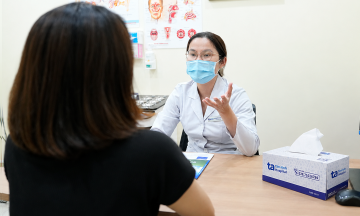
Dr. Linh advises parents of a young child on treatment methods. Illustration: Tam Anh General Hospital |
Parents should watch for signs of secondary infection in areas with molluscum contagiosum, such as increased redness, swelling, warmth, pain, oozing, or pus around the lesions. Some cases may progress to impetigo. If the infection spreads or deepens, children may develop skin or soft tissue abscesses, requiring medical examination and evaluation.
Parents should also avoid picking, poking, or squeezing the lesions themselves, as this can cause deeper skin damage, increase inflammation risk, and spread the infection to other skin areas. Once lesions heal, post-inflammatory hyperpigmentation or scars may remain.
You should keep your child's skin clean and adequately moisturized to reduce dryness. Keep fingernails short and prevent your child from scratching the lesions. Do not attempt to squeeze, poke, or pick at the lesions. Affected areas should be appropriately covered to limit scratching and reduce contact with healthy skin.
If the number of lesions increases rapidly, lesions spread widely, many inflamed red skin areas appear, or there are signs of infection such as swelling, warmth, pain, oozing, or pus, you should take your child to a doctor. A doctor will assess both the molluscum contagiosum and atopic dermatitis to determine a suitable treatment plan, help control itching, protect the skin barrier, and prevent scratching from causing more lesions or complications.
Dr. Tran Thi My Linh
Specialist in Dermatology - Aesthetic Dermatology
Tam Anh General Hospital TP HCM
| Readers can submit dermatology - aesthetic dermatology questions here for doctor consultation. |