About a week ago, Mr. Tien's two children successively developed fever, cough, and eye pain due to adenovirus infection, receiving outpatient treatment. After caring for them, he experienced a high fever, headache, severe sore throat, and painful swallowing. A rapid test confirmed adenovirus, prompting him to visit Tam Anh General Hospital in Hanoi for examination.
Doctor Dam Thi Thanh Tam, from the General Internal Medicine Department, noted Mr. Tien had a high fever with intermittent chills and a rapid pulse of 120 beats per minute. Laboratory tests revealed an elevated white blood cell count of 14 G/L (normal is below 10 G/L) and an increased CRP inflammation index of 14.6 mg/dL (normal is below 0.5 mg/dL), indicating a strong inflammatory response. An ear, nose, and throat endoscopy showed swollen tonsils with multiple pus pockets, and an X-ray detected bronchitis.
Doctors diagnosed the patient with adenovirus infection, acute purulent tonsillitis, and bacterial superinfection-induced bronchitis.
Adenovirus is common in young children, but adults can also contract it through close contact, especially when caring for sick children. Most cases present with flu-like symptoms and resolve on their own. However, in some instances, the virus damages the respiratory tract, creating conditions for bacterial superinfection, leading to purulent tonsillitis, bronchitis, or pneumonia. Such cases require treatment to prevent complications.
Mr. Tien received intravenous fluids combined with oral rehydration. Doctors administered a combination of intravenous and oral fever reducers, pain relievers, anti-inflammatory drugs, mucolytics, and cough suppressants. Intravenous antibiotics were also used to control the superinfection. Additionally, he received antibiotic eye drops to treat conjunctivitis.
Mr. Tien's fever subsided, his cough decreased, his tonsils reduced swelling, and the pus pockets gradually cleared. His health stabilized, and he was discharged after 6 days.
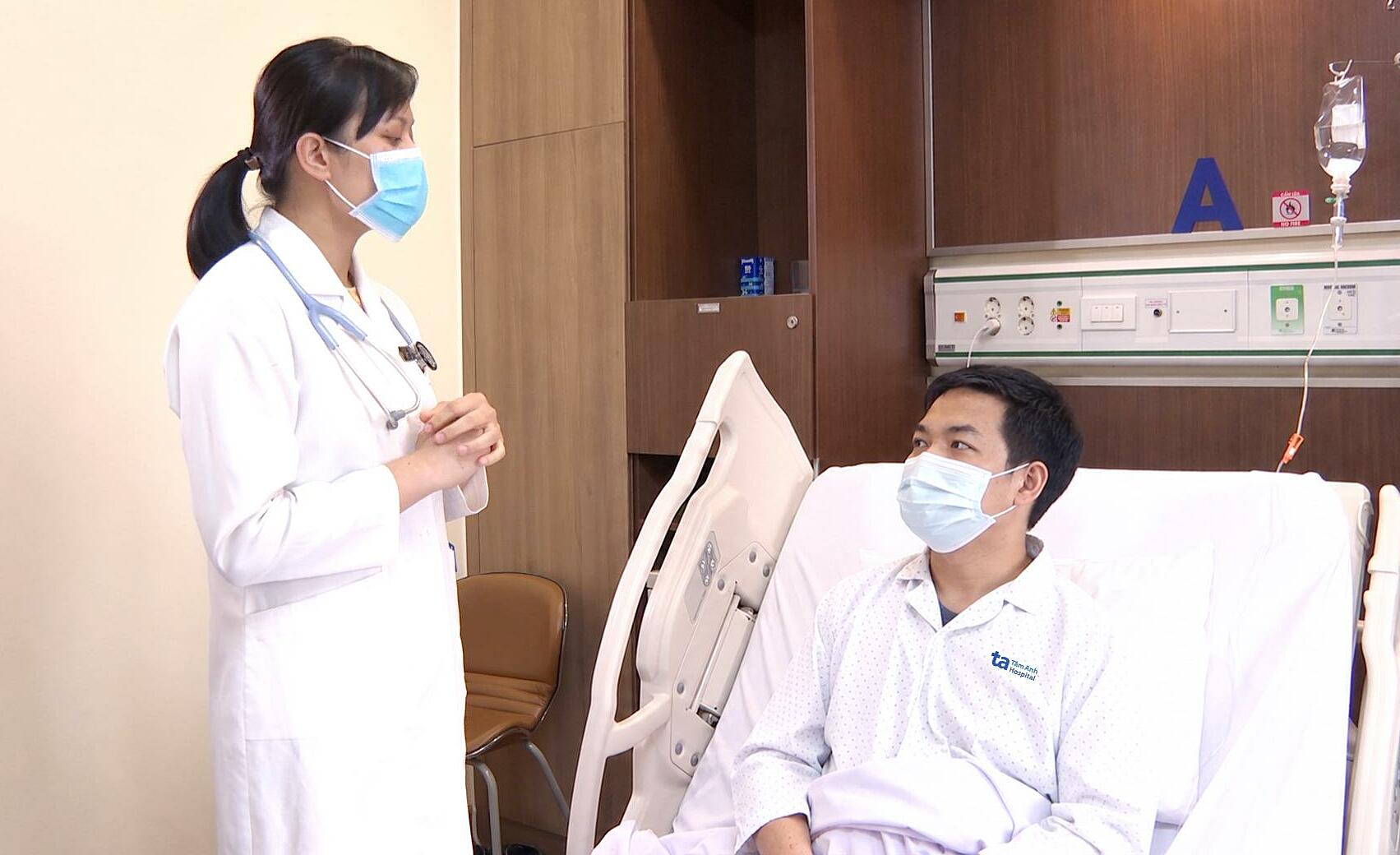 |
Doctor Tam examining Mr. Tien before his discharge. *Photo: Tam Anh General Hospital* |
According to Doctor Tam, there is currently no specific medication for adenovirus. Treatment primarily focuses on symptom control, such as: fever reduction, pain relief, inflammation reduction, fluid and electrolyte replacement, and managing complications. Antibiotics are ineffective against viruses; they are only prescribed when there is evidence of bacterial superinfection, as in Mr. Tien's case.
Adenoviruses belong to the family Adenoviridae, with over 50 types capable of causing human illness. The virus can damage multiple organs, including the respiratory tract, eyes, gastrointestinal tract, bladder, skin, and even the nervous system. Patients can experience recurrent infections due to different virus types.
The virus primarily spreads through respiratory droplets when an infected person coughs or sneezes, or through direct contact with secretions such as phlegm, nasal discharge, tears, or eye discharge. Therefore, if someone in a family is infected, the risk of transmission to other members is high.
Doctors recommend that when caring for someone with adenovirus, caregivers should wear masks, wash hands frequently with soap or hand sanitizer, and limit sharing face towels, drinking cups, and eating utensils. Homes should be cleaned and frequently touched surfaces disinfected, while ensuring good ventilation.
Patients experiencing a high fever lasting over 39 degrees Celsius, continuous fever for several days unresponsive to fever reducers, severe sore throat, difficulty swallowing, productive cough with thick phlegm, or shortness of breath should seek hospital examination. These could be signs of complications or superinfection.
Thanh Ba
| Readers can send questions about respiratory illnesses here for doctors to answer |