


Lung cancer develops when cells in lung tissue grow abnormally, uncontrolled by the body. Patients often experience symptoms like persistent cough without clear cause, chest pain, shortness of breath, weight loss, and fatigue. As the disease progresses, cancer cells can invade nearby tissues and metastasize to other organs such as the brain, bones, liver, and adrenal glands.
Lung cancer is classified based on the histological characteristics of cancer cells. The two most common types are non-small cell lung cancer (NSCLC) and small cell lung cancer (SCLC). There are also some rarer forms, such as neuroendocrine lung cancer and lung connective tissue cancer.
According to Master of Science, Doctor Pham Thi Le Quyen, from the Department of Respiratory Medicine at Tam Anh General Hospital Hanoi, environmental, lifestyle, and genetic factors can increase disease risk.
Tobacco smoke
Doctor Quyen states that tobacco smoke is the leading cause of lung cancer. Smokers face a 15-30 times higher risk of developing lung cancer compared to non-smokers. Even non-smokers can increase their disease risk if they regularly inhale secondhand smoke.
When tobacco smoke enters the respiratory tract, thousands of toxins and carcinogens damage lung cells. Although lungs possess self-repair capabilities, prolonged exposure to smoke impairs this mechanism, allowing cells to develop abnormally and form malignant tumors. Many patients with small cell lung cancer often have a history of heavy, long-term smoking.
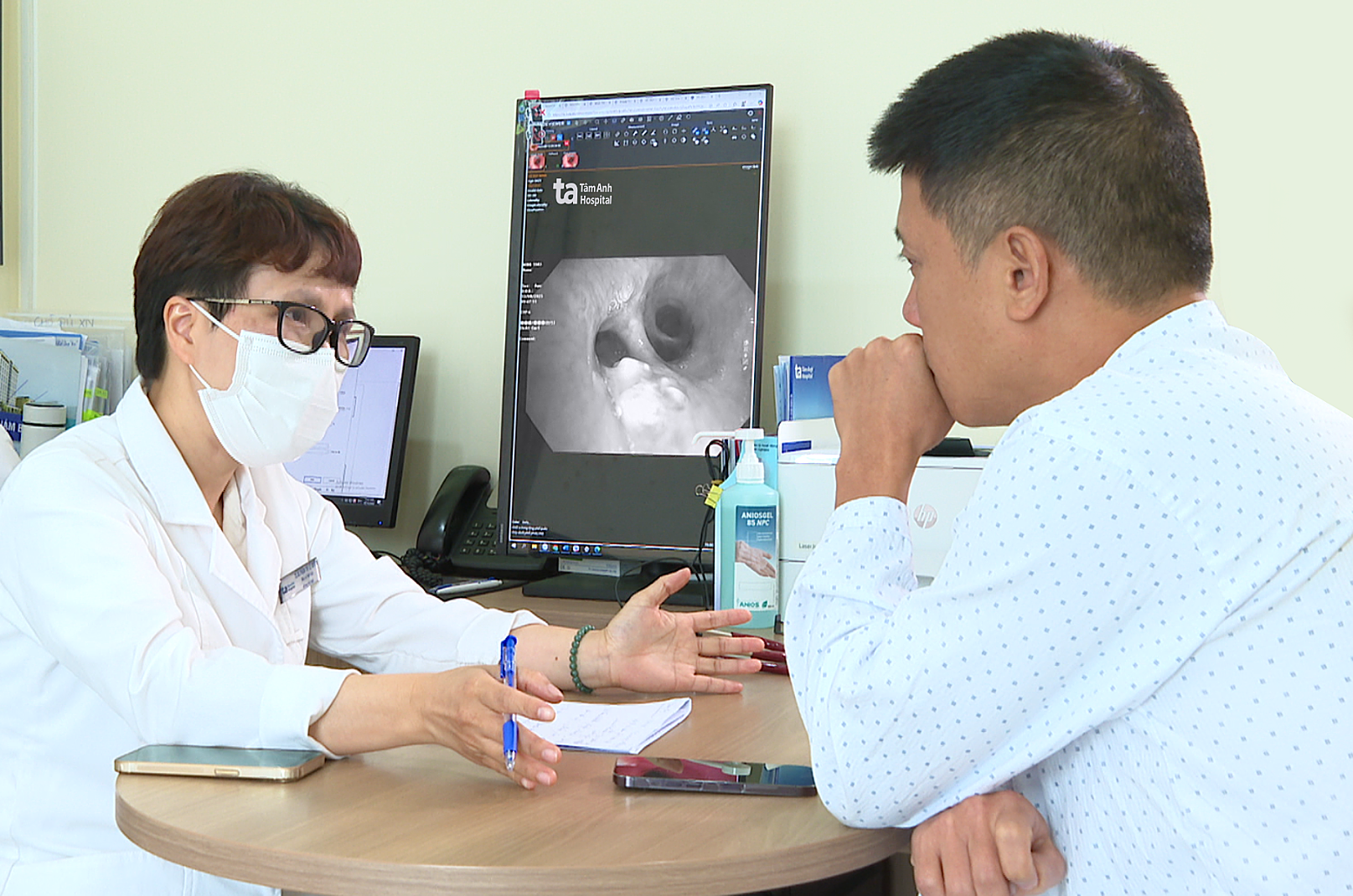 |
Doctor Quyen examines a patient. Illustration: Tam Anh General Hospital. |
Radon exposure
The second cause of lung tumors is exposure to radon, a naturally occurring radioactive gas. Radon enters buildings through small cracks in foundations.
Exposure to toxic gases
Inhaling toxic substances over extended periods can cause chronic lung damage, leading to pulmonary fibrosis and increasing cancer risk. Individuals working in environments with hazardous dust and chemicals like silica, asbestos, arsenic, cadmium, chromium, nickel, or uranium face a high risk of lung cancer. As pulmonary fibrosis progresses, the likelihood of malignant tumor formation also increases compared to normal individuals.
Genetic mutations
Certain genetic mutations increase lung cancer risk, especially when combined with other risk factors such as smoking or exposure to toxic chemicals. In fact, many cases of lung cancer occur in non-smokers who carry gene abnormalities related to cell development and division.
Undergoing radiation therapy
Doctor Quyen explains that individuals who have undergone chest radiation therapy for other cancers have a higher risk of developing lung cancer in the future. This is because radiation can damage the DNA of lung cells, increasing the potential for malignant cell formation years later. However, this risk is not high, typically appears after a long period, and is managed within current cancer radiation therapy protocols. Radiation therapy, when administered as prescribed, still offers significant benefits, and patients should not be overly concerned or refuse treatment.
Doctor Quyen recommends that individuals with risk factors undergo regular health check-ups and lung cancer screenings using low-dose computed tomography (CT) scans to detect any abnormalities early, enabling effective treatment.
Thu Giang
| Readers can submit respiratory questions here for a doctor's response. |


