


A young man was admitted to Thong Nhat Hospital with severe abdominal pain, initially suspecting a relapse of stomach issues. However, blood test results revealed a critical decline in kidney function. Upon reviewing his medical history, doctors identified the cause: unlabeled powder medicine Minh had been taking regularly for nasal congestion over several months.
"I felt relief from nasal congestion and generally well after taking it, so I continued using it, which ultimately led to acute kidney failure," Minh recounted from his hospital bed.
Associate Professor Doctor Nguyen Bach, Head of the Nephrology and Dialysis Department at Thong Nhat Hospital, identified Minh's case as a typical example of acute kidney failure caused by poisoning from medication of unknown origin. Advanced tests ruled out other potential causes such as glomerulonephritis, infection, or drug abuse. The only conclusion was that toxins within the powder medicine directly damaged the kidney tubules.
Thanks to early hospitalization and immediate cessation of the suspected medication, Minh received intensive treatment, and his kidney function showed signs of improvement within a few days. Doctor Bach emphasized, "Had he been admitted later, the acute damage could have progressed to chronic and irreversible kidney failure."
Across nephrology departments, many patients are admitted with both kidneys already fibrotic and atrophied, clear signs of end-stage chronic kidney failure. A common cause stems from the long-term abuse of pain relievers, traditional herbal remedies, or unregulated dietary supplements. In such cases, the price extends beyond a few days of treatment; it becomes a life inextricably linked to dialysis.
For instance, a 55-year-old man faces lifelong dialysis due to a two-year habit of using pain relievers for toothaches. After several tooth extractions, he became reluctant to visit the dentist, opting instead to self-medicate whenever pain arose, sometimes continuously for a week. By the time he was hospitalized, his kidneys had sustained irreversible damage, necessitating regular dialysis.
Similarly, a 22-year-old woman permanently lost kidney function after consuming 250 "weight-loss pills" purchased online within one month. While she lost 6 kg, this came at the cost of acute liver failure, gastrointestinal bleeding, and end-stage kidney failure, requiring dialysis three times a week and a life dependent on the dialysis machine.
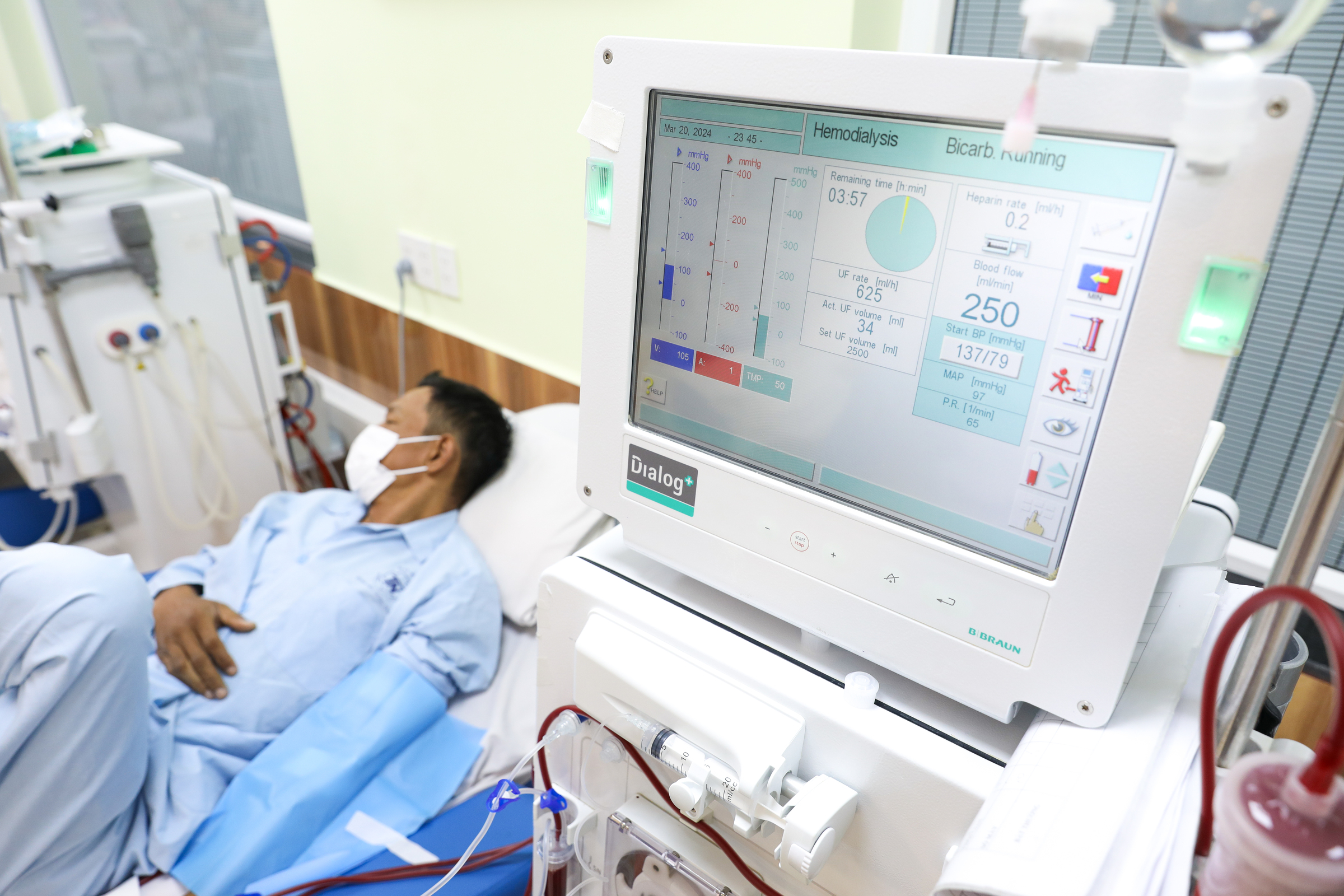 |
A patient undergoes dialysis three times a week at Thong Nhat Hospital. Photo: Phung Tien |
According to kidney specialists, while kidney failure was once primarily observed in older adults due to complications from diabetes and hypertension, there is now a growing number of younger patients, aged 17-45. Beyond autoimmune diseases, the habit of indiscriminate medication use stands out as a critical risk factor pushing many young individuals toward kidney failure.
Doctor of Medicine Level 2 Le Thi Dan Thuy, Head of the Nephrology and Dialysis Department at Binh Dan Hospital, stated that her department admits patients with drug-induced kidney damage almost daily. Most young patients admitted do not realize that seemingly "simple" medications can harm their kidneys, leading them to prolonged use without regular health check-ups. Many only seek medical attention when symptoms like swelling, reduced urination, or hypertension manifest, by which time the kidney damage has become severe and is very difficult to reverse.
"What is concerning is that many pain relievers are often mixed into dietary supplements, 'herbal medicines,' and weight-loss pills sold unregulated online," Doctor Thuy explained, "causing users to unknowingly introduce toxins into their bodies daily."
Doctors advise individuals to use medication only when prescribed by a doctor, adhering to the correct dosage and duration. It is crucial not to self-medicate with pain relievers, other drugs, herbal remedies, or products advertised for "detoxification," "weight loss," or "beauty" without clear knowledge of their ingredients and one's own kidney function. Individuals with underlying conditions such as diabetes, hypertension, cardiovascular disease, or pre-existing kidney disease must exercise particular caution and monitor their kidney function during and after medication use.
Regular health check-ups, including blood and urine tests, represent the most effective screening method, as chronic kidney disease often presents no clear symptoms in its early stages. To protect kidney health, everyone should maintain a healthy lifestyle, including a low-sodium diet, adequate hydration, limiting processed foods, regular exercise, refraining from smoking, moderating alcohol consumption, and effectively managing underlying health conditions. Should symptoms such as swelling, reduced urine output, persistent fatigue, or hypertension appear, prompt medical examination is necessary to detect potential kidney damage.
Le Phuong


