


Answer:
Doctors typically consider stent placement for individuals with severe coronary artery stenosis, usually 70% or more, especially when symptoms like angina or shortness of breath are present. The primary goal of this procedure is to restore blood flow to the heart, thereby reducing the risk of myocardial infarction (heart attack), heart failure, arrhythmias, and sudden cardiac death. Stent placement is a minimally invasive procedure, requiring only local anesthesia at the catheter insertion site, such as the wrist, groin, or arm. Patients remain awake and can communicate with the doctor throughout the intervention.
During stent placement, some patients may experience mild chest pressure or discomfort. However, this sensation is typically fleeting and not severe. After the procedure, patients mainly feel temporary, mild soreness at the catheter insertion site. This is a normal reaction as blood vessels and soft tissues have just undergone intervention. These discomforts are generally mild and can be effectively managed with pain relievers and sedatives as prescribed by the doctor.
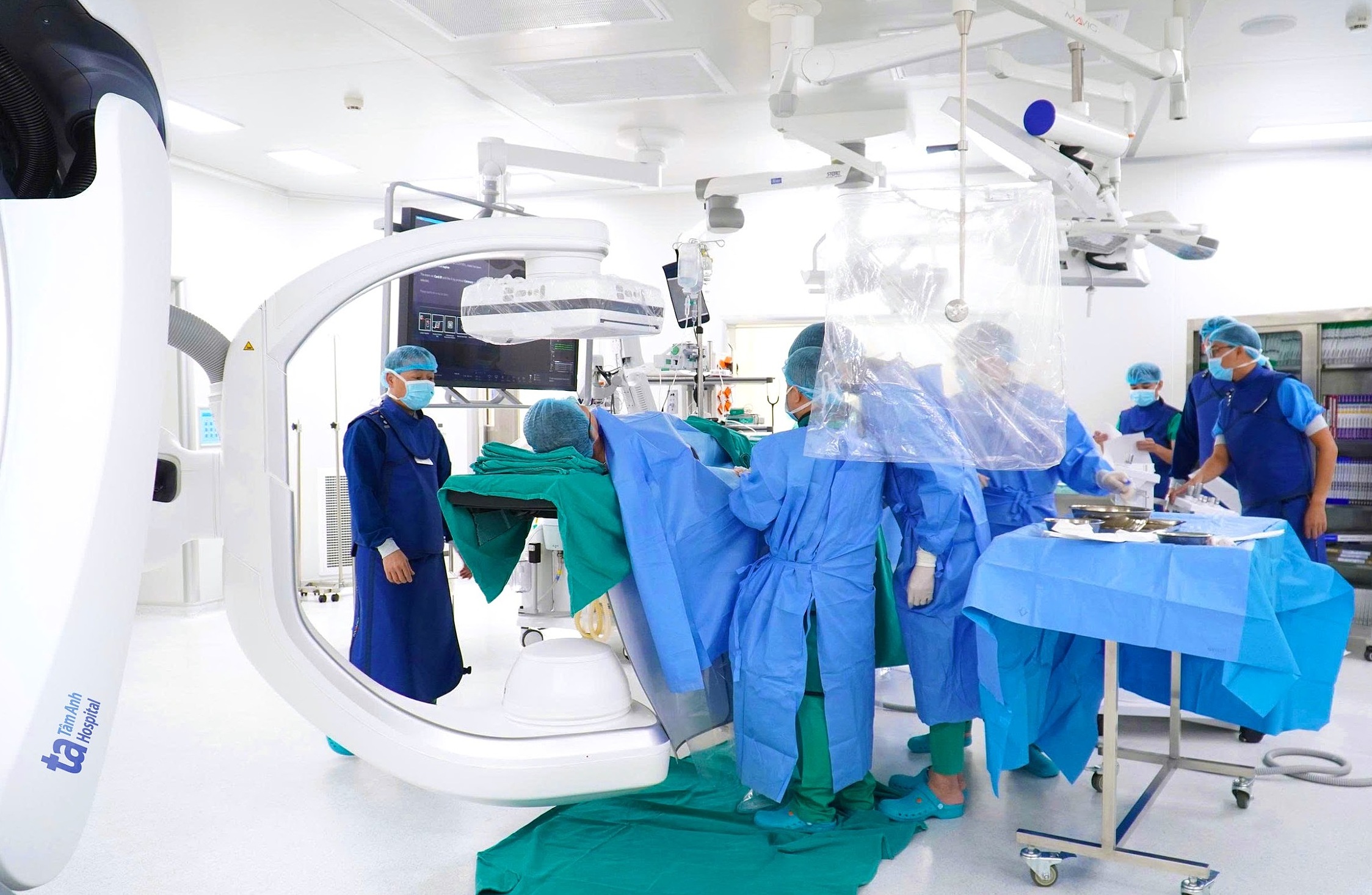 |
The team performing coronary artery stent placement for a patient. Photo: Tam Anh General Hospital |
If no complications arise, most patients can sit up and walk gently within a few hours following the procedure. However, during the first 24-48 hours, patients need to limit strenuous activity and be closely monitored for any unusual signs at the puncture site. Patients can usually be discharged after 1-2 days. In cases requiring further observation or for those with underlying conditions, a longer hospital stay may be necessary as advised by the doctor.
After stent placement, daily activities such as walking, eating, and personal hygiene can typically resume within a few days. The majority of patients achieve stable recovery within about 5-7 days, depending on their physical condition, the stent’s location, and the extent of the intervention.
You should contact your doctor or go to a medical facility immediately if, after stent placement, you experience any of the following signs: increasing pain at the intervention site; redness, swelling, warmth, or discharge from the puncture area; severe chest pain; or shortness of breath. These symptoms could be early indicators of complications such as bleeding, local infection, vascular damage, or other cardiovascular events.
Stent placement helps reopen narrowed arteries, reducing chest pain symptoms and the risk of cardiovascular complications, but it does not completely cure coronary artery disease or atherosclerosis. After stent placement, patients must strictly adhere to antiplatelet medication as prescribed by their doctor. They also need to control blood pressure, blood lipids, and blood sugar, maintain a healthy diet, limit alcohol, and quit smoking. Regular follow-up appointments are essential for the doctor to monitor treatment effectiveness and adjust medication when necessary.
Master, Doctor An Tuan Dat
Department of Cardiology
Tam Anh General Hospital Hanoi
| Readers can send cardiology questions here for doctors to answer |


