


Liver cancer with lymph node metastasis occurs when hepatocellular carcinoma cells spread via the lymphatic system to regional or distant lymph nodes. This spread is most common in the porta hepatis, mediastinum, or abdomen. This late stage indicates the disease has moved beyond the liver and may have spread throughout the body. Lymph node metastasis is a negative prognostic factor, reducing treatment efficacy and shortening patient survival.
Once lymph node metastasis occurs, liver cancer cannot be completely cured. However, appropriate treatment methods can control disease progression. The treatment goals are to extend survival, improve quality of life, and reduce symptoms for patients.
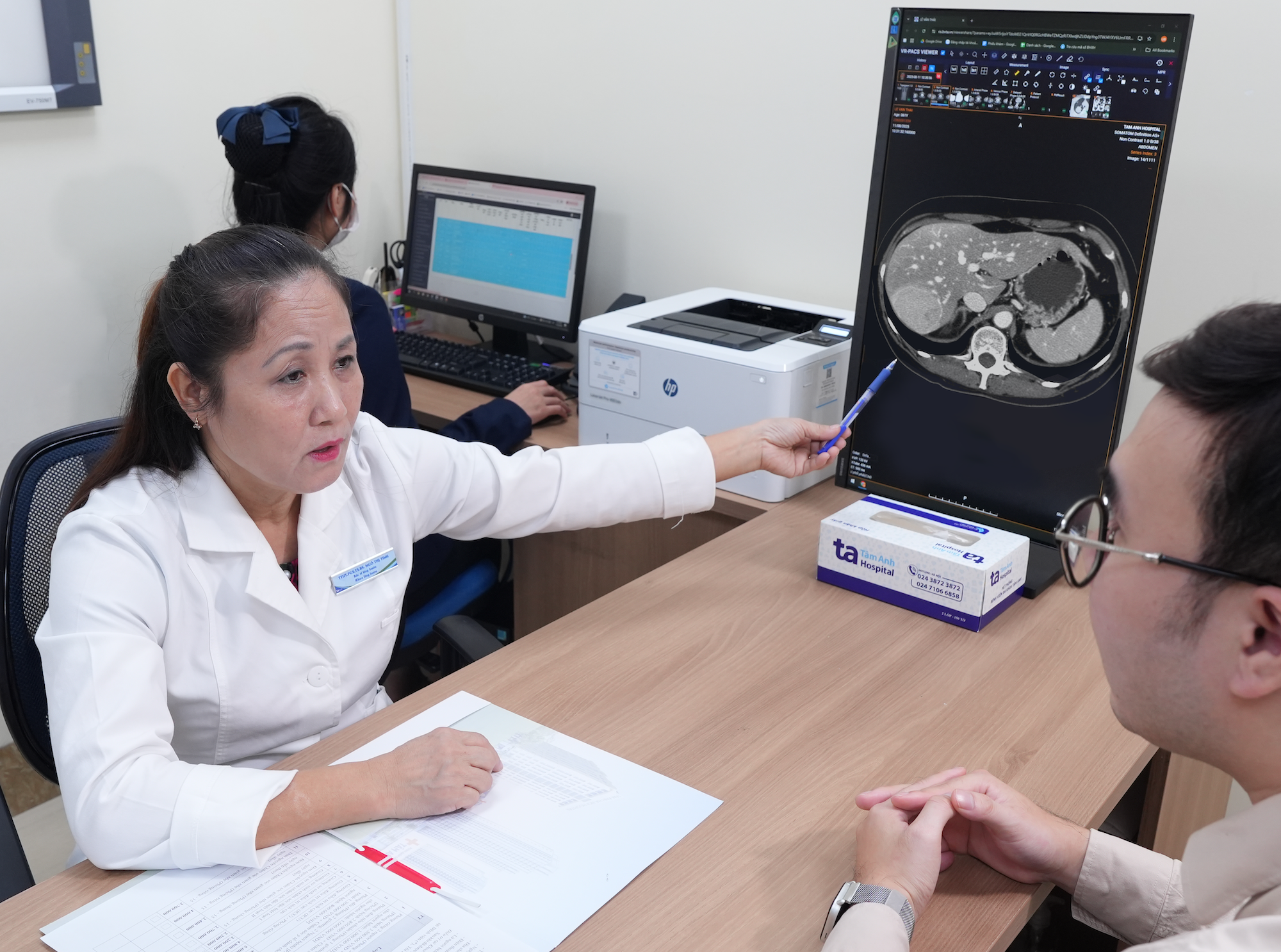 |
Associate Professor Tinh advises a patient on a liver cancer treatment regimen. Illustration: Tam Anh General Hospital |
Depending on the patient's condition, doctors prescribe a multi-modal treatment regimen, which includes one or more of the following methods:
Targeted therapy drugs inhibit growth signals in cancer cells and blood vessels supplying the tumor, slowing disease progression. This method is often prescribed when lymph node metastasis is inoperable.
Immunotherapy drugs are an advance in late-stage liver cancer treatment, increasing overall survival rates and controlling lymph node metastasis more effectively than traditional drugs.
Systemic chemotherapy is prescribed when patients do not respond to targeted or immunotherapy drugs, or in cases of extra-abdominal lymph node metastasis.
Radiation therapy helps shrink lymph node size, reduce pain, and supports local metastasis control. It is typically used adjunctively, combined with systemic methods to enhance treatment effectiveness.
Surgery or interventional procedures are applied in some cases if there are few metastatic lymph nodes, the patient is otherwise healthy, the liver functions well, and lymph nodes cause severe compressive symptoms. Doctors may recommend lymph node dissection, selective lymphadenectomy, or radiofrequency ablation (RFA) to alleviate metastatic cancer symptoms.
Palliative care is a crucial treatment step to help liver cancer patients with lymph node metastasis manage symptoms like pain from lymph node compression, fever, weakness, loss of appetite, jaundice, and ascites if liver failure occurs. Supportive measures include pain medication, albumin infusions, paracentesis for ascites, nutritional support, and treatment for depression or anxiety.
The average prognosis for liver cancer patients with lymph node metastasis is typically 4-10 months. With aggressive treatment and a positive response to targeted and immunotherapy, some patients may extend their survival by an additional 12-24 months.
You should take your father for treatment at multi-specialty medical facilities, including oncology, gastroenterology, diagnostic imaging, nutrition, and palliative care departments, for a comprehensive examination. This allows doctors to create a personalized treatment plan, optimizing treatment effectiveness and improving his quality of life.
Associate Professor, Doctor Ngo Thi Tinh
Department of Oncology
Tam Anh General Hospital Hanoi


