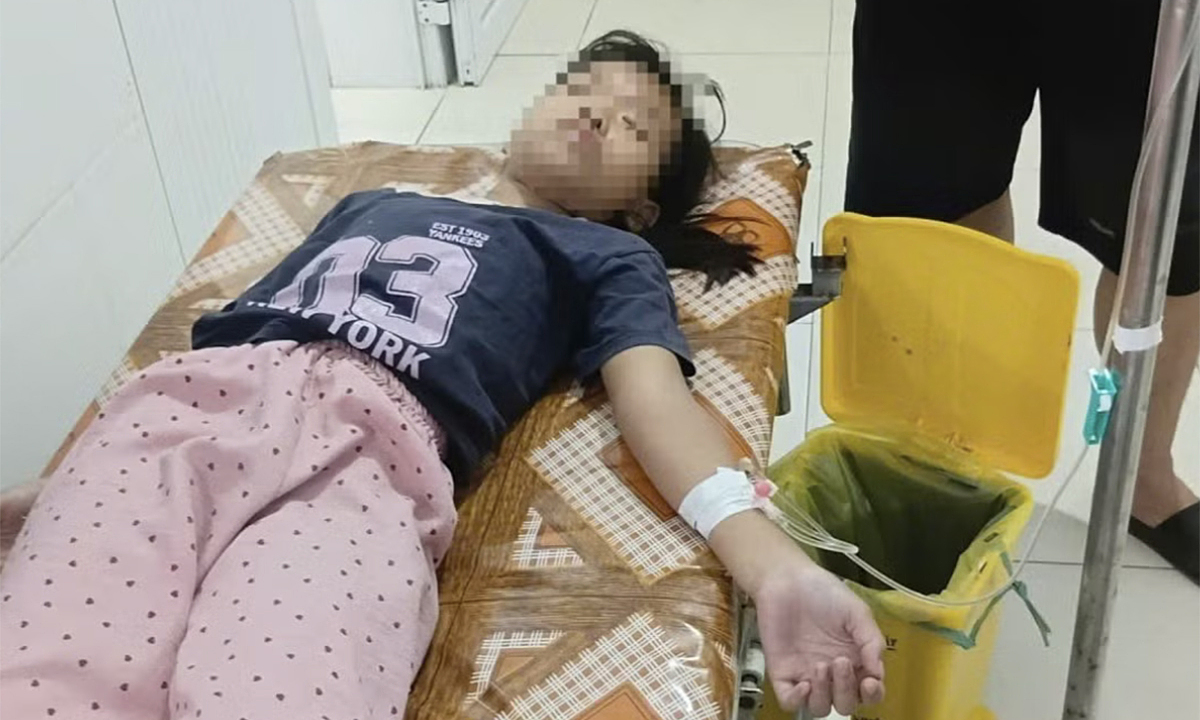
Ho Chi Minh City Department of Health reported that 4 medical facilities are providing emergency care and treatment for this group of patients. Specifically, Military Hospital 175 is treating 12 inpatients, while Gia Dinh People's Hospital is treating 8 cases. Thu Duc Regional General Hospital and Trung My Tay General Hospital are each caring for one patient. These individuals all purchased banh mi from the same establishment and subsequently developed symptoms such as chills, abdominal cramps, vomiting, and continuous diarrhea. There is no final conclusion on the incident yet.
To control the situation, the Department of Health requested all hospitals in the area to immediately review patients presenting with epidemiological factors related to the aforementioned food establishment. Department leaders instructed medical staff to classify and treat patients according to food poisoning protocols. Additionally, treatment facilities must promptly report severe cases, update microbiological test results, and any emerging complications to assist management agencies in coordinating specialized responses.
 |
Image of pork banh mi advertised on the shop's website.
Experts suggest that banh mi is a common street food, consumed quickly and served to a large number of people daily. It often uses both cooked and raw ingredients, making it susceptible to microbial contamination if preparation and preservation processes are not ensured.
This incident is not isolated. In early November, over 300 people in Ho Chi Minh City suffered food poisoning after eating banh mi purchased from Co Bich shops, with the cause identified as Salmonella bacteria. A few days prior, over 70 people were hospitalized with poisoning symptoms after eating banh mi from Hong Ngoc 12 establishment in Dong Thap. In mid-December, over 200 people in Quang Ngai also suffered poisoning after eating banh mi sold at a local chain of shops, due to contaminated pate and vegetables.
Le Phuong